Critically Endangered
Cochran's least gecko
Sphaerodactylus cochranae
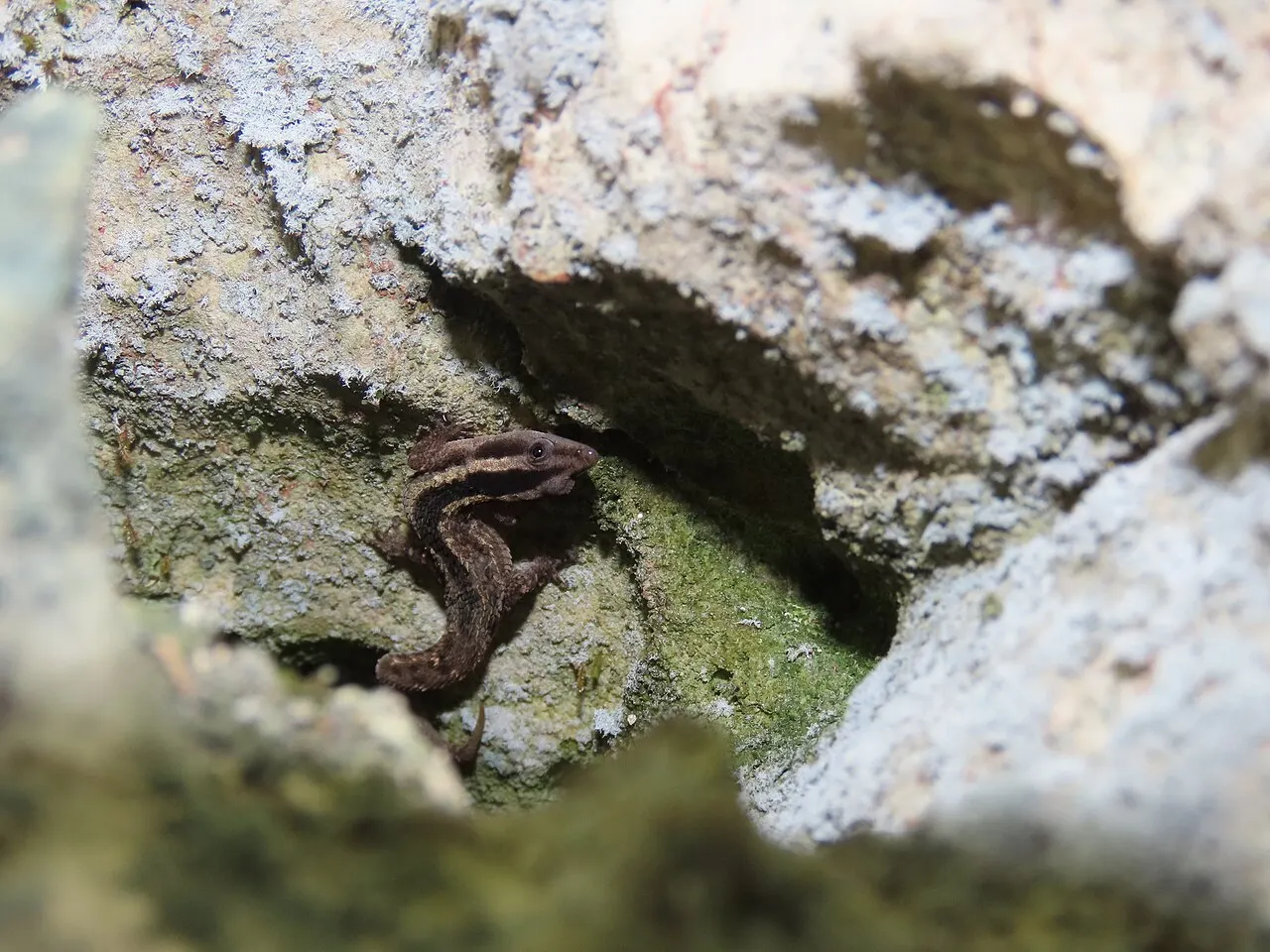
Cochran's least gecko (Sphaerodactylus cochranae) is a tiny lizard found only in the Los Haitises karst country of the Dominican Republic, on Hispaniola. The IUCN Red List rates it Critically Endangered (assessed 2016), with a range of about 71 square kilometres. It is believed to shelter in bromeliads on forested limestone hills.
How to recognise it
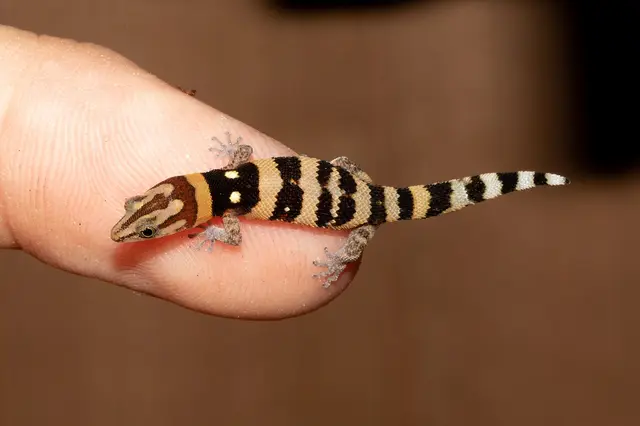
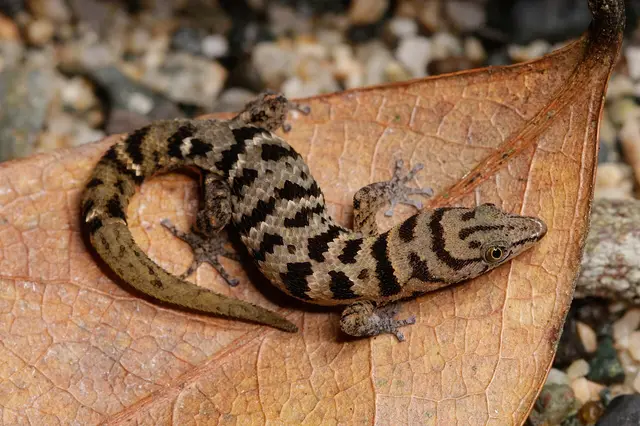
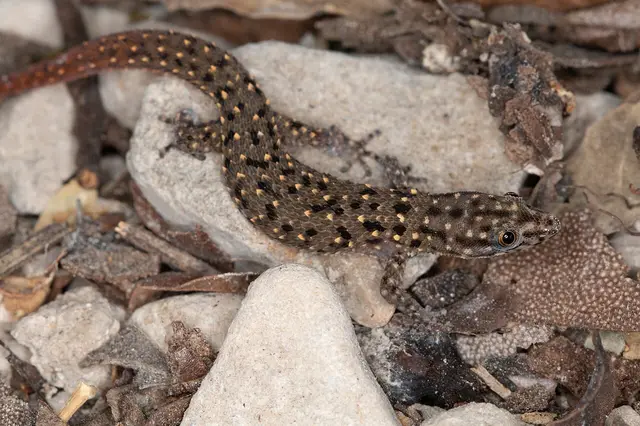
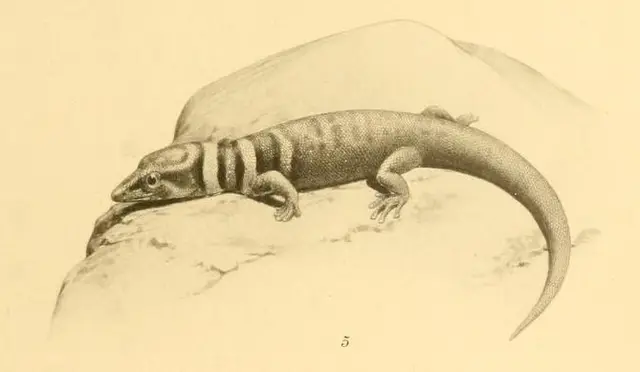
This is a dwarf gecko, and a very small one. Adult males reach a snout to vent length of about 30 millimetres and females about 28 millimetres, so a full-grown animal is roughly the length of a paperclip, not counting the tail.
The back is yellowish brown to tan, with three dark stripes that continue onto the tail. The scales on the back are large, pointed, keeled and overlapping, while the belly scales are smooth. Males and females look alike.
Where it lives
The species is known only from the Los Haitises region, a patch of steep limestone hills (called mogotes) south of Samana Bay on Hispaniola's northeast side. Los Haitises National Park and the karst land around it hold the known records.
The Red List treats the whole range as a single location, from sea level up to about 241 metres, in moist lowland forest, and puts the extent of occurrence at about 71 square kilometres. A global database of specimen and observation records, GBIF, holds just 13 records for the animal, all of them from the Dominican Republic.
Pins are Wikidata “endemic to” fields. Orange dots, when present, are GBIF occurrence tiles — survey bias included.
How it lives
Very little has been written about its daily life. It is believed to be a bromeliad dweller, living in the water-holding plants that grow on trees and rock, and it is reported to be very sensitive to habitat change, especially from agricultural expansion. It is associated with humid karst where the steep mogotes have stayed largely undisturbed. Diet and breeding have not been documented in the sources available.
It was described by the herpetologist Rodolfo Ruibal in 1946, and the name honours Doris Cochran, an American herpetologist who worked at the Smithsonian's National Museum of Natural History.
Why it is in trouble
The IUCN lists shifting agriculture as the threat, with forest being converted and degraded, and the area of habitat is still shrinking. Inside the national park, unclear boundaries and weak enforcement have reportedly let clearing and degradation carry on.
Nobody has a population count, and the Red List records the population trend as unknown. With a range this small and tied to one forest, even modest clearing could remove a large share of what exists.
What is being done
The gecko occurs in at least one protected area, Los Haitises National Park, which is the main safeguard in place. The assessment lists no species-specific conservation actions beyond that.
Sources
Written for this catalog in our own words from the sources below, checked against them on 12 November 2026. Population figures are estimates and carry the year they were made. Status and assessment year: IUCN. 2026. The IUCN Red List of Threatened Species. Version 2026-1. iucnredlist.org.