Critically Endangered
Sphaerodactylus callocricus
Sphaerodactylus callocricus
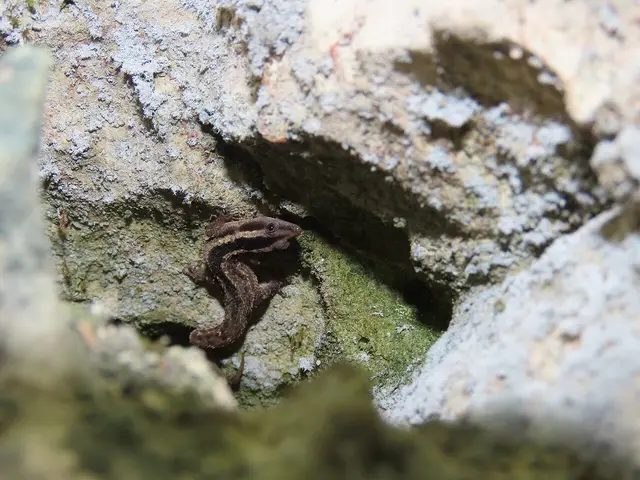
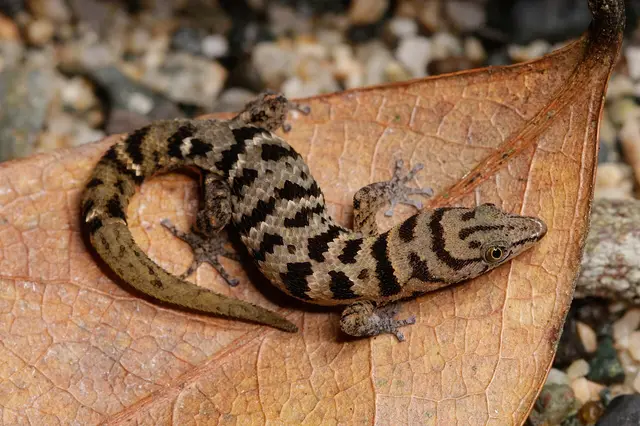
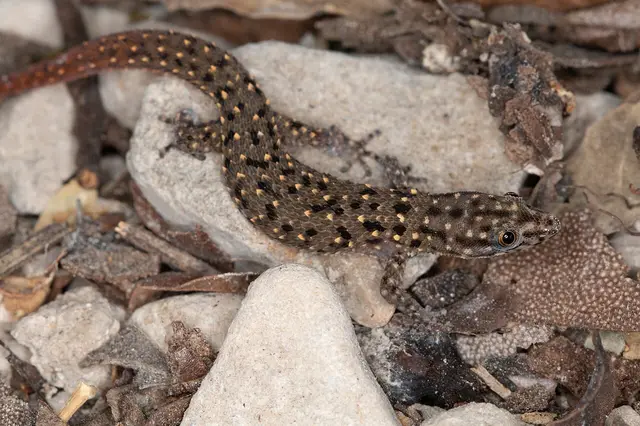
Sphaerodactylus callocricus, the beautifully ringed or rough-banded least gecko, is a small banded gecko found only on the Samaná Peninsula in the Dominican Republic. The IUCN Red List (2019) lists it as Critically Endangered, with a decreasing, severely fragmented population in a very small range.
How to recognise it
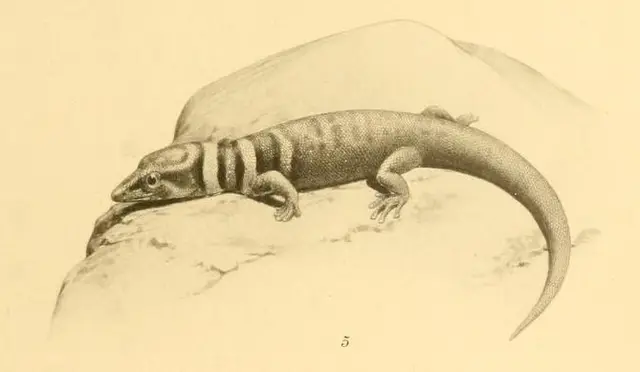
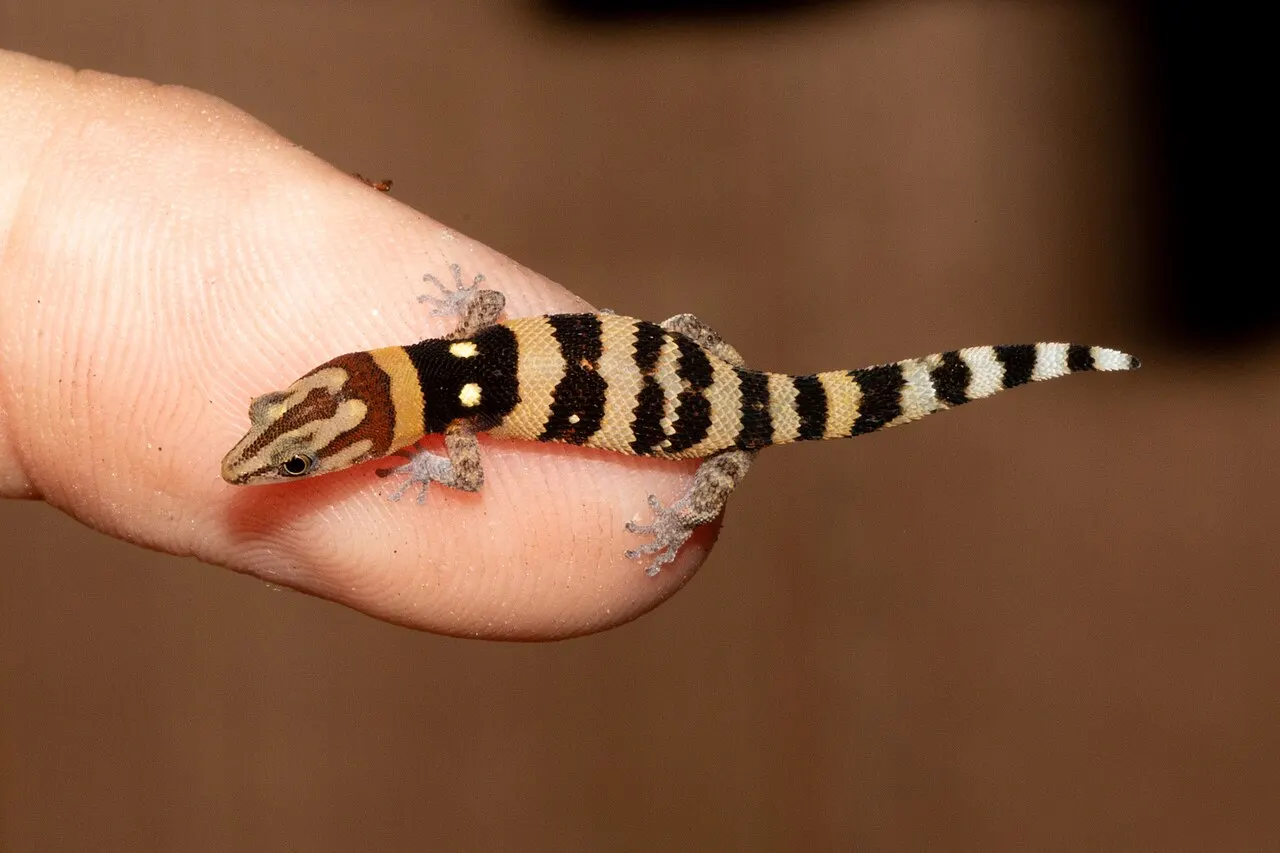
It is a least gecko, described as moderately sized for its genus, with large, keeled, overlapping scales on its back. The ground colour is pale yellowish gray crossed by dark bands, with a large patch on the shoulders that has paired eye-like spots in the middle, and a W-shaped mark on the head. Males, females and young look alike, though juveniles have stronger contrast and the pattern softens with age.
The name comes from Greek words for beauty and ring, a reference to the dark rings around the body and tail.
Where it lives
The species is endemic to the Samaná Peninsula in the eastern Dominican Republic, and its range is reportedly estimated at under 100 square kilometres. The first specimens were collected on the peninsula and described by Albert Schwartz in 1976, with the type locality about 4.6 kilometres south of Las Galeras.
Records run from near sea level to about 305 metres. The IUCN lists moist lowland forest and sandy shoreline habitats. It is reported to depend on old karst forest, where limestone boulders, stones and leaf litter give it shelter. Of 66 records on GBIF, 64 date from 1975 and 1976, with the most recent in 1984.
Pins are Wikidata “endemic to” fields. Orange dots, when present, are GBIF occurrence tiles — survey bias included.
How it lives
It shelters under stones, boulders, leaf litter and other debris, and is sometimes seen on the forest floor during the day. It lays eggs. Little else has been published about its behaviour.
Why it is in trouble
Old karst forest on the peninsula is disappearing quickly. The IUCN lists shifting agriculture, tourism and recreation areas, small-scale farming and ranching, and unintentional effects of small-scale harvest as threats, and records a severely fragmented population and continuing decline in its habitat area.
What is being done
The IUCN reports that the species occurs in at least one protected area and lists site and area management as the conservation action in place.
Sources
Written for this catalog in our own words from the sources below, checked against them on 12 November 2026. Population figures are estimates and carry the year they were made. Status and assessment year: IUCN. 2026. The IUCN Red List of Threatened Species. Version 2026-1. iucnredlist.org.