Endangered
Hispaniolan Two-striped Geckolet
Sphaerodactylus rhabdotus
The two-striped sphaero, or Valle de Neiba least gecko, is a tiny, pale gecko found only in the dry lowlands of the Dominican Republic. The IUCN lists it as Endangered (assessed 2016), with a small range, a shrinking and fragmented habitat, and a decreasing population.
How to recognise it
It belongs to the least geckos, a group of very small lizards in the genus Sphaerodactylus. Albert Schwartz described the species in 1970 in the Journal of Herpetology. The name rhabdotus comes from a Greek word for lined, and the English name two-striped sphaero refers to the same markings.
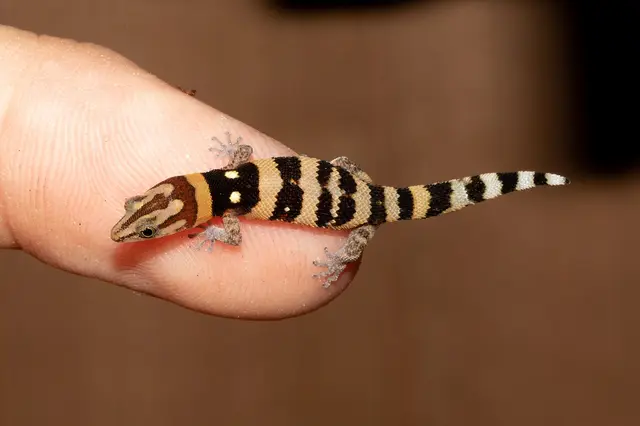
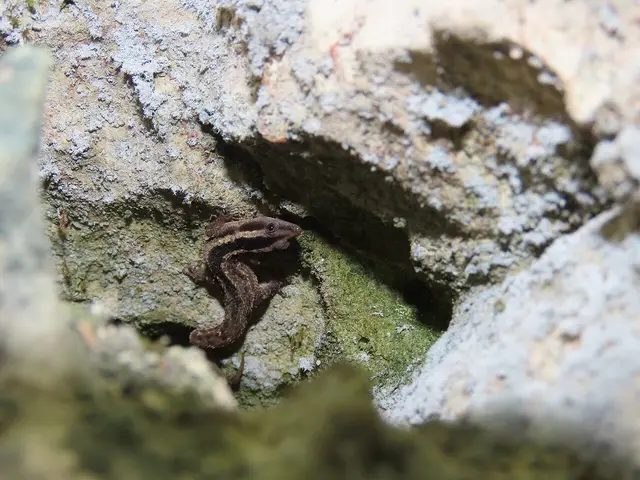
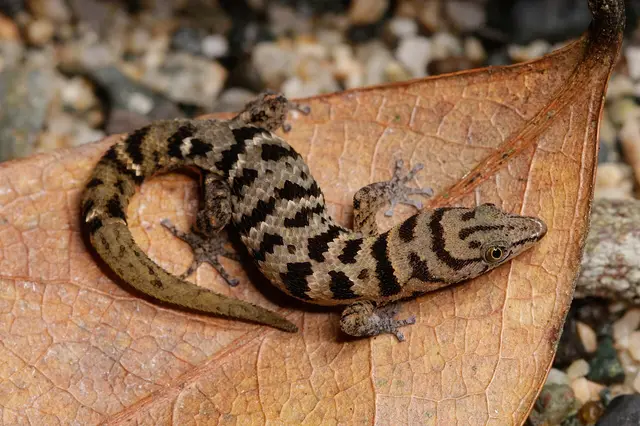
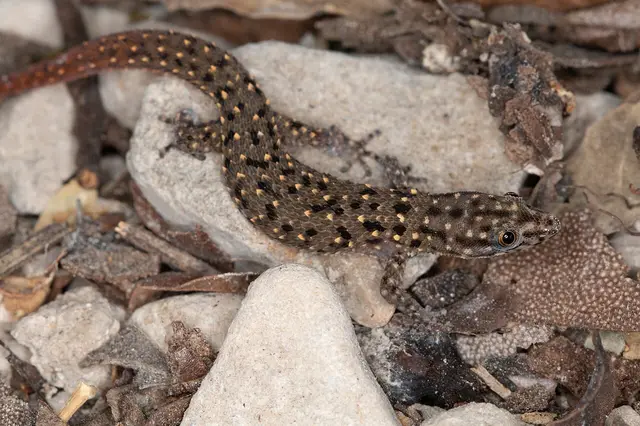
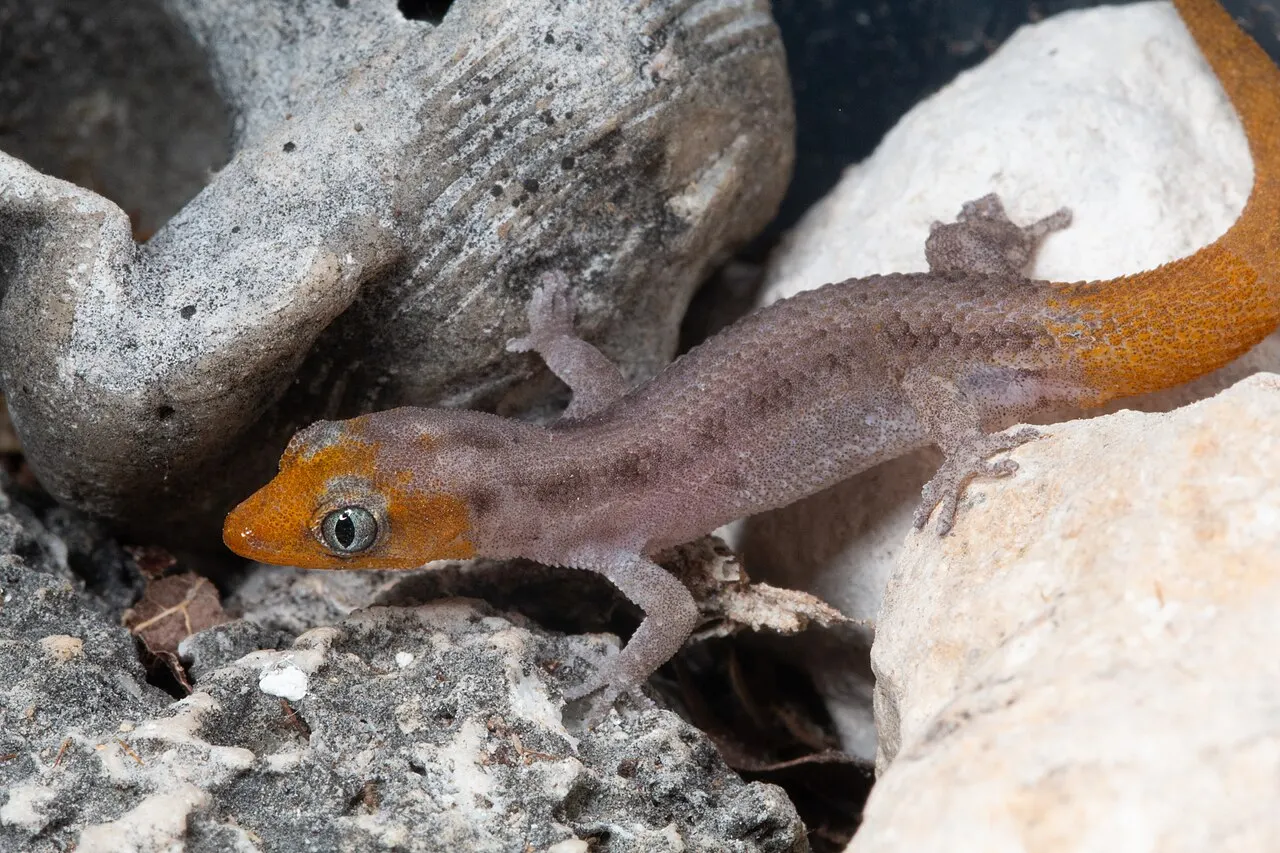
A 1980 study of 27 specimens by Schwartz and Eugene Graham found the largest male measured 31 mm from snout to vent and the largest female 32 mm. In life the back is a pale ground colour, from pink or almost lavender to very pale gray, with two brown to black lines running along it. A Y-shaped brown mark usually sits on the back of the head. Males have a yellow head and snout, and adults of both sexes have a yellow tail, brighter in males.
Where it lives
The species is endemic to the Dominican Republic, on the island of Hispaniola, and is tied to the Valle de Neiba, a dry valley in the south-west. The first specimens came from about 5 km south-east of La Florida in Independencia Province, at roughly 150 m above sea level. In 1980 the known localities stretched from near Las Lajas on the Haitian border east to the Angostura area, on both sides of Lago Enriquillo.
The IUCN gives its extent of occurrence as about 1,454 square kilometres and records it from sea level up to 150 m, in subtropical or tropical dry forest. A close relative, Sphaerodactylus leucaster, takes over in neighbouring parts of the Valle de Neiba and the Llanos de Azua. The two have complementary ranges, meaning one replaces the other across the ground rather than overlapping.
Pins are Wikidata “endemic to” fields. Orange dots, when present, are GBIF occurrence tiles — survey bias included.
How it lives
Little is recorded. The type series was found in the fallen thatch of a construction crew's shack at the foot of the Sierra de Baoruco, where the geckos were fairly common, especially where the thatch met the limestone below and inside the dry folded bases of palm fronds. Other individuals were found under dry palm siding at an abandoned shack near a gypsum mine and in a pile of palm trunk cuttings in dry scrub.
Schwartz noted in 1980 that he had never collected the species in an undisturbed setting despite searching the dry valley. Diet and breeding are not documented in the sources found.
Why it is in trouble
The IUCN assessment describes the population as decreasing and severely fragmented, with its habitat still shrinking. The named threats are small-holder farming and the unintentional effects of small-scale harvesting, both listed as affecting the whole population (more than 90 percent). The stresses involved are the conversion and degradation of its dry forest.
The assessment gives no estimate of how many animals remain. Museum and observation records are scarce too: the global biodiversity database GBIF held only 34 records in late 2026, nearly all of them preserved specimens.
What is being done
The gecko is known to occur in at least one protected area in the Dominican Republic. The assessment lists no species-specific conservation actions. Protecting what is left of the Neiba valley's dry forest is the most direct help it could get.
Sources
Written for this catalog in our own words from the sources below, checked against them on 12 November 2026. Population figures are estimates and carry the year they were made. Status and assessment year: IUCN. 2026. The IUCN Red List of Threatened Species. Version 2026-1. iucnredlist.org.
- IUCN Red List assessment, Sphaerodactylus rhabdotus
- Schwartz and Graham 1980, The shrevei group of Hispaniolan Sphaerodactylus (Tulane Studies in Zoology and Botany 22)
- Reptile Database, Sphaerodactylus rhabdotus
- GBIF species page, Sphaerodactylus rhabdotus
- Sphaerodactylus rhabdotus (encyclopedia article)