Squamata in crisis
334 records. Red List version 2026-1
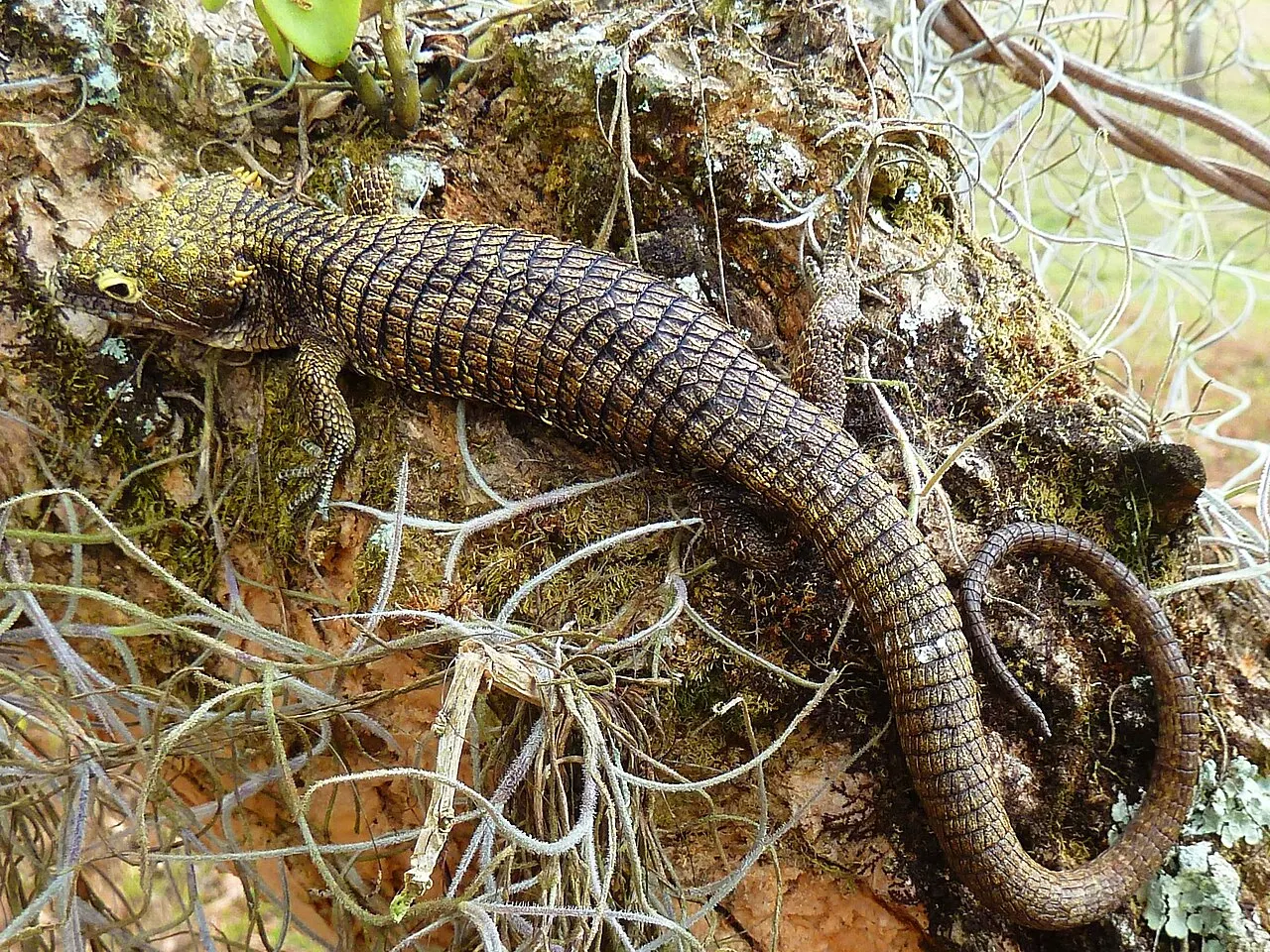
In this catalog, Squamata stands for lizards and snakes. We list 334 lizards and snakes that the IUCN Red List records as threatened enough to be Critically Endangered, Endangered or Extinct in the Wild: 96 Critically Endangered, 236 Endangered and 2 Extinct in the Wild.
A class is a filing shelf, not a measure of risk: it says nothing about how fast any one species is declining. Status and assessment years come from the IUCN Red List (version 2026-1); how to read an IUCN assessment explains what the categories and criteria mean, and each record links to its own assessment.
Some of these animals are also kept or traded as pets. For the legal side in each US state, see exotic pet laws by state.
Status breakdown
334 records: Critically Endangered 96; Endangered 236; Extinct in the Wild 2.
All species
Unplaced (334)
- Abronia campbelli CR
- Abronia fuscolabialis EN
- Abronia graminea EN
- Acanthodactylus harranensis CR
- Acontias rieppeli EN
- Adelaide pigmy blue-tongue skink Tiliqua adelaidensis EN
- Adelphicos daryi EN
- Aeolian Wall Lizard Podarcis raffonei EN
- Ahaetulla perroteti EN
- Alsophis antiguae CR
- Ameivula nativo EN
- Amphisbaena supernumeraria EN
- Andaman cobra Naja sagittifera EN
- Anolis amplisquamosus CR
- Anolis bicaorum CR
- Anolis cooki EN
- Anolis cusuco CR
- Anolis eugenegrahami CR
- Anolis monteverde CR
- Anolis nelsoni CR
- Anolis proboscis EN
- Anolis roatanensis EN
- Anolis rubribarbus EN
- Anolis sminthus EN
- Anolis utilensis CR
- Antilles racer Alsophis antillensis CR
- antsingy leaf chameleon Brookesia perarmata EN
- Aristelliger reyesi CR
- Asaccus caudivolvulus CR
- Aspidura ravanai CR
- Aspidura trachyprocta EN
- Atheris desaixi EN
- Atractus duboisi EN
- Aurelio's Rock Lizard Iberolacerta aurelioi EN
- Barbados Leaf-toed Gecko Phyllodactylus pulcher CR
- Barisia rudicollis EN
- Barrier skink Oligosoma judgei CR
- Bavayia cyclura EN
- Bavayia exsuccida CR
- Bavayia sauvagii EN
- Be'er Sheva Fringe-fingered Lizard Acanthodactylus beershebensis CR
- Bitis parviocula EN
- blue iguana Cyclura lewisi EN
- Blue Mountain Water Skink Eulamprus leuraensis EN
- Blue-tailed Skink Cryptoblepharus egeriae EW
- Boiga andamanensis EN
- Bojer's skink Gongylomorphus bojerii CR
- Bothriechis thalassinus EN
- Bothrops caribbaeus EN
- Bothrops insularis CR
- Bothrops lanceolatus EN
- Bothrops muriciensis CR
- Brachylophus bulabula EN
- Brachylophus gau EN
- Brookesia decaryi EN
- Brookesia desperata CR
- Brookesia karchei EN
- Brookesia minima EN
- Brookesia peyrierasi EN
- Brookesia ramanantsoai EN
- Brookesia tristis EN
- Calotes liocephalus EN
- Calotes nigrilabris EN
- Calumma andringitraensis Calumma andringitraense EN
- Calumma furcifer EN
- Calumma gallus EN
- Calumma glawi EN
- Calumma tarzan EN
- Cape Melville leaf-tailed gecko Saltuarius eximius EN
- Caribicus anelpistus Celestus anelpistus CR
- Celestus occiduus CR
- Ceratophora aspera EN
- Ceratophora erdeleni CR
- Ceratophora stoddartii EN
- Ceratophora tennentii EN
- Chinese crocodile lizard Shinisaurus crocodilurus EN
- Chioninia vaillantii EN
- Cnemaspis flaviventralis EN
- Cnemaspis paripari CR
- Cnemaspis tropidogaster CR
- Cnemaspis yercaudensis EN
- Coachella Valley fringe-toed lizard Uma inornata EN
- Coleodactylus natalensis EN
- Cophotis ceylanica EN
- Cophotis dumbara CR
- Corallus annulatus blombergi Corallus blombergi EN
- Corallus cropanii EN
- Crotalus catalinensis CR
- Crotalus pusillus EN
- Ctenosaura bakeri CR
- Ctenosaura melanosterna EN
- Ctenosaura oaxacana CR
- Ctenosaura oedirhina EN
- Ctenosaura palearis EN
- Cyclodomorphus praealtus EN
- Cyclura collei CR
- Cyclura pinguis CR
- Cyclura ricordii EN
- Cyclura rileyi EN
- Cyrtodactylus brevidactylus EN
- Cyrtodactylus chanhomeae CR
- Cyrtodactylus nigriocularis CR
- Darevskia kopetdaghica EN
- Darevskia rostombekowi EN
- Dhlinza dwarf chameleon Bradypodion caeruleogula EN
- Dierogekko nehoueensis EN
- Dixonius kaweesaki CR
- Echinanthera cephalomaculata CR
- Emoia boettgeri EN
- Emoia samoensis EN
- Emoia slevini CR
- Enyalioides altotambo EN
- Eremias pleskei CR
- Erythrolamprus triscalis EN
- Eurolophosaurus amathites EN
- Eutropis clivicola EN
- Fiji Banded Iguana Brachylophus fasciatus EN
- Fiji Crested Iguana Brachylophus vitiensis CR
- Flat-tailed day gecko Phelsuma serraticauda EN
- Forest spotted gecko Cyrtodactylus speciosus EN
- Furcifer balteatus EN
- Furcifer belalandaensis CR
- Furcifer minor EN
- Furcifer nicosiai EN
- Galápagos Pink Land Iguana Conolophus marthae CR
- Gambelia sila EN
- Gekko lauhachindai CR
- Gerrhonotus parvus EN
- Giant Bronze Gecko Ailuronyx trachygaster CR
- Globe-horned chameleon Calumma globifer EN
- Golden Gecko Gekko badenii EN
- Gonatodes daudini CR
- Goniurosaurus bawanglingensis EN
- Goniurosaurus catbaensis EN
- Goniurosaurus huuliensis CR
- Goniurosaurus orientalis EN
- Goniurosaurus splendens EN
- Goniurosaurus yamashinae CR
- Goniurosaurus yingdeensis CR
- Goniurosaurus zhelongi EN
- Gran Canaria Giant Lizard Gallotia stehlini CR
- Gran Canaria Skink Chalcides sexlineatus EN
- Green Psammodromus Psammodromus microdactylus EN
- Green skink Oligosoma chloronoton EN
- Guatemalan beaded lizard Heloderma charlesbogerti EN
- Harpesaurus modiglianii EN
- Hemidactylus dracaenacolus CR
- Hemidactylus sataraensis CR
- Hemidactylus scabriceps EN
- Hemiphyllodactylus aurantiacus CR
- Hemiphyllodactylus titiwangsaensis EN
- Homonota uruguayensis EN
- Hypnale nepa EN
- Ialtris agyrtes EN
- Iberolacerta martinezricai EN
- Ibiza Wall Lizard Podarcis pityusensis EN
- Iguana delicatissima CR
- Iguana melanoderma CR
- Kanakysaurus viviparus EN
- Kentani dwarf chameleon Bradypodion kentanicum EN
- Kinyongia matschiei EN
- Kinyongia tenuis EN
- Kinyongia vosseleri EN
- Komodo dragon Varanus komodoensis EN
- La Gomera giant lizard Gallotia bravoana EN
- Lanthanotus borneensis EN
- Lebanon viper Montivipera bornmuelleri EN
- Leeward island racer Alsophis rijgersmaei EN
- Leiocephalus varius EN
- Leiolepis guentherpetersi EN
- Lepidoblepharis miyatai EN
- Lepidodactylus listeri EW
- Lepidodactylus tepukapili CR
- Leposternon octostegum EN
- Liolaemus aparicioi CR
- Liolaemus arambarensis EN
- Liolaemus curis CR
- Liolaemus fabiani EN
- Liolaemus isabelae EN
- Liolaemus leopardinus EN
- Liolaemus lorenzmuelleri EN
- Liolaemus lutzae CR
- Liolaemus multimaculatus EN
- Liolaemus paulinae CR
- Liolaemus stolzmanni EN
- Lissolepis coventryi EN
- Long-toed skink Oligosoma longipes EN
- Louisiana pinesnake Pituophis ruthveni EN
- Lucasium occultum EN
- Macrovipera schweizeri EN
- Madascincus arenicola CR
- Madascincus macrolepis EN
- Magombera chameleon Kinyongia magomberae EN
- Malayan Forest Gecko Cyrtodactylus pulchellus EN
- Marisora roatanae CR
- Masticophis anthonyi CR
- McGregor's pit viper Trimeresurus mcgregori EN
- Melanophidium khairei EN
- Mixcoatlus melanurus EN
- Mlanje Mountain chameleon Nadzikambia mlanjensis EN
- Mniarogekko jalu EN
- Mokopirirakau cryptozoicus EN
- Monte Cristo Arboreal Alligator Lizard Abronia montecristoi EN
- Morunasaurus groi EN
- mountain viper Montivipera albizona EN
- Naja peroescobari EN
- Natal Midlands Dwarf Chameleon Bradypodion thamnobates EN
- Naultinus gemmeus EN
- Naultinus manukanus EN
- Naultinus rudis EN
- Oligodon calamarius EN
- Oligosoma albornense CR
- Oligosoma awakopaka CR
- Oligosoma burganae CR
- Oligosoma elium EN
- Oligosoma grande EN
- Oligosoma homalonotum EN
- Oligosoma infrapunctatum CR
- Oligosoma levidensum EN
- Oligosoma lineoocellatum EN
- Oligosoma microlepis EN
- Oligosoma prasinum EN
- Oligosoma salmo CR
- Oligosoma toka EN
- Oligosoma waimatense EN
- Oligosoma whitakeri EN
- Ophisaurus ceroni EN
- Otago skink Oligosoma otagense EN
- Otocryptis beddomii EN
- Paroedura lohatsara CR
- Paroedura masobe EN
- Phelsuma rosagularis EN
- Phoenicolacerta kulzeri EN
- Phrynocephalus horvathi CR
- Phyllodactylus angustidigitus EN
- Phymaturus tenebrosus EN
- Platyplectrurus madurensis EN
- Plestiodon longirostris CR
- Pristidactylus casuhatiensis CR
- Proahaetulla antiqua EN
- Protobothrops mangshanensis EN
- Pseudoacontias menamainty CR
- Rhacodactylus trachycephalus CR
- Rhampholeon acuminatus CR
- Rhampholeon platyceps EN
- Rhampholeon temporalis EN
- Rhampholeon tilburyi EN
- rhinoceros iguana Cyclura cornuta EN
- Riama balneator EN
- Rim rock crown snake Tantilla oolitica EN
- Roatan coral snake Micrurus ruatanus CR
- Rosette-Nosed Chameleon Rhampholeon spinosus EN
- Réunion Island day gecko Phelsuma borbonica EN
- Réunion Island ornate day gecko Phelsuma inexpectata CR
- Saint Croix ground lizard Pholidoscelis polops EN
- Sarada superba CR
- Sauromalus hispidus EN
- Savigny's Fringe-fingered Lizard Acanthodactylus savignyi EN
- Scelotes inornatus CR
- Schreiber's Fringe-fingered Lizard Acanthodactylus schreiberi EN
- Scincella huanrenensis CR
- Seipp's day gecko Phelsuma seippi EN
- Seychelles house snake Lamprophis geometricus EN
- Sinbad skink Oligosoma pikitanga CR
- Sitana marudhamneydhal EN
- Small-eared skink Oligosoma stenotis EN
- Spanish Algyroides Algyroides marchi EN
- Sphaerodactylus callocricus CR
- Sphaerodactylus cochranae CR
- Sphaerodactylus epiurus CR
- Sphaerodactylus intermedius EN
- Sphaerodactylus oxyrhinus EN
- Sphaerodactylus parthenopion EN
- Sphaerodactylus perissodactylius EN
- Sphaerodactylus plummeri EN
- Sphaerodactylus randi EN
- Sphaerodactylus rhabdotus EN
- Sphaerodactylus schuberti CR
- Sphaerodactylus thompsoni EN
- Sphaerodactylus torrei EN
- Spondylurus powelli EN
- St Lucia Whiptail Cnemidophorus vanzoi CR
- St. Lucia Anole Anolis luciae EN
- St. Lucia threadsnake Tetracheilostoma breuili EN
- Stenocercus modestus EN
- Striped Legless Lizard Delma impar EN
- Synophis bicolor EN
- Takydromus dorsalis EN
- Tarentola gigas EN
- Tenerife speckled lizard Gallotia intermedia EN
- Teratoscincus rustamowi EN
- Terre-de-Haut racer Alsophis sanctonum EN
- terror skink Phoboscincus bocourti CR
- Tetracheilostoma carlae CR
- Thamnophis melanogaster EN
- Tiger chameleon Archaius tigris EN
- Toropuku stephensi EN
- Trachyboa gularis CR
- Transkei Dwarf Chameleon Bradypodion caffer EN
- Trimeresurus kanburiensis EN
- Trimeresurus truongsonensis EN
- Trioceros pfefferi EN
- Tropidophis caymanensis CR
- Tukutuku rakiurae EN
- Turks and Caicos rock iguana Cyclura carinata EN
- Turquoise dwarf gecko Lygodactylus williamsi CR
- Tympanocryptis condaminensis EN
- Tympanocryptis pinguicolla EN
- Tympanocryptis wilsoni EN
- Uma exsul EN
- Uromastyx thomasi EN
- Uropeltis shorttii CR
- Uroplatus guentheri EN
- Urosaurus auriculatus EN
- Varanus auffenbergi EN
- Varanus flavescens EN
- Varanus mabitang EN
- Varanus macraei EN
- Varanus melinus EN
- Varanus mertensi EN
- Varanus mitchelli CR
- Venerable collared lizard Crotaphytus antiquus EN
- Vipera anatolica CR
- Vipera darevskii CR
- Vipera kaznakovi EN
- Vipera magnifica EN
- Vipera orlovi CR
- Vipera pontica EN
- Wagner's Viper Montivipera wagneri CR
- West Usambara Two-horned Chameleon Kinyongia multituberculata EN
- Wynad day gecko Cnemaspis wynadensis EN
- Xenosaurus platyceps EN
- Yellow-headed day gecko Phelsuma klemmeri EN
- Yellow-throated day gecko Phelsuma flavigularis EN
The A to Z index lists the species with a full account; the catalog search finds any record by name.
Quick answers
- How many lizards and snakes are in this catalog?
- 334, listed by the IUCN Red List as 96 Critically Endangered, 236 Endangered, 2 Extinct in the Wild.
- What is Squamata?
- Here, Squamata means lizards and snakes. It is a taxonomic class used to group the catalog.
- Where do the statuses come from?
- From the IUCN Red List (version 2026-1), with a link to each species' assessment on iucnredlist.org.