Endangered
Ramanantsoa's Leaf Chameleon
Brookesia ramanantsoai
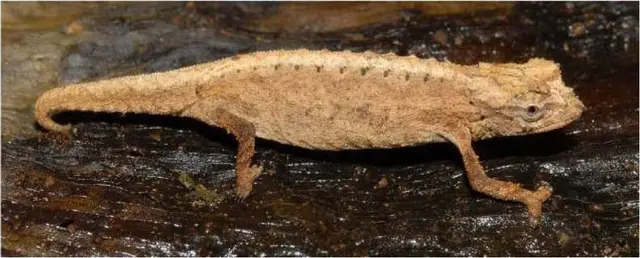
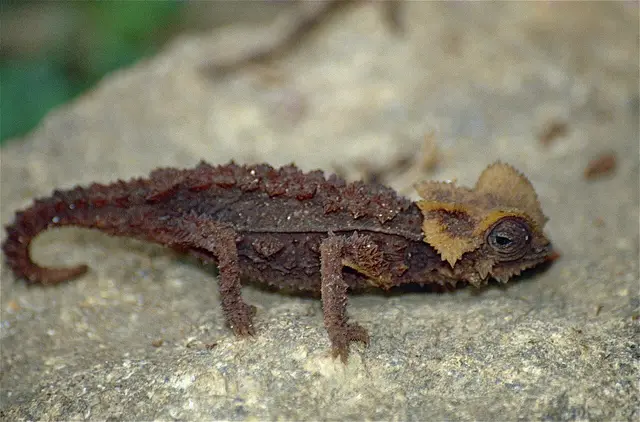
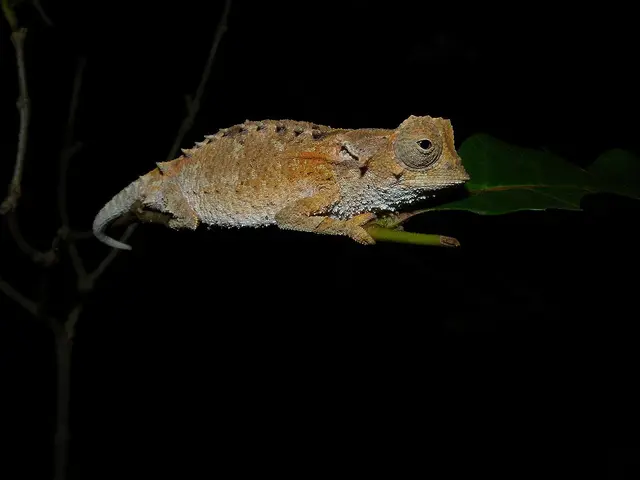
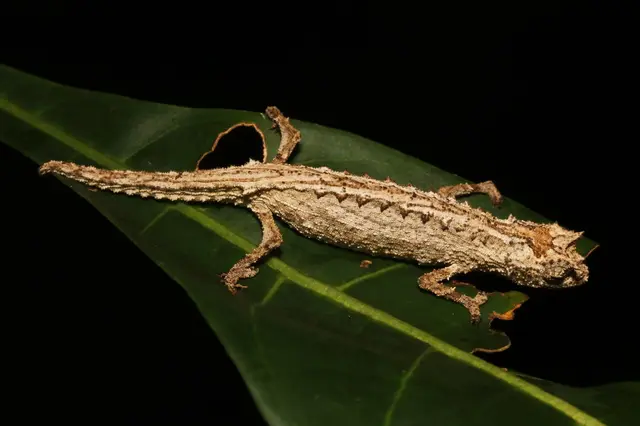
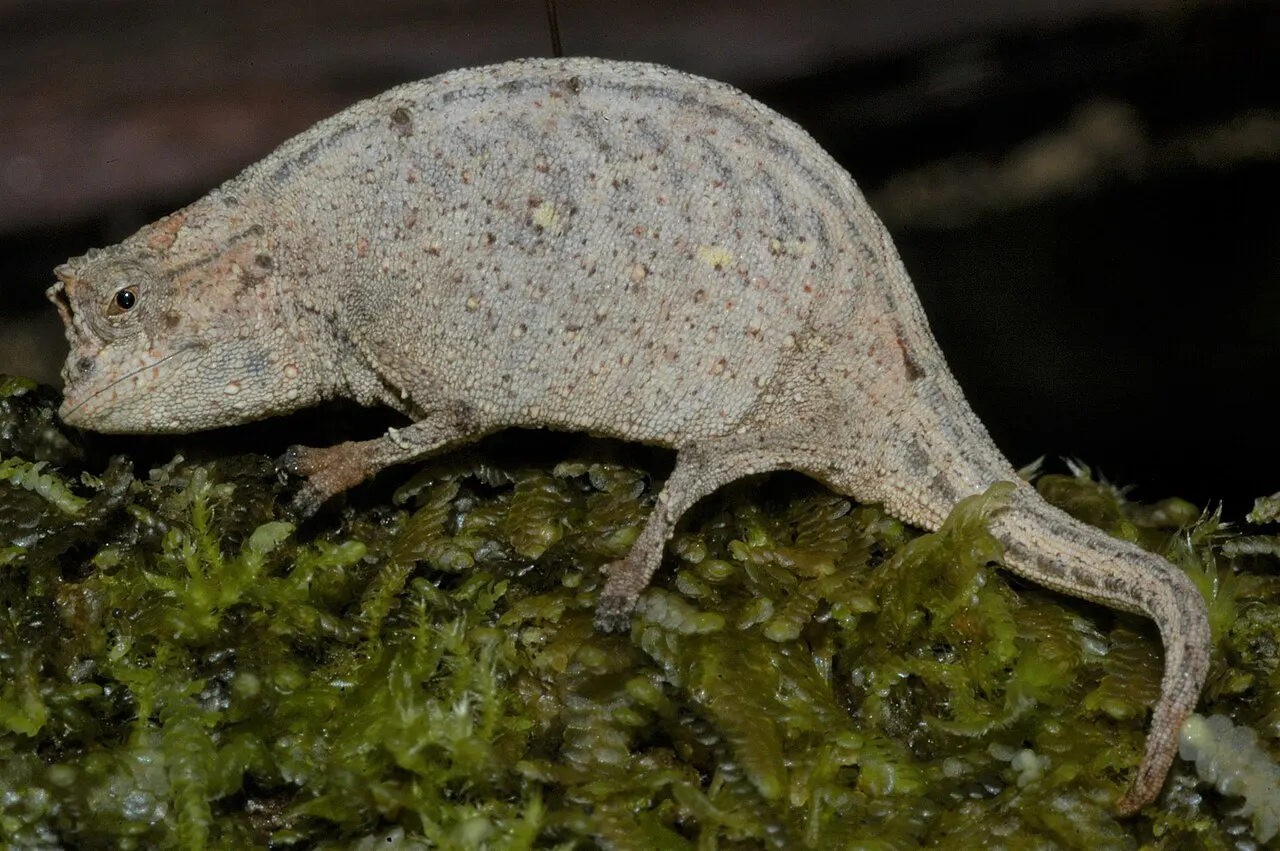
Brookesia ramanantsoai, Ramanantsoa's leaf chameleon, is a tiny forest chameleon from the eastern highlands of Madagascar. Adults measure only about 4 cm including the tail. The IUCN Red List rated it Endangered in 2011 because its forest is being cleared and it is known from very few places.
How to recognise it
This is one of the smallest chameleons. Total length, snout to tail tip, is about 41 to 44 mm according to a keepers' reference site. It belongs to the Brookesia minima group of very small leaf chameleons. Instead of a pelvic shield it has two pelvic spines.
It looks much like Brookesia dentata. In 1995 Raxworthy and Nussbaum folded it into that species, but the Reptile Database now treats the two as clearly different, and a recent classification places it in the subgenus Evoluticauda.
Where it lives
The species is found only in Madagascar. It was described in 1975 by Brygoo and Domergue and named after Guy Ramanantsoa, a Malagasy zoologist who helped start the Beza Mahafaly reserve. The Reptile Database gives Ambohibooataba Forest as the type locality.
It lives in the eastern highlands at roughly 1,000 to 1,300 m. Reported sites include small forest patches near Mandraka, the Vohimana reserve and Tsinjoarivo, where a female was photographed in 2010. It was originally recorded in Andasibe-Mantadia National Park but has not been seen there since, according to the keepers' site. The Red List counts two locations and says the range is restricted.
Pins are Wikidata “endemic to” fields. Orange dots, when present, are GBIF occurrence tiles — survey bias included.
How it lives
It likes forest slopes with ferns and small delicate plants, where leaf litter and dead wood form a thinner layer than elsewhere. It sleeps on the higher, wide, mossy roots of large trees, as other leaf chameleons of its group do. Like other leaf chameleons it is thought to lay eggs, though that is inferred from relatives rather than observed. The Red List habitats include streams and moist lowland and montane forest, up to 1,300 m.
Why it is in trouble
The Red List names shifting agriculture, small-scale farming and unintended effects of local harvesting. All of them convert or degrade the forest. The trend is decreasing, though the population is not described as severely fragmented.
The keepers' site lists no legal export from Madagascar. Conservation needs listed are site management and protection of habitat, and no recovery plan or monitoring scheme was in place at the 2011 assessment.
Sources
Written for this catalog in our own words from the sources below, checked against them on 12 November 2026. Population figures are estimates and carry the year they were made. Status and assessment year: IUCN. 2026. The IUCN Red List of Threatened Species. Version 2026-1. iucnredlist.org.