Critically Endangered
Brookesia desperata
Brookesia desperata
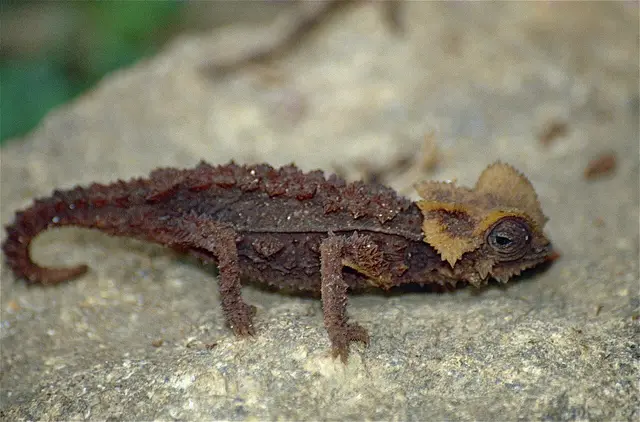
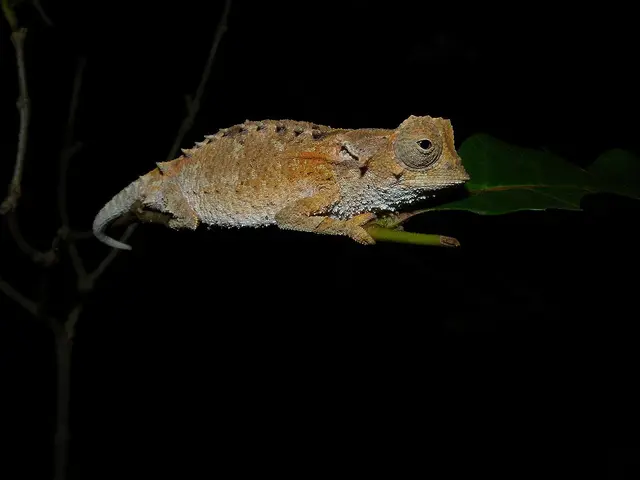
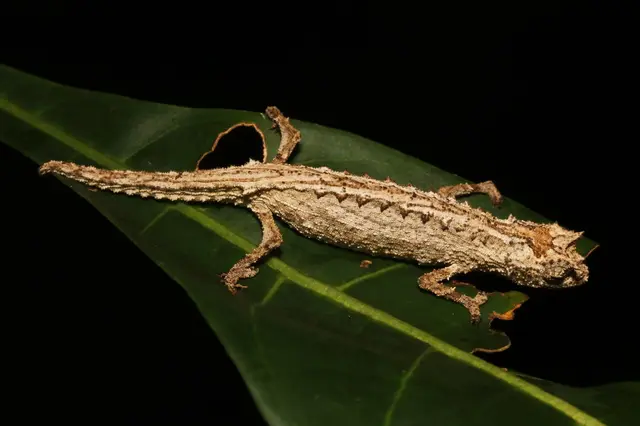
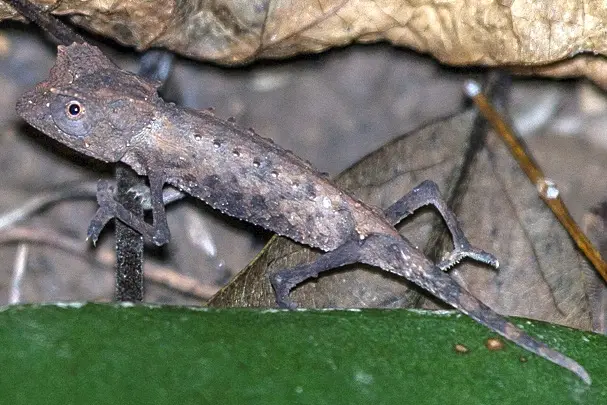
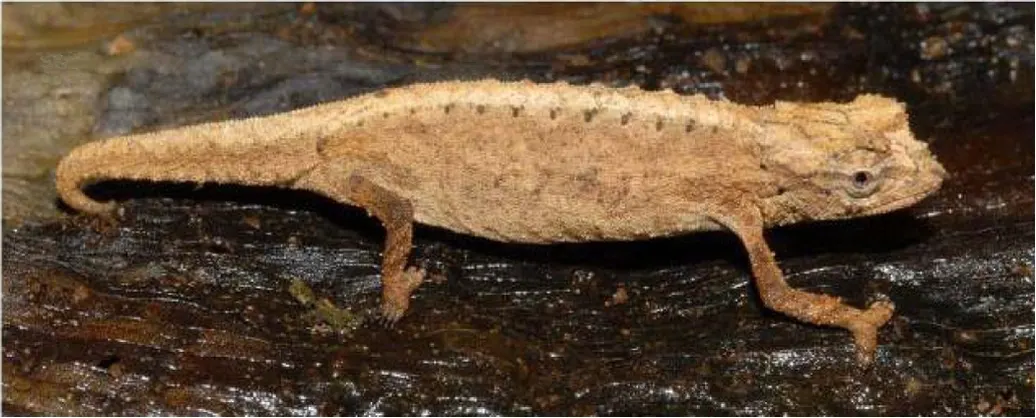
Brookesia desperata is a tiny leaf chameleon known only from the Forêt d'Ambre Special Reserve in northern Madagascar. The IUCN Red List (2014) rates it Critically Endangered. Scientists described it in 2012 and chose the Latin word for desperate as its name, to draw attention to the threat facing Madagascar's very small-range species.
How to recognise it
This is a miniature chameleon. In the 2012 description, adult males measured 25.0 to 26.7 mm from snout to vent, and females 27.3 to 30.0 mm. It belongs to the Brookesia minima group of miniaturised leaf chameleons, and is among the larger members of that group.
When relaxed, most of the body is beige, with a slightly paler patch on the head and back. When stressed, the head, back and tail turn light grey, with beige to dark brown flanks. Three enlarged tubercles on each side of the head separate it from its relatives, which have none, one or two. Its closest relative is Brookesia tristis.
Where it lives
It is a micro-endemic, known only from the Forêt d'Ambre area of the Montagne d'Ambre massif in far northern Madagascar. The type specimens came from the southern edge of the reserve, about 5 km southwest of Sakaramy village, at about 470 m above sea level.
The describers found it in disturbed rainforest and at the edges of forest clearings, including on banana plants, and the animals appeared to occur in high numbers there. At night they roost on small branches or leaves, about 5 to 100 cm above the ground.
Pins are Wikidata “endemic to” fields. Orange dots, when present, are GBIF occurrence tiles — survey bias included.
How it lives
Very little has been published about its biology. One female laid two large eggs while being held after capture. Diet and breeding season are not described in the sources reviewed.
Why it is in trouble
The reserve was set up decades ago, yet the 2012 describers called the habitat barely protected in practice and said it was suffering severe human-caused destruction. Forest is being cleared for crops, charcoal and timber, and small-scale quarrying and cattle grazing add to the loss.
The whole species lives in one small patch of forest, so any further clearing there could remove a large share of it. No population estimate has been published.
Brookesia chameleons are listed in CITES Appendix II, which means international trade is regulated.
Sources
Written for this catalog in our own words from the sources below, checked against them on 12 November 2026. Population figures are estimates and carry the year they were made. Status and assessment year: IUCN. 2026. The IUCN Red List of Threatened Species. Version 2026-1. iucnredlist.org.