Critically Endangered
Ceratophora erdeleni
Ceratophora erdeleni
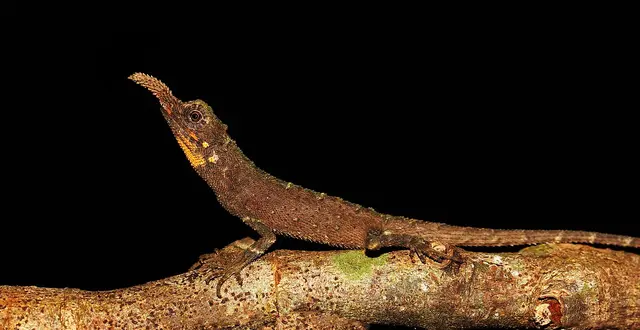
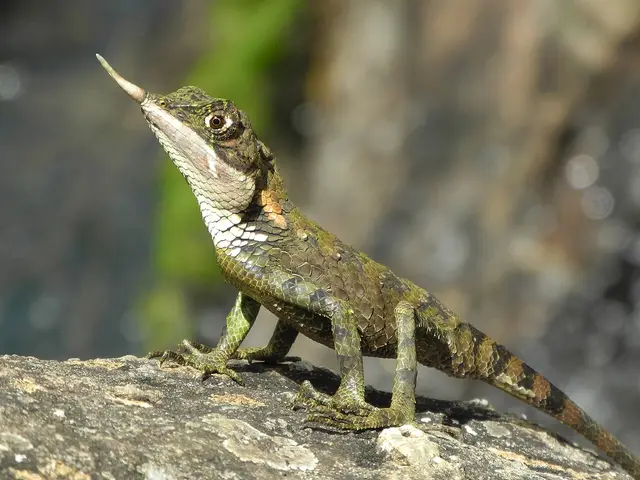
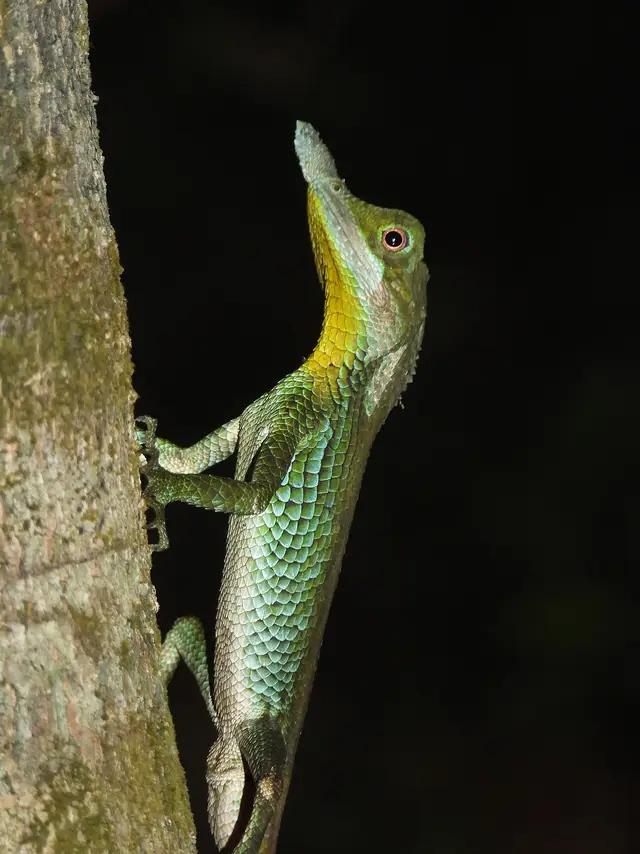
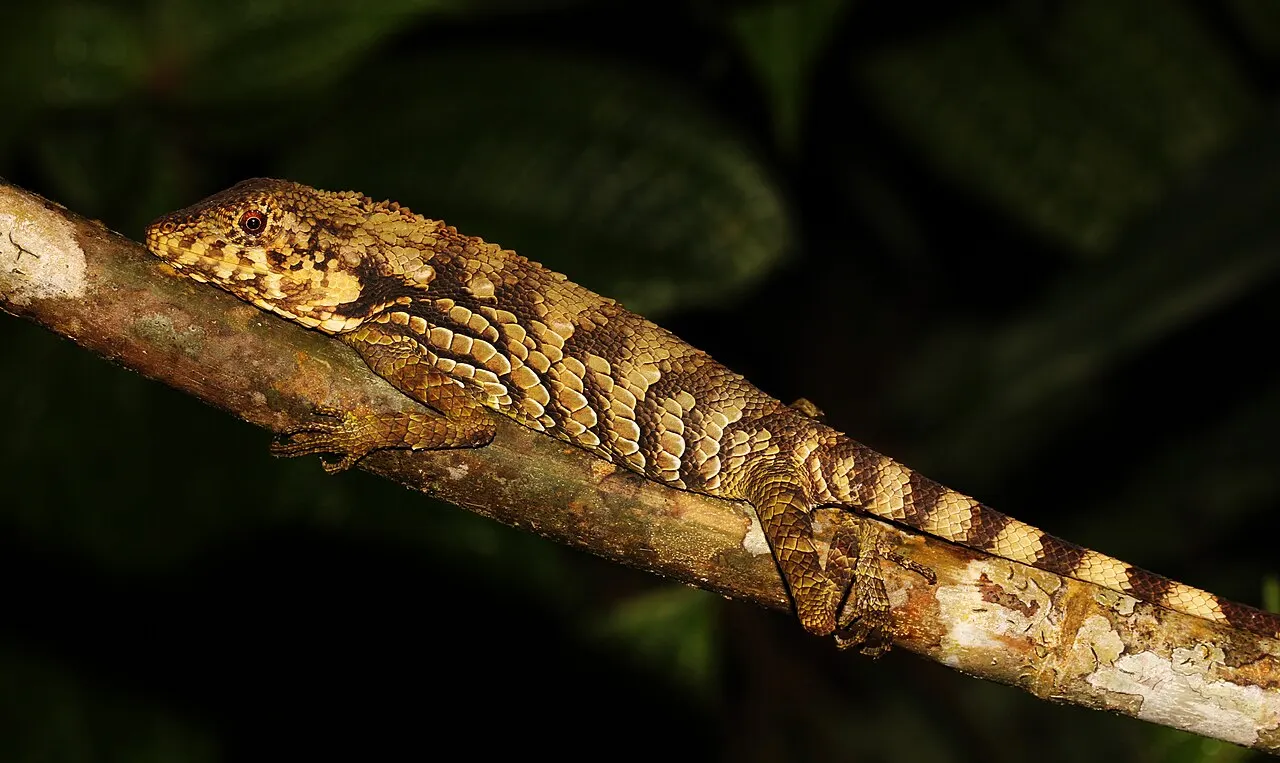
Erdelen's horned lizard (Ceratophora erdeleni) is a small tree-living lizard known only from one rainforest reserve in Sri Lanka. The IUCN Red List rated it Critically Endangered in 2021. Despite its name, its horn is only a rudimentary bump, and is sometimes missing entirely.
How to recognise it
Like its relatives, this agamid lizard belongs to the Sri Lankan horned lizards, but it has barely any horn. The snout appendage is rudimentary or absent in both sexes. Its closest relative, Ceratophora stoddartii, has a much longer one, which is the easiest way to tell the two apart.
Adults are yellow, light brown or reddish brown, with about 17 dark crossbands and a yellowish green belly. Juveniles are reportedly green with black bands. The eardrum is hidden under the skin.
Where it lives
The species is endemic to Sri Lanka and known only from Morningside Forest Reserve at the eastern edge of the Sinharaja forest, in the Rakwana Hills. It has been recorded at about 1,060 m, and the type locality is given as 1,000 to 1,300 m. It shares the reserve with another horned lizard, Ceratophora karu. The IUCN gives an extent of occurrence of just 23.9 square kilometres and counts a single location, in moist montane forest.
Pins are Wikidata “endemic to” fields. Orange dots, when present, are GBIF occurrence tiles — survey bias included.
How it lives
It is active by day and lives in trees. It lays eggs, and a female reportedly lays two to three at a time. Beyond this, its diet and daily habits have been little recorded.
Why it is in trouble
A tiny range leaves little room for error. The IUCN lists small-holder farming, mining and quarrying, tourism and recreation areas, pesticide and herbicide use, drought, and both deliberate and accidental collection as pressures, and records a continuing decline in the area of habitat. It also notes international trade in the species as pets or display animals.
The population trend is decreasing, and no population count has been published.
What is being done
Its single known site lies inside a protected forest reserve, and the IUCN assessment lists site protection, site management and habitat protection as actions. More survey work to learn how many animals survive would help, though no such program has been described.
Sources
Written for this catalog in our own words from the sources below, checked against them on 12 November 2026. Population figures are estimates and carry the year they were made. Status and assessment year: IUCN. 2026. The IUCN Red List of Threatened Species. Version 2026-1. iucnredlist.org.