Endangered
Rough-nosed horned lizard
Ceratophora aspera
The rough-nosed horned lizard (Ceratophora aspera) is a leaf-litter agamid from the wet forests of southern Sri Lanka, where males carry a horn-like growth on the snout. The IUCN Red List rated it Endangered in 2021, up from Vulnerable in 2010, as its forest shrinks and splits into patches.
How to recognise it
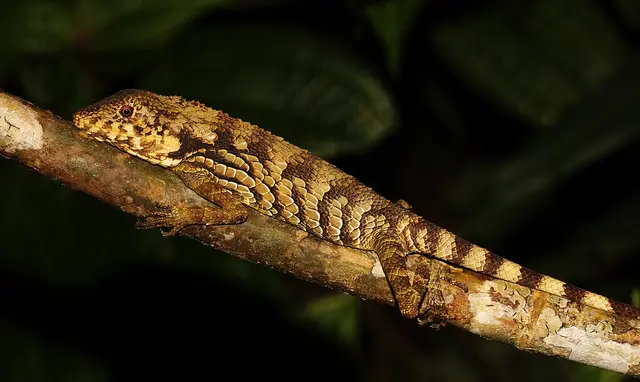
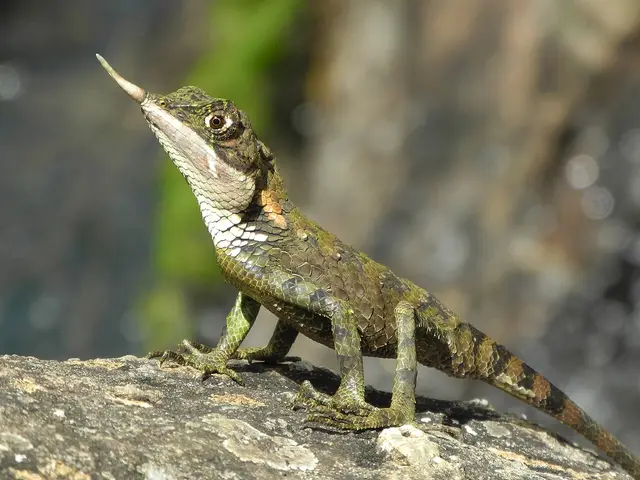
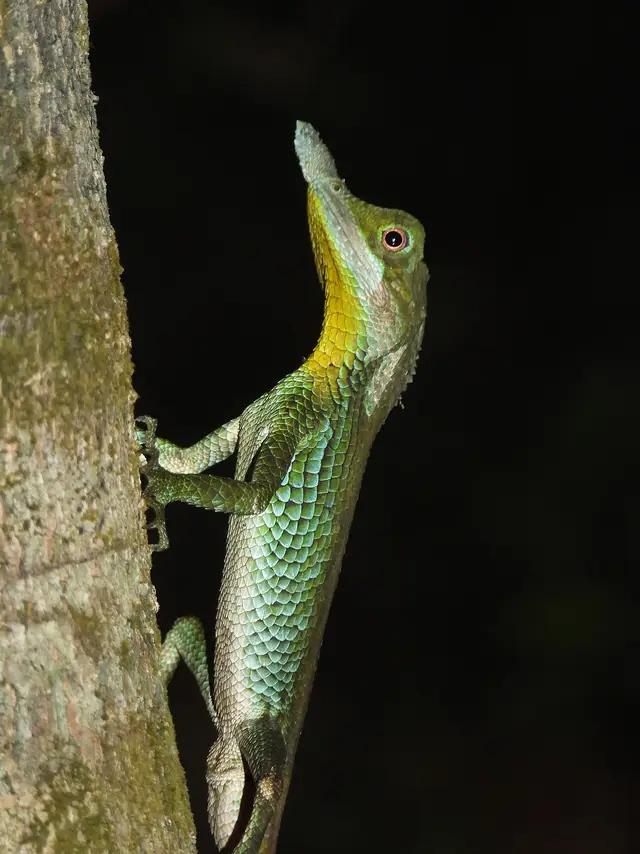
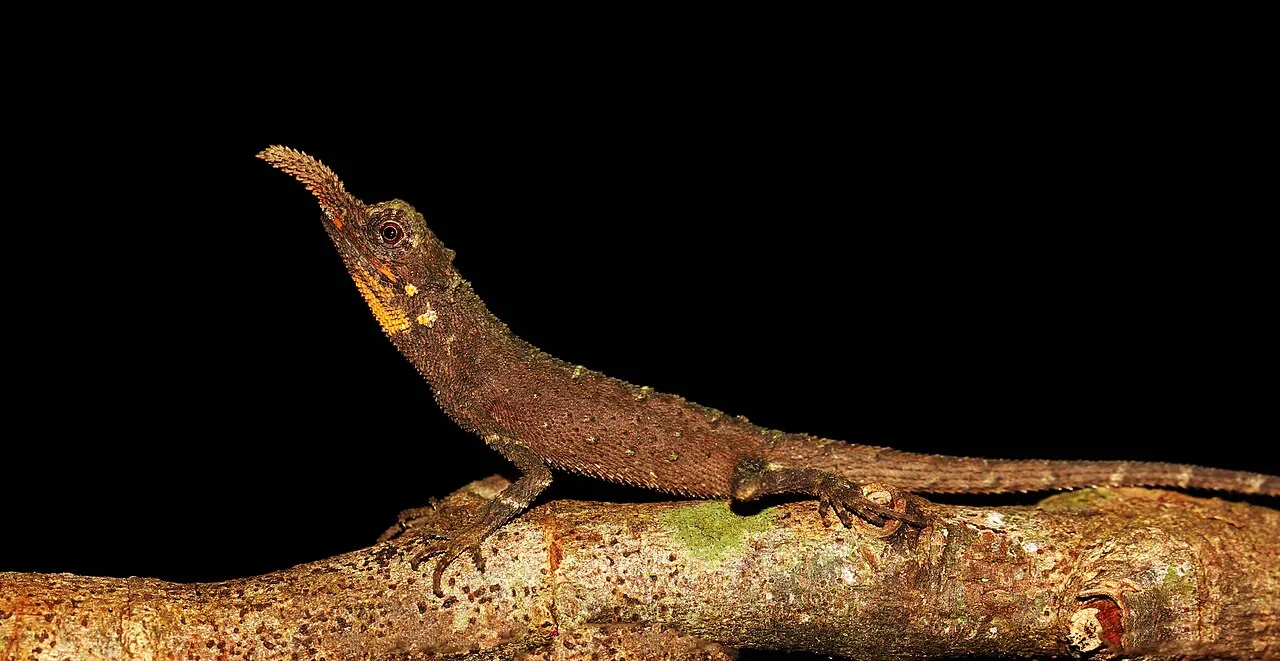
This is a slightly flattened lizard with a hidden eardrum, no throat fold, a weak crest on the neck and an X-shaped ridge on the back of the head. Males are dark brown or brick red. Females may look similar or paler, sometimes with diamond-shaped marks or dark spots and lines.
The snout is the giveaway. Males grow a complex rostral appendage, a horn built from several scales rather than one, which separates the species from its relatives in the genus Ceratophora. It develops when a male reaches sexual maturity. Females and young animals reportedly lack a prominent horn.
Where it lives
It is endemic to Sri Lanka and lives in moist lowland and submontane forest in the wet zone, including secondary forest. Records include Hiniduma, Kottawa, Hiyare and Kithulgala, and the IUCN gives an elevation range of 60 to 990 m. Its estimated extent of occurrence is only about 4,100 square km.
The Sinharaja area is reported to hold major populations, in a reserve where clearing and mining are more tightly controlled than elsewhere.
Pins are Wikidata “endemic to” fields. Orange dots, when present, are GBIF occurrence tiles — survey bias included.
How it lives
The lizard is mostly found on the forest floor, among leaf litter in well-shaded forest, usually in pairs. It eats small insects. A female lays two soft-shelled eggs at a time.
Why it is in trouble
A 2021 study in Biotropica sampled tail tips from eight forests and found four genetic groups: Southern Lowlands, Sabaragamuwa Hills, Central Highlands and Kithulgala. The IUCN calls the population severely fragmented, with the habitat area still declining, and gives its overall trend as unknown. No population count exists.
Threats listed by the IUCN include housing, small-holder farming, drought, temperature extremes and collection for the pet trade. A museum account says only about 5% of Sri Lanka's original moist lowland forest remains, and that clearing for crops such as tea has reduced lizard numbers in the region. The 2021 study also named climate change and predation by non-native cats and chickens as concerns.
What is being done
The lizard occurs in at least one protected area and is listed on CITES Appendix II, which controls international trade. The IUCN calls for site management, habitat protection and habitat restoration. The 2021 study suggested the Hiyare and Kottawa reserves as a restoration priority, since their lizard populations are close together and reconnecting them could increase interbreeding and genetic diversity.
Sources
Written for this catalog in our own words from the sources below, checked against them on 12 November 2026. Population figures are estimates and carry the year they were made. Status and assessment year: IUCN. 2026. The IUCN Red List of Threatened Species. Version 2026-1. iucnredlist.org.