Sri Lanka
9 catalog pins
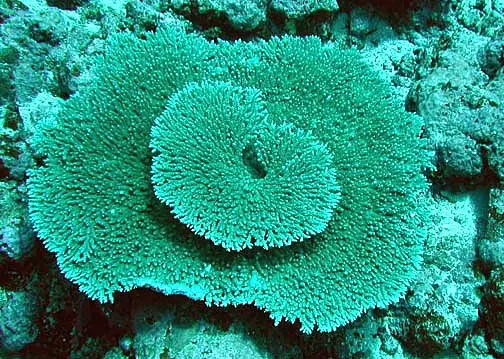
9 animals in this catalog carry a structured country pin for Sri Lanka. That is a filing fact, not a claim that the crisis is only here.
The photograph is one of those animals: Acropora glauca. Open a dossier for the text, the status, and the map. Use the world map to jump to another country. Confirm official distributions on the Red List.
Sri Lanka is a tropical island south of India, with a wet zone in the south-west and central mountains that gets about 2,500 millimetres of rain a year. That zone is a quarter of the land but holds 88 percent of the flowering plants and 95 percent of the flowering plant endemics, according to a wildlife overview.
Endemism is high. The CBD country profile says 43 percent of indigenous vertebrates (excluding marine forms) are endemic, with the highest rates among amphibians, freshwater fish and reptiles. An updated species table released in 2021 lists 107 of 120 amphibians as endemic (about 92 percent), though the same source gives other totals elsewhere in its text. The montane rain forests above 1,000 metres cover about 3,066 square kilometres and, by one summary, hold about half the island's endemic flowering plants and 51 percent of its endemic vertebrates.
Where the pressure comes from
The CBD profile names habitat loss, fragmentation and degradation, overexploitation, pollution, human-wildlife conflict and invasive species, and calls deforestation the most serious threat to terrestrial biodiversity. Closed-canopy forest fell to 22.5 percent of land by 1999, and coral mining for the lime industry has damaged reefs. Clearing of forest for coffee and later tea began in 1820, and almost 18 percent of the island's forest cover was lost between 1990 and 2005. Invasive plants are described as a major threat to montane wildlife, and large-scale cardamom cultivation threatens forest in the Knuckles range.
These losses fall on animals with very small ranges. The horned lizards of the genus Ceratophora are a group of six species, all found only in Sri Lanka. Three of them, C. aspera, C. stoddartii and C. tennentii, appear in this catalog.
What is being done
The CBD profile says about 28 percent of land lies within reserves, covering roughly 60 percent of closed-canopy natural forest (year not stated). The Biodiversity Conservation Action Plan was approved by Cabinet in 1998 and published in 1999, with an addendum in 2007, though the profile says it has not been implemented holistically. Named montane sites include Horton Plains National Park (about 20 square kilometres) and the Knuckles range protected area (about 217 square kilometres).
Reading the catalog for Sri Lanka
Squamata (lizards) at 4 is the largest class in the catalog's list for Sri Lanka, and Agamidae, the agamid lizards, is the leading family at 4, out of 9 records. All 9 are Endangered. Insects (2 records), a reef coral, a catfish and a stingray make up the rest. With only 9 records, the list is a sample of what the Red List has assessed, not a measure of how many of the island's endemic species are at risk.
Sources for this section
- CBD country profile, Sri Lanka: Endemism, forest loss, protected area share, action plan dates
- Wildlife of Sri Lanka (Wikipedia): Wet zone share, 2021 endemism table
- Sri Lanka montane rain forests (Wikipedia): Ecoregion area, endemics, forest loss 1990 to 2005, Horton Plains, Knuckles
- Ceratophora (Wikipedia): Six species, all Sri Lankan
What the catalog records for Sri Lanka
The catalog has 9 animals with a country pin for Sri Lanka: 9 Endangered. By GBIF class the largest groups are Squamata (4), Insecta (2), Anthozoa (1), unknown (1). The families with the most records are Agamidae (4), Acroporidae (1), Coenagrionidae (1). A pin means a structured source (Wikidata or a GBIF match) places the animal in Sri Lanka; it does not say the animal lives only there.
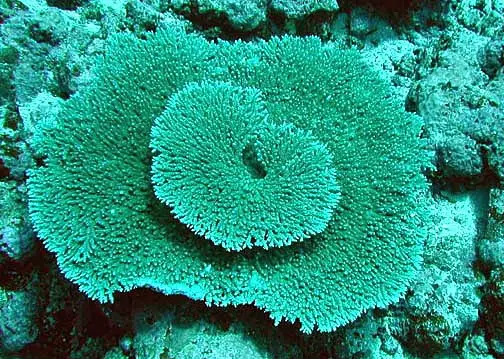 EN
Acropora glauca
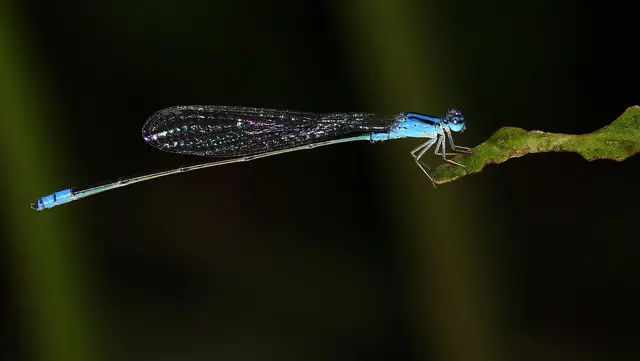 EN
Lieftinck's Sprite
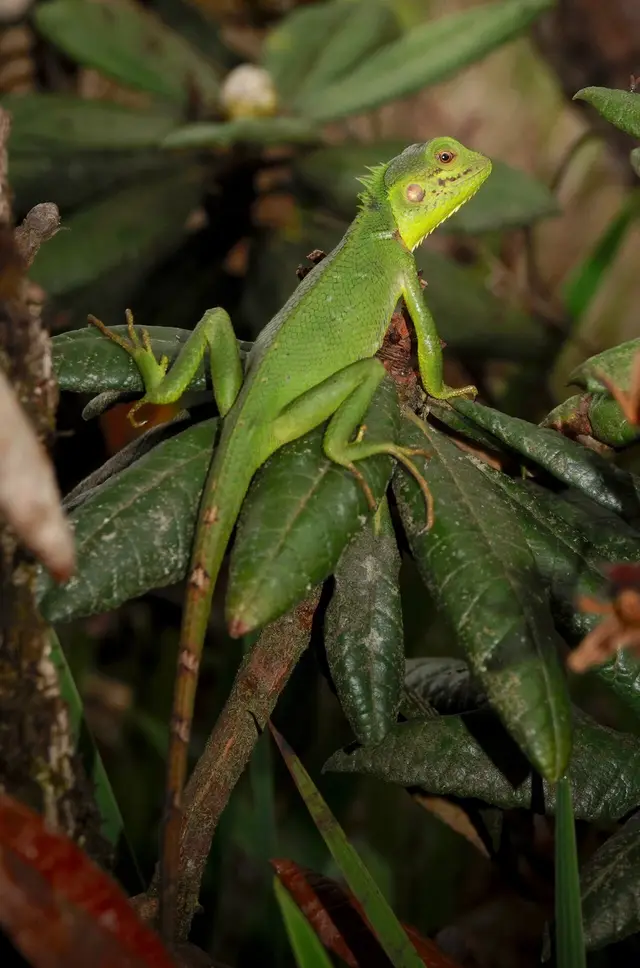 EN
Calotes nigrilabris
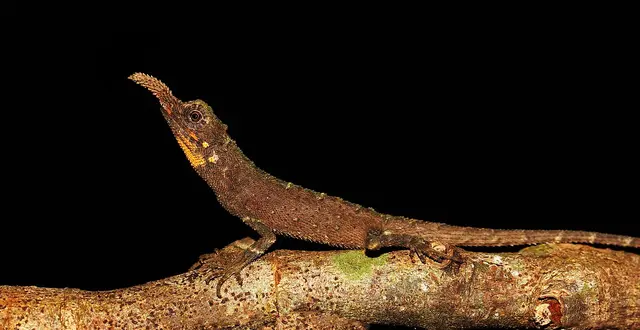 EN
Rough-nosed horned lizard
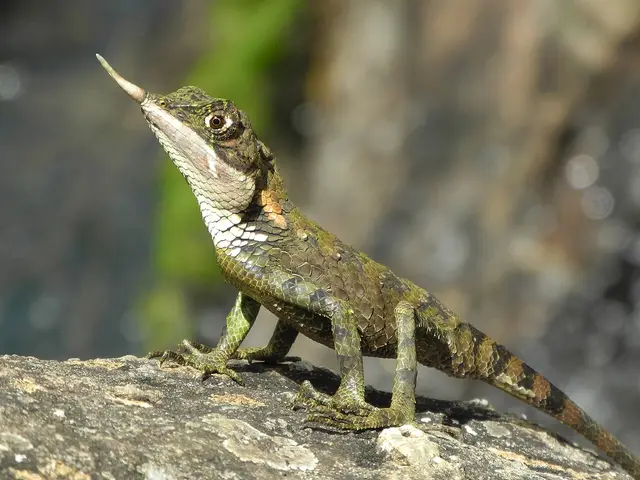 EN
Rhino-horned lizard
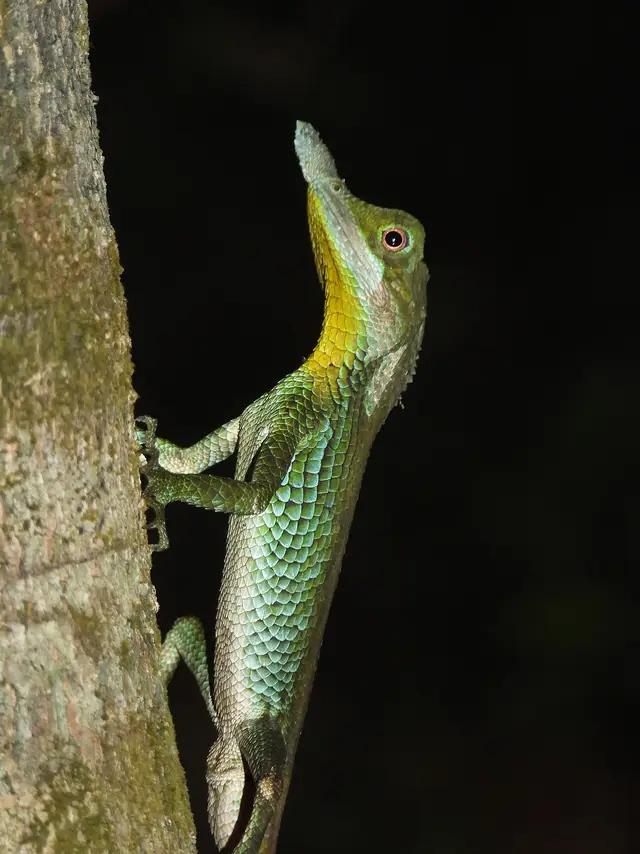 EN
Leaf-nosed lizard
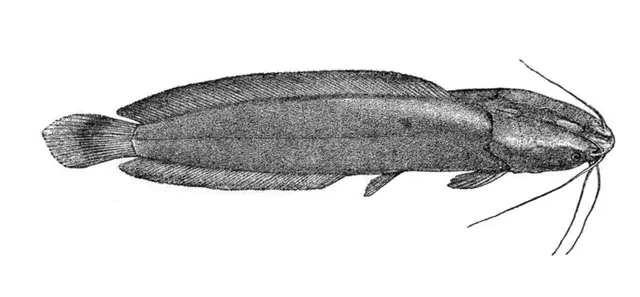 EN
Wagur
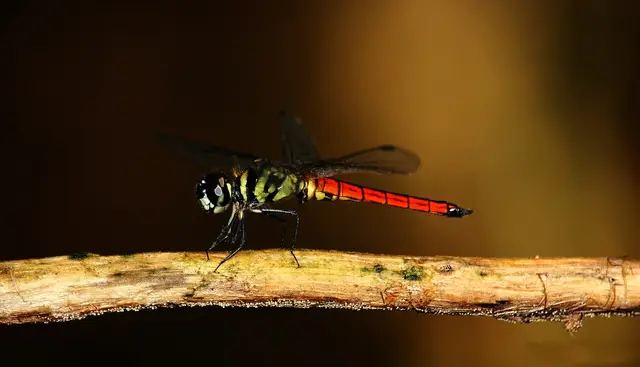 EN
Vermilion Forester
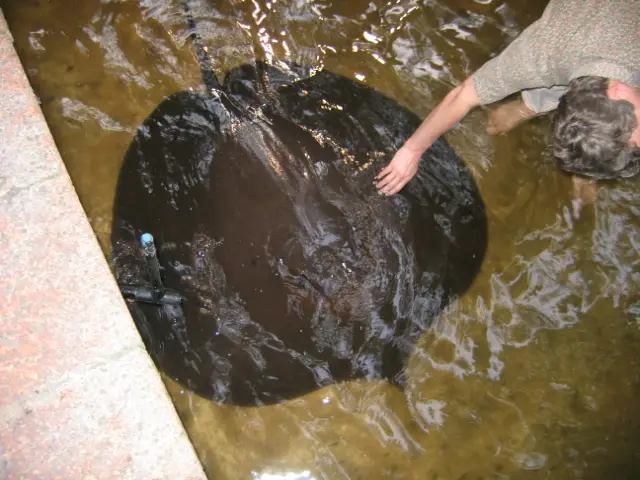 EN
Giant freshwater stingray
Total pins: 9.
Quick answers
- Do all these animals live only in Sri Lanka?
- No. A pin means a Wikidata place field resolved here. Official ranges can be wider.
- Is this a government list?
- No. It is a slice of this catalog.