Endangered
Vermilion Forester
Lyriothemis defonsekai
The vermilion forester (Lyriothemis defonsekai) is a small dragonfly found only in the rainforests of southwestern Sri Lanka. It was recognised in 2007 and described in 2009. The IUCN Red List lists it as Endangered (2021 assessment), and Sri Lanka's national list rates it Critically Endangered.
How to recognise it
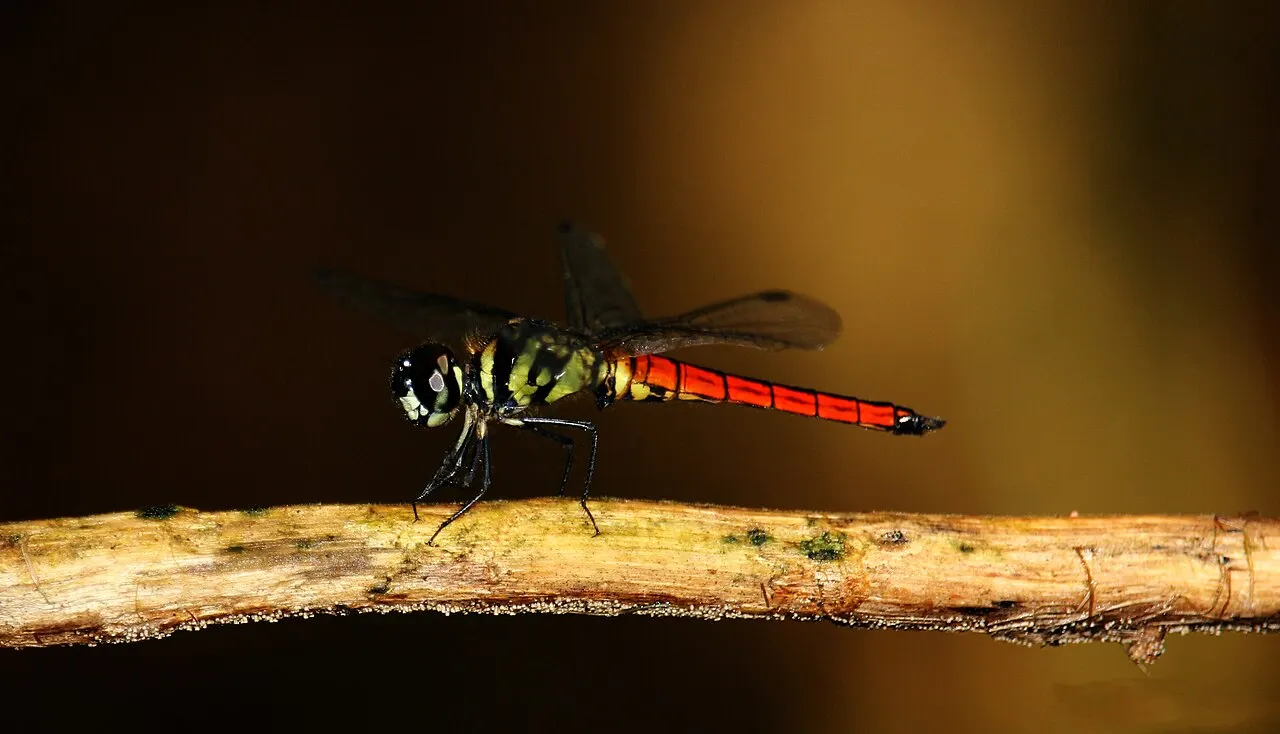
Mature males are the showy ones, with a bright vermilion-red abdomen and a yellow thorax marked with slanting black stripes. The overall effect is red, golden-yellow and black. Immature males look different, with a yellow abdomen. It is the only member of its genus on the island.
Where it lives
The first specimen came from near Kudawa in the Ratnapura District, inside the Sinharaja Man and Biosphere Reserve. Earlier records all came from that area, at 500 to 700 m, in hilly semi-disturbed dipterocarp forest with bamboo and tree ferns, near a perennial stream with pitcher plants and old abandoned paddy fields.
In 2015 an immature male and a mature female were found at Yagirala Forest Reserve at only 42 m, about 27.5 km southwest of the type locality. The IUCN gives its overall elevation range as 20 to 600 m and describes the habitat as lowland rainforest, swamp forest, marshes and permanent streams. It has not been recorded in forest gaps far from marshy or stagnant water. A 2016 report in the Journal of Threatened Taxa suspects it occurs in other lowland forests between the two sites and suggests surveys of reserves such as Morapitiya-Runakanda, Kalugala and Haycock.
Pins are Wikidata “endemic to” fields. Orange dots, when present, are GBIF occurrence tiles — survey bias included.
How it lives
Adults fly from April to November. They are usually found along forest paths with partial canopy cover, close to marshes, rain pools or slow streams. The 2015 Yagirala dragonflies were perched on bamboo, about 1.5 to 2 m above the ground. The larvae haven't been found. One suggestion is that they develop in water held by plants, but that remains a guess, and where it breeds is still unknown.
Why it is in trouble
The IUCN criteria rest on a small range: an extent of occurrence of roughly 1,369 to 2,838 square km and an area of occupancy of 88 to 500 square km, with a severely fragmented population and a continuing decline in habitat. The population trend is decreasing. Listed threats include habitat shifting and alteration and the abstraction of surface water, though the scale of each is unknown.
What is being done
It occurs in at least one protected area, and the type locality lies inside the Sinharaja Man and Biosphere Reserve. The IUCN lists site protection, habitat restoration, awareness work and action at national and sub-national levels as conservation measures needed, and further research on its numbers, ecology, threats and actions as a priority.
Sources
Written for this catalog in our own words from the sources below, checked against them on 12 November 2026. Population figures are estimates and carry the year they were made. Status and assessment year: IUCN. 2026. The IUCN Red List of Threatened Species. Version 2026-1. iucnredlist.org.




