Endangered
Wagur
Clarias magur
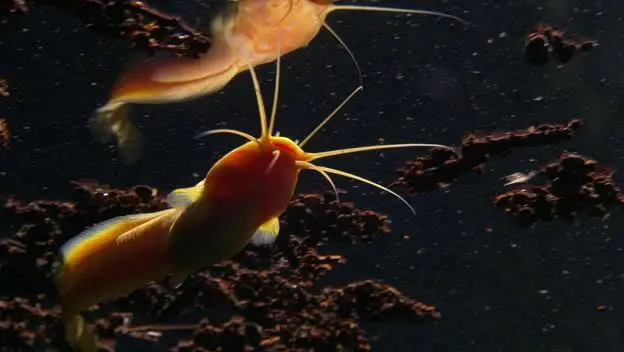
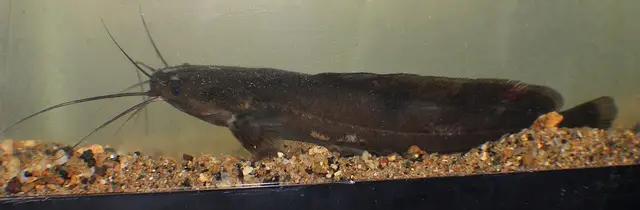
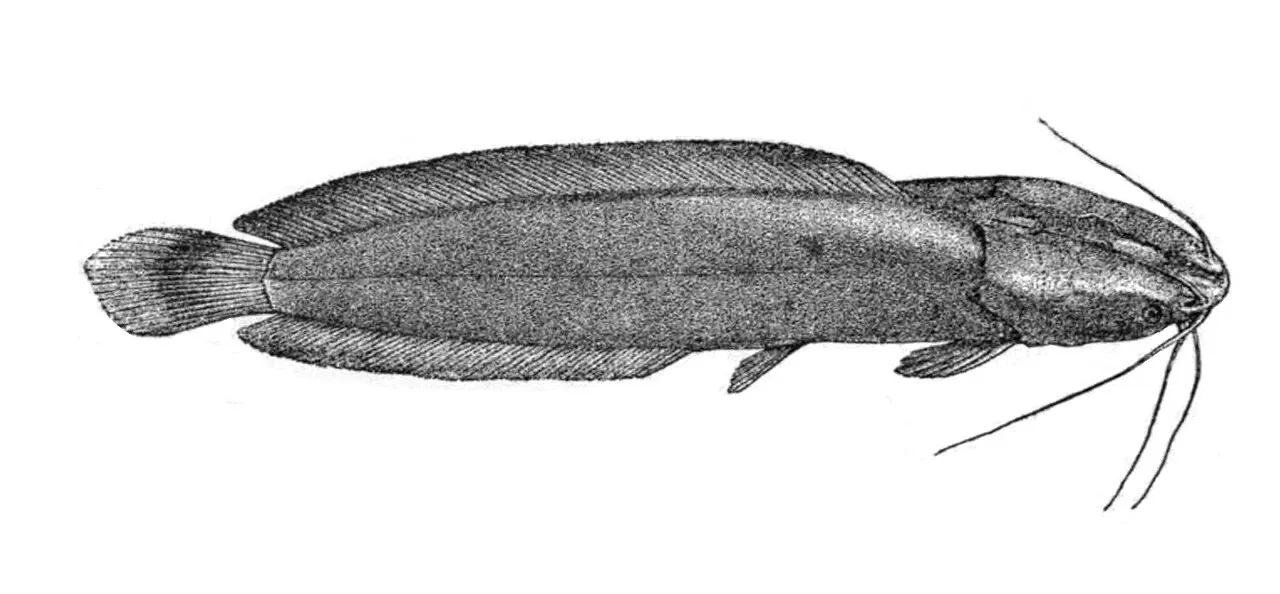
The wagur or magur (Clarias magur) is a freshwater catfish of northern and north-eastern India, Bangladesh and Nepal that can breathe air. The IUCN Red List rated it Endangered in 2010. It is a favourite food fish, and heavy harvest, pesticides and introduced African catfish are among the pressures on wild numbers.
How to recognise it
Magur is a bottom-dwelling catfish in the family Clariidae. Like other clariids it can breathe air when it needs to, and the genus name Clarias comes from a Greek word referring to how long these fish can live out of water. One difference from its relative Clarias batrachus is the pectoral spine: in magur the front edge has distinct serrations, while in C. batrachus it is rough and irregularly bumpy.
Francis Buchanan-Hamilton described it in 1822, and the common names are many. Magur is used in Bengali, Nepali and Punjabi, and the IUCN also lists wagur, mangur and manguri.
A name that moved
For a long time the fish of the Indian subcontinent was called Clarias batrachus. In 2008 Heok Hee Ng and Maurice Kottelat fixed that name to a fish from Java by designating a neotype from near Bandung. They concluded the species is definitely known only from Java, and that records from mainland Southeast Asia and the wider Sunda region probably involve other species. The Indian and Bangladeshi fish takes the name Clarias magur, although many papers, including recent ones, still use the older name for it.
Where it lives
The IUCN assessment lists native presence in India, Bangladesh and Nepal. In India the list runs from Uttar Pradesh, Haryana and Delhi through Bihar, West Bengal and Assam to Arunachal Pradesh, Manipur, Nagaland, Mizoram, Meghalaya, Tripura and Sikkim.
It uses a broad range of freshwater habitats: permanent and seasonal rivers and streams, lakes over 8 hectares, small marshes and pools, and shrubby wetlands. The assessment treats it as a full migrant and describes the population as severely fragmented.
Pins are Wikidata “endemic to” fields. Orange dots, when present, are GBIF occurrence tiles — survey bias included.
Why it is in trouble
The 2010 assessment (criteria A3cde+4acde) estimated reductions of 30 to 50 percent in the past and 50 to 70 percent both continuing and projected. Large-scale and small-scale harvest and herbicides and pesticides each affect most of the population and cause rapid declines. Sewage affects a minority. An unspecified species threat is rated as causing very rapid declines.
Demand is part of the problem. Magur is reportedly eaten as a light curry in Bangladesh and West Bengal, and in Manipur, where it is called nga-kra, it is regarded as a delicacy. The IUCN lists food, medicine, research and specimen collecting among its uses.
The African catfish Clarias gariepinus has complicated things. A 2016 study in Mitochondrial DNA found that up to 99 percent of market fish sold as magur in India were African catfish, which are supposedly banned there. A 2022 study in Biology, covering Bangladesh, where the African catfish was introduced for farming because native fingerlings were scarce, found genetic evidence of hybridisation and erosion in the local fish. Both studies used the older name C. batrachus.
What is being done
The assessment found no species recovery plan, no systematic monitoring and no harvest management plan, though conservation sites had been identified over part of the range. It recommended captive breeding, a genome resource bank, harvest and trade management, habitat protection and public awareness among other steps.
Sources
Written for this catalog in our own words from the sources below, checked against them on 12 November 2026. Population figures are estimates and carry the year they were made. Status and assessment year: IUCN. 2026. The IUCN Red List of Threatened Species. Version 2026-1. iucnredlist.org.
- IUCN Red List assessment, Clarias magur (2010)
- Ng and Kottelat 2008 treatment of Clarias batrachus (neotype)
- Khedkar et al. 2016, High rates of substitution of the native catfish Clarias batrachus by Clarias gariepinus in India
- Invasion of African Clarias gariepinus drives genetic erosion of the indigenous C. batrachus in Bangladesh (Biology 2022)
- FishBase, Clarias magur
- Wikipedia, Clarias magur