Critically Endangered
Clarias cavernicola
Clarias cavernicola
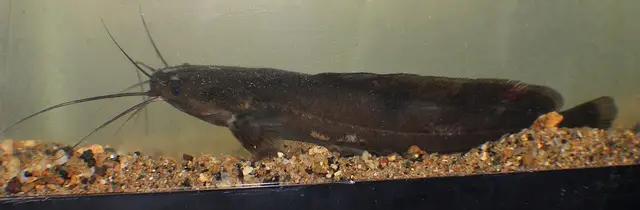
The golden cave catfish (Clarias cavernicola) is a pale, blind air-breathing catfish known only from Aigamas Cave in northern Namibia, and it is the only cavefish known from mainland southern Africa. The IUCN Red List rated it Critically Endangered in 2007. Groundwater pumping is the main threat to its single pool.
How to recognise it
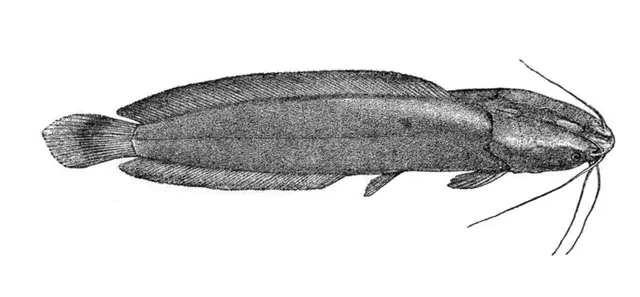
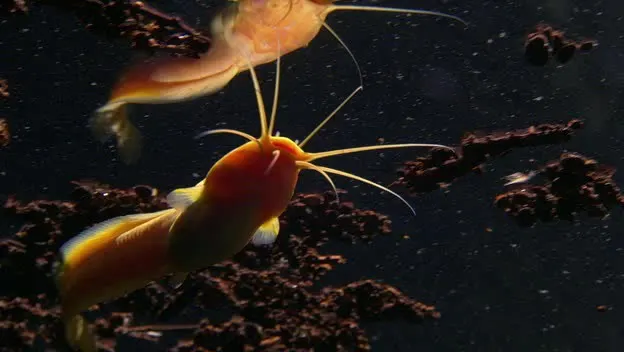
The skin is cream with a pink or golden-yellow flush, and otherwise lacks pigment. The eyes are tiny or missing, so the fish is considered blind and finds its way by touch with four pairs of sensitive barbels. Like other members of the family Clariidae, it has an air-breathing organ above the gills.
Ten fish measured in a February 2019 survey averaged 104 mm in total length, with a range of 42 to 153 mm. A maximum standard length of about 16 cm is also reported. The type specimens described by Ethelwynn Trewavas in 1936 were 118 to 147 mm.
Where it lives
Aigamas (sometimes spelled Aigumas) Cave lies north of Otavi, in the Otjozondjupa region. The fish lives in a dark underground pool about 18 m long and 2.5 m wide, in water around 27°C. Reported depths range from 30 to 52 m, but the fish stay over submerged ledges and mostly in the upper few metres.
A 2019 survey found two further pools in a nearby cave on the same fault holding fish, with about 60 and 13 individuals. Surveyors suspect these belong to the same population, but that is not proven. Divers found no sign of the species in the lake in nearby Dragons Breath Cave.
Pins are Wikidata “endemic to” fields. Orange dots, when present, are GBIF occurrence tiles — survey bias included.
How it lives
It is a generalist scavenger that feeds mostly on detritus. Insects and bat droppings and carcasses are an important food input, and a large colony of the bat Hipposideros commersoni roosts in the cave. The lake also shelters an endemic cave isopod, Namibianira aigamasensis.
Breeding in the wild is poorly known. Attempts to breed the fish in captivity have failed, although females were once induced to produce eggs with a pituitary extract in 1991.
How many are left
Counts are small and inconsistent. A February 2019 visual census counted about 115 fish, and a maximum of 119 was recorded that year. A census in May 2019 counted about 40, which suggests some of the fish move out of view. An older, undated estimate puts the whole population at 200 to 400 individuals.
Why it is in trouble
The lake is a water supply in a very dry region. Pumping has lowered the water level from about 70 m to 50 m since 1921. The IUCN lists groundwater abstraction and small-scale harvesting as threats. As the level falls, the ledges where the fish gather could be exposed, which would hurt their feeding. The assessment lists the population trend as unknown and notes the fish occurs in a protected area. Namibia bans polluting cave lakes and introducing alien fish, and the ranch owner reportedly bars visitors and allows collecting only with a permit.
Sources
Written for this catalog in our own words from the sources below, checked against them on 12 November 2026. Population figures are estimates and carry the year they were made. Status and assessment year: IUCN. 2026. The IUCN Red List of Threatened Species. Version 2026-1. iucnredlist.org.