Critically Endangered
Clarias maclareni
Clarias maclareni
Clarias maclareni is a catfish found in one place on Earth, Lake Barombi Mbo, a volcanic crater lake in western Cameroon. It grows to about 36 centimetres, breathes air when it needs to, and is listed as Critically Endangered on the IUCN Red List (assessed 2010).
How to recognise it
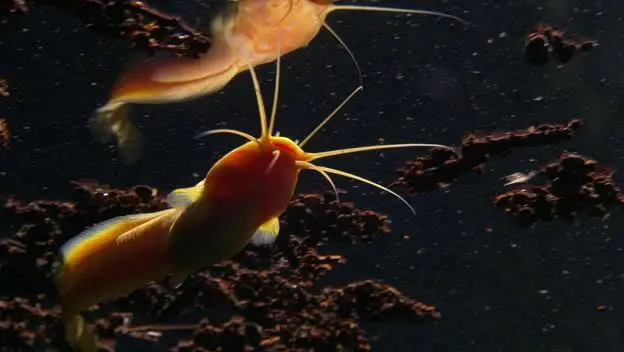
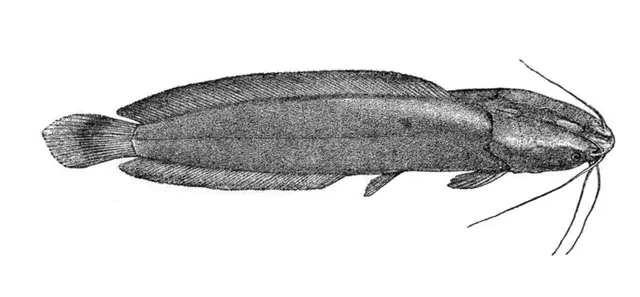
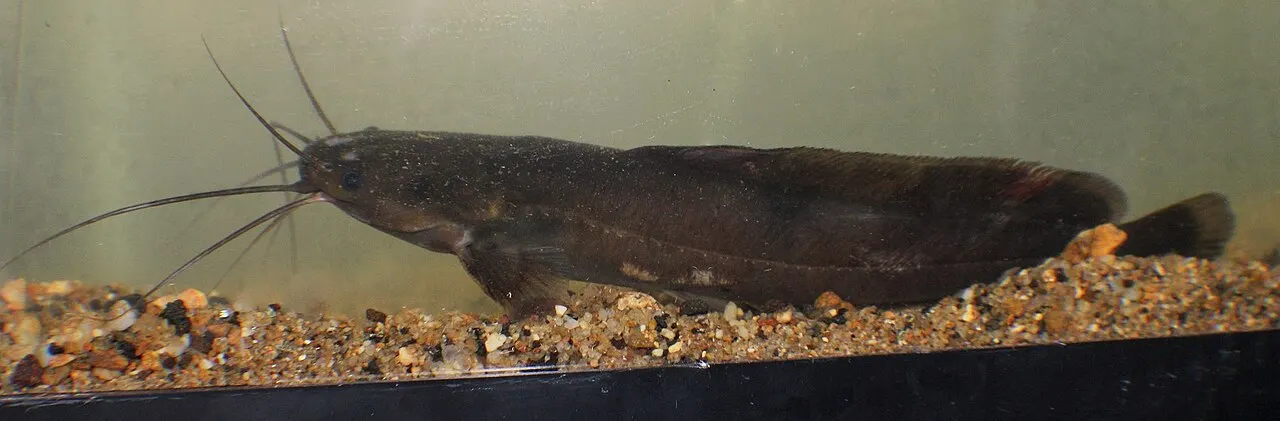
This is a slim, eel-like air-breathing catfish of the family Clariidae. The biggest fish measured reach about 36 cm in total length. It has no dorsal spines, but the long dorsal fin carries 62 to 77 soft rays and the anal fin has 52 to 57. Preserved specimens are dark reddish-brown on the back and flanks.
Its skull has a long, narrow, knife-shaped opening on top (the frontal fontanel), and the tooth plates in its mouth are broad. FishBase gives these among the features that set it apart from other African Clarias.
Where it lives
Clarias maclareni is endemic to Lake Barombi Mbo, near Kumba in Cameroon's Southwest Region. The lake fills a volcanic crater about 2.15 km across, sits at roughly 300 m above sea level, and averages 69 m deep with a maximum near 111 m. Sources give its surface area as either 5 or 7 square kilometres.
The water is strongly layered. Almost no oxygen reaches below about 40 m, so most fish stay in the upper waters. Researchers have recorded 15 fish species in the lake, including 11 endemic cichlids, and this catfish is endemic too.
Pins are Wikidata “endemic to” fields. Orange dots, when present, are GBIF occurrence tiles — survey bias included.
How it lives
The catfish lives on the lake bed and is found in both shallow and deeper water. Like other clariids it is a facultative air-breather, meaning it can gulp air but doesn't depend on it all the time.
Its diet changes as it grows. Small fish eat insect larvae, including midge and odonate (dragonfly and damselfly) larvae. Large ones mostly eat other fish, especially cichlids. It is of no interest to fisheries.
Why it is in trouble
A single lake is a fragile address. The Red List assessment names soil erosion and sedimentation, tourism and recreation areas, and groundwater abstraction among the pressures, along with volcanic activity, though it rates most of them as low impact or negligible. Pollution and sediment from human activity are also described as threats to the lake's endemic fish in general. The population trend is listed as unknown, and no population count is given.
Some researchers have raised the possibility of carbon dioxide escaping from the lake bottom, as it did at Lake Nyos, but studies reportedly show no excess gas in the water.
What is being done
Commercial fishing is banned on the lake, and it was designated a Ramsar wetland of international importance on 8 October 2006. The Red List assessment records no conservation actions aimed at the catfish itself.
Name and discovery
British ichthyologist Ethelwynn Trewavas described the species in 1962. It honours Peter Ian Rupert MacLaren, a fisheries officer in Nigeria who collected fishes for the British Museum, including the type specimen taken in Cameroon in 1948. He died in 1956 after a crocodile attack in what is now Zambia.
Sources
Written for this catalog in our own words from the sources below, checked against them on 12 November 2026. Population figures are estimates and carry the year they were made. Status and assessment year: IUCN. 2026. The IUCN Red List of Threatened Species. Version 2026-1. iucnredlist.org.