Endangered
Forked Chameleon
Calumma furcifer
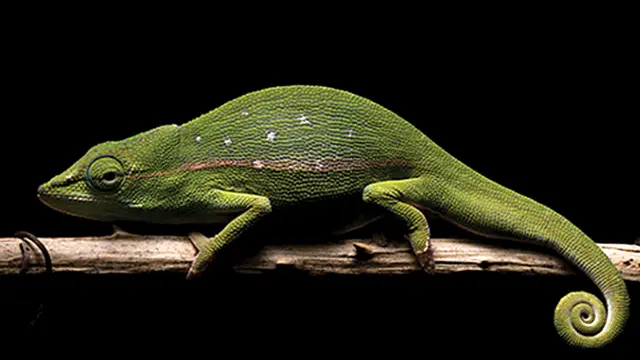
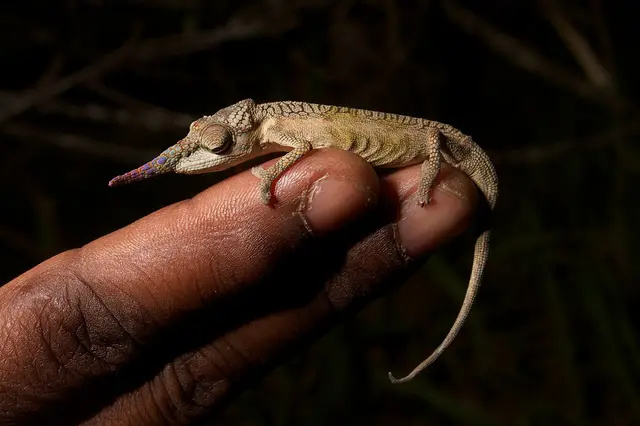
The fork-nosed chameleon (Calumma furcifer) is a small chameleon from the east of Madagascar. Males carry a forked growth on the snout. The IUCN Red List assessed it as Endangered in 2011, with a decreasing population living in forest that is being cleared for farming.
How to recognise it
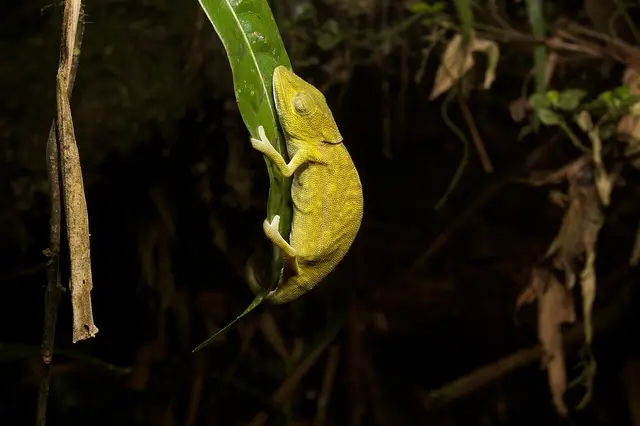
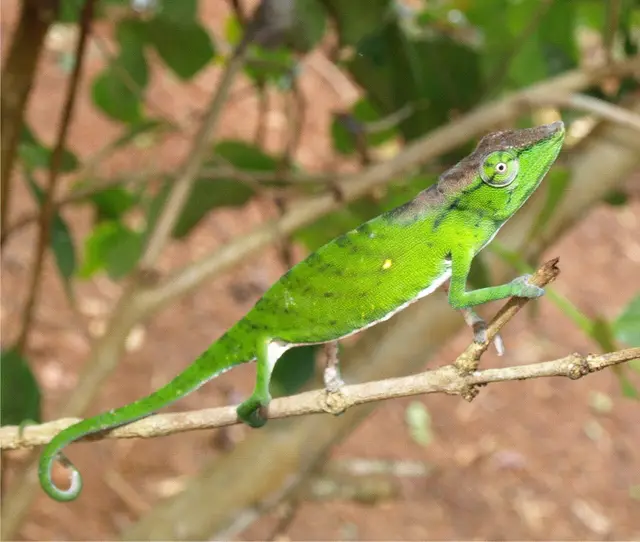
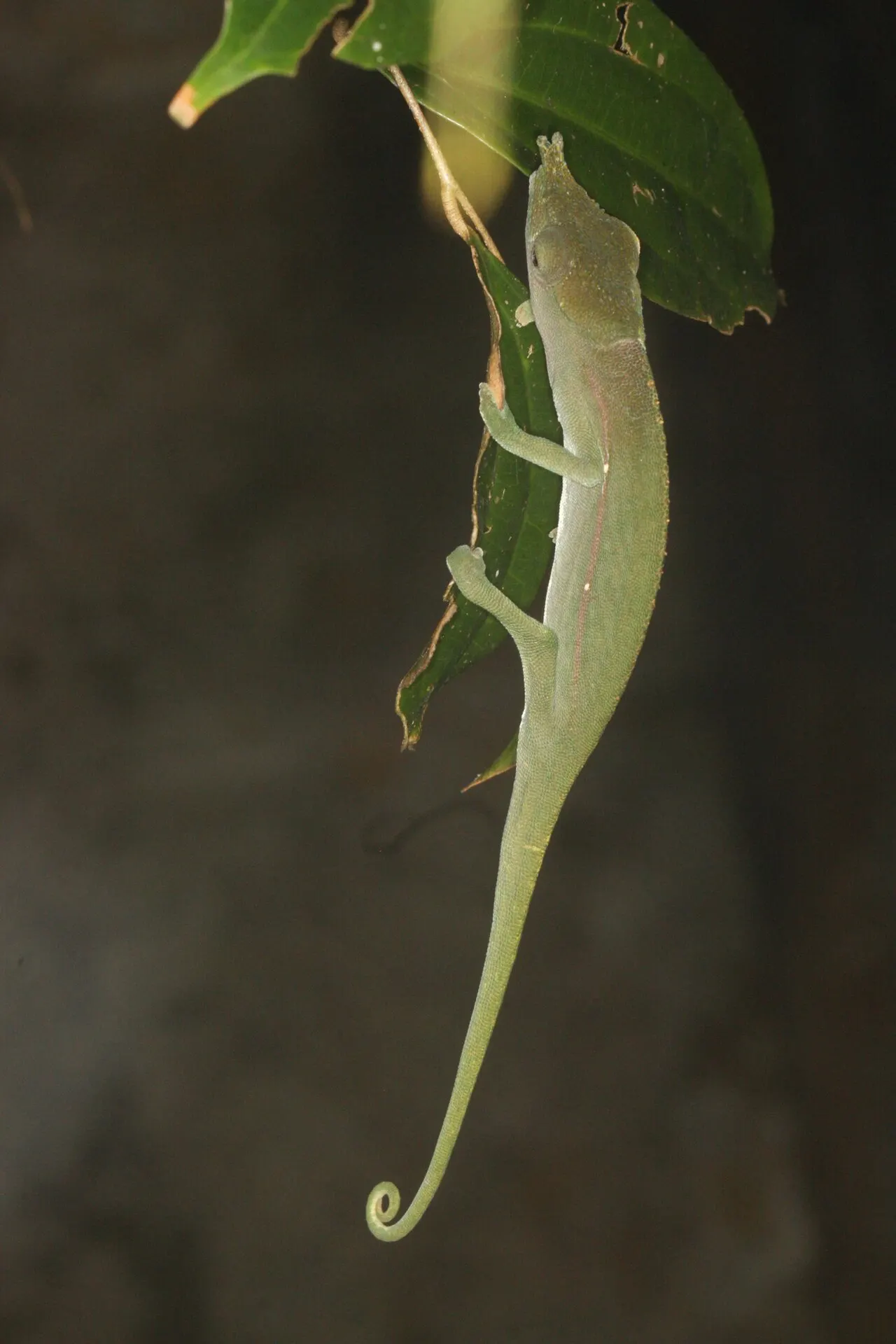
This is one of the smaller Calumma chameleons, reaching about 15 cm in total length. The body is brown to green, and a rust to cream stripe runs along each flank, sometimes marked with two spots. A double white line runs along the underside, and a row of regularly spaced conical scales runs down the back.
Males have the feature that gives the species its name, a small forked growth on the snout covered with enlarged, plate-like scales. The head is smooth, with no raised casque. The name comes from the Latin for fork.
Where it lives
It is found only in Madagascar, in the east of the central highlands. The IUCN records it from sea level up to 865 m in moist forest, and the 2011 assessment judged its range severely fragmented. Known sites include Vohidrazana, about 25 km east of Andasibe National Park, and the Vohimana reserve.
Much of the original forest around Vohidrazana has burned. The chameleons survive in secondary growth, in bushes, shrubs and thin trees on steep, hard-to-reach hills near rivers. The animals there are reported to be very hard to find, and the Vohimana population appears very small.
Pins are Wikidata “endemic to” fields. Orange dots, when present, are GBIF occurrence tiles — survey bias included.
How it lives
It lays eggs, but little else is documented about its behaviour or diet, and virtually nothing is known about its care in captivity. At its sites, rain falls on 15 to 27 days a month, and monthly average temperatures run from about 19 to 24 degrees C. At nearby Andasibe, nights can be 10 to 15 degrees cooler than days.
Why it is in trouble
The 2011 assessment names shifting agriculture, small-holder farming and grazing, and unintentional effects of harvesting as the threats. Slash-and-burn clearing is reported as the main one, and the remaining habitat is expected to keep shrinking. The population trend is recorded as decreasing.
At the time of assessment there was no recovery plan and no systematic monitoring scheme, and the species was not recorded from any protected area. Conservation sites were identified over its entire range, and site protection is the only conservation action listed.
Sources
Written for this catalog in our own words from the sources below, checked against them on 12 November 2026. Population figures are estimates and carry the year they were made. Status and assessment year: IUCN. 2026. The IUCN Red List of Threatened Species. Version 2026-1. iucnredlist.org.