Endangered
Calumma gallus
Calumma gallus
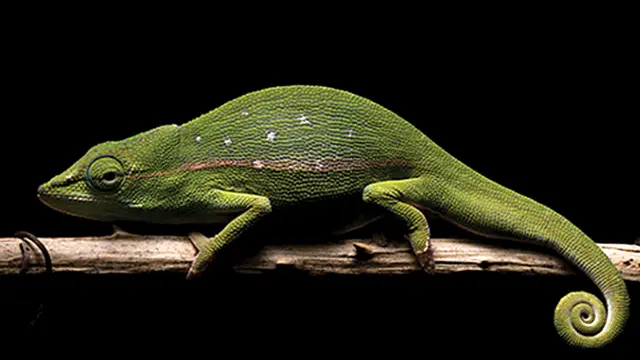
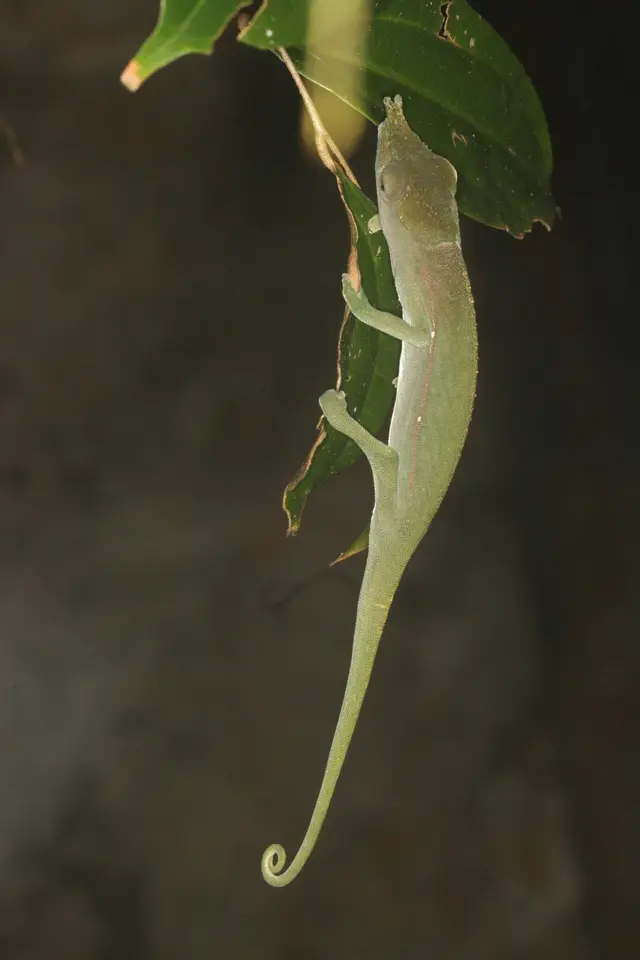
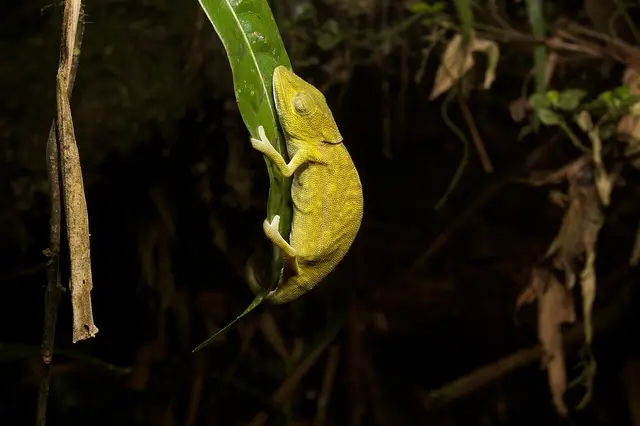
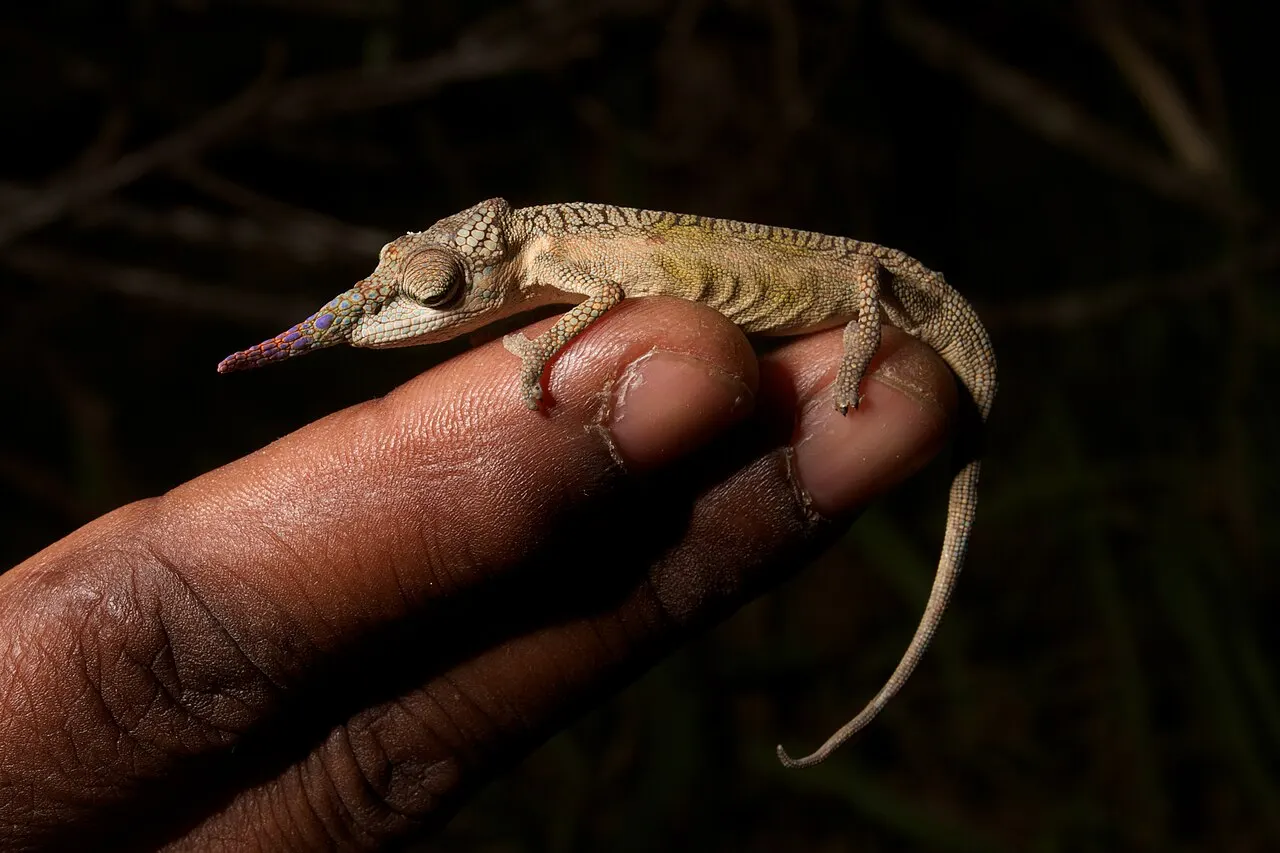
Calumma gallus is a small chameleon from the rainforests of eastern Madagascar, the male carrying a flexible, serrated appendage on its snout. The IUCN rated it Endangered in 2011, but that rating covers a broader group of chameleons that taxonomists split into several species in 2025.
How to recognise it
Males carry a pointed, elongated appendage on the snout, made mostly of skin. On this species some of its scales are spiny, which gives the edge a serrated look. Females have a shorter, blunter appendage that is reddish. The male Albert Günther used to describe the species in 1877 measured 93 millimetres in total, of which 7 millimetres were the appendage and 45 millimetres the tail.
The name gallus is Latin for rooster. The species lays eggs.
A group that has just been taken apart
For almost 150 years, chameleons with long snout appendages in eastern Madagascar were filed under this one name. A 2025 study in Salamandra by Frank Glaw and colleagues, using genetic data and old museum specimens, showed that the group is a complex of several species.
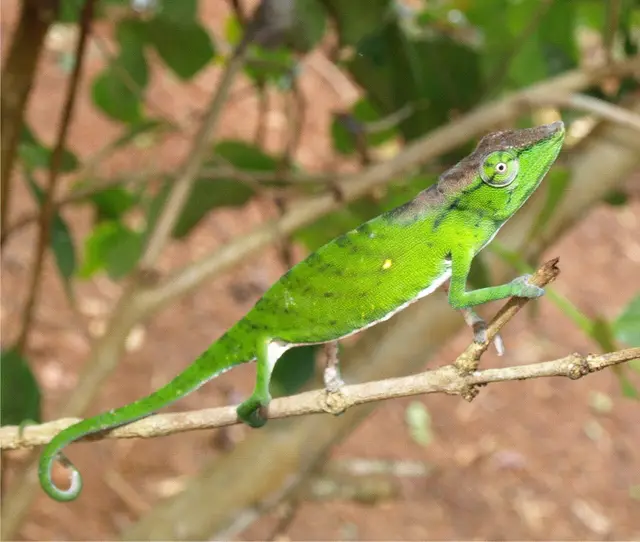
The name gallus now goes to a lineage with serrated appendages that includes animals from Tarzanville, north of Anosibe An'Ala, and from a coastal site about 10 kilometres south of Mahanoro, the type locality. A few serrated-nosed populations farther south and east could not be placed and stay listed as Calumma cf. gallus. The smooth-edged animals farther north, the ones in most published photographs, became a new species, Calumma pinocchio.
Reptile Database now notes that most published records of gallus, and almost all published photographs, actually show that newcomer. The 2011 Red List assessment was written for the old, broad concept, so its figures describe the whole group and not the narrow species.
Where it lives
Calumma gallus in the strict sense is reliably known from only five localities, no more than about 100 kilometres apart. Most are tiny forest fragments with little or no protection. Counting the unplaced serrated-nosed populations would roughly double the number of sites.
The 2011 assessment described lowland moist forest from sea level to 600 metres and an extent of occurrence of about 3,900 square kilometres in a severely fragmented range. Recent density surveys cited in the 2025 study, in evergreen forest at sites between roughly 700 and 1,140 metres, recorded about 94 animals per hectare at Ankorabe and 65 per hectare at Tarzanville.
Pins are Wikidata “endemic to” fields. Orange dots, when present, are GBIF occurrence tiles — survey bias included.
Why it is in trouble
The 2011 assessment lists shifting agriculture and small-scale farming and grazing as threats, and records a decreasing population. It also lists collecting for the pet and display trade, rated as a minor cause with negligible declines.
For gallus in the strict sense, the 2025 study judges that five small, mostly unprotected forest fragments under heavy human pressure would qualify as Endangered by Red List criteria. Counting the unplaced populations as the same species would lower that to Vulnerable. These are proposals from the study, not an official listing. The study adds that the 2011 assessment was largely based on records of the Pinocchio chameleon.
Sources
Written for this catalog in our own words from the sources below, checked against them on 12 November 2026. Population figures are estimates and carry the year they were made. Status and assessment year: IUCN. 2026. The IUCN Red List of Threatened Species. Version 2026-1. iucnredlist.org.