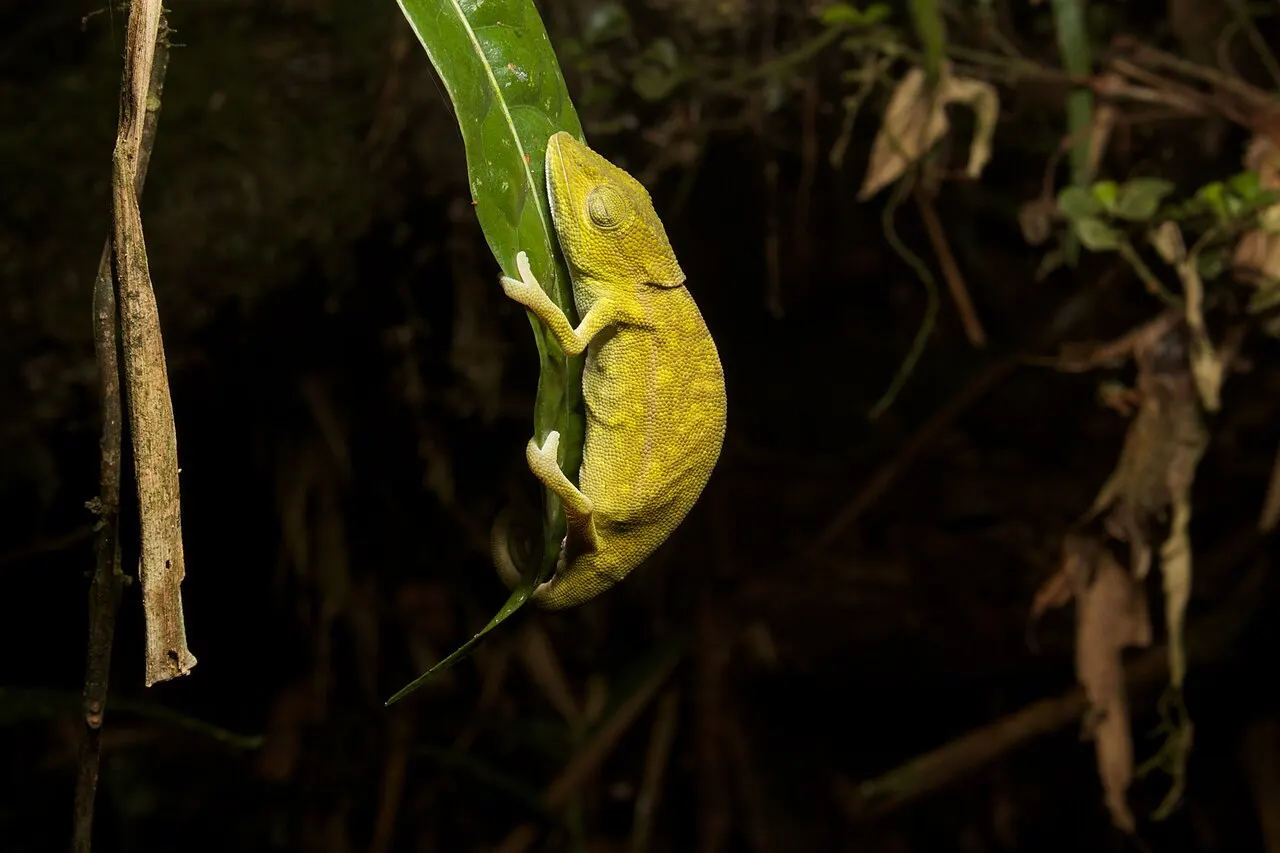
Endangered
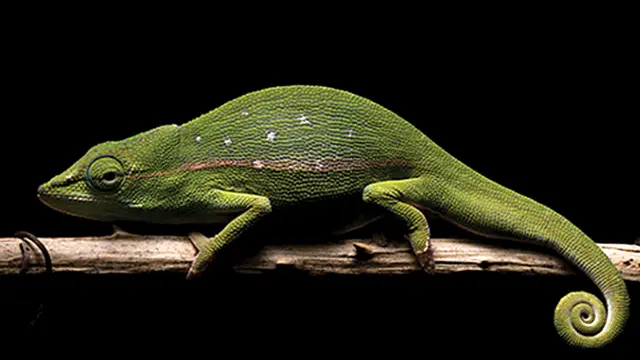
Calumma glawi
Calumma glawi
Calumma glawi is a small forest chameleon found only in eastern Madagascar. The IUCN Red List rated it Endangered in 2011. It lives in humid mid-elevation rainforest, which is being cleared by shifting agriculture, and it is hard to find even in good habitat.
How to recognise it
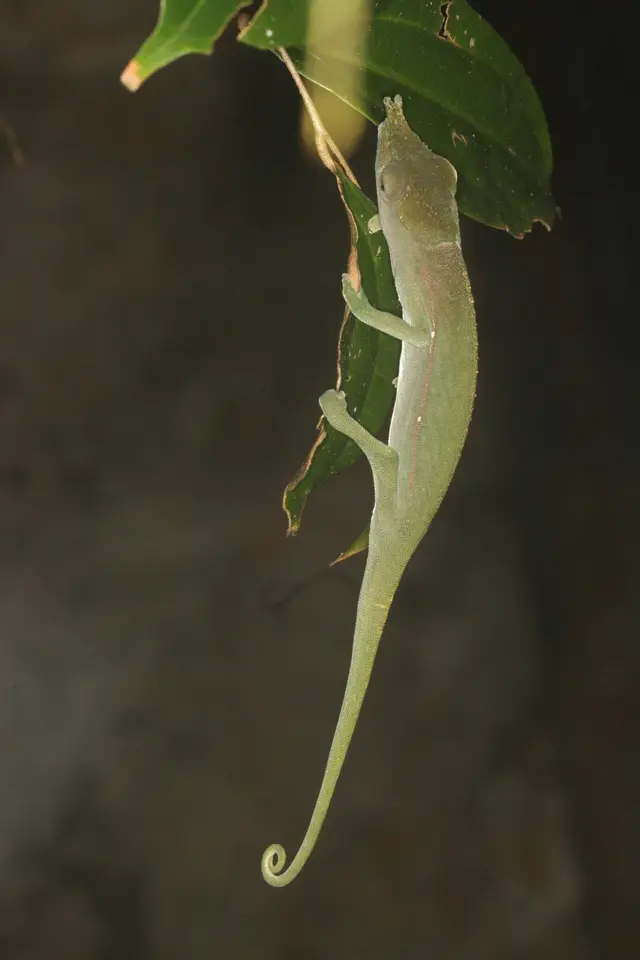
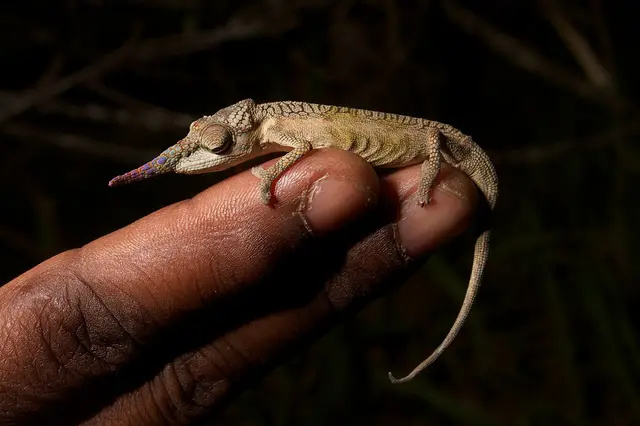
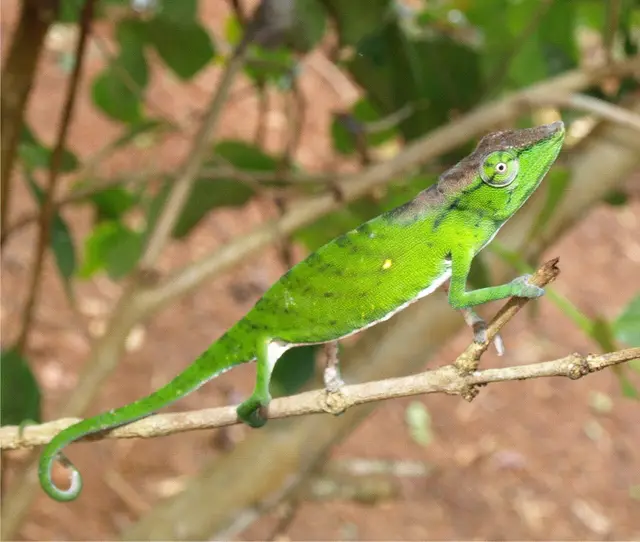
It is one of the smaller chameleons, mostly green, and males have a yellowish stripe along the side. In the breeding season males often show bright turquoise-blue spots. Males also carry a slightly raised, dark helmet with small dark lobes at the back of the head. Females have less developed lobes, and a stressed female can show dark bands that break into spots on the head.
Neither sex has enlarged scales on the back, belly or throat. Males have brighter throats and bellies, partly yellow.
Where it lives
Böhme described the species in 1997, and it is named for the German herpetologist Frank Glaw. The type locality is Vohiparara, in the Ranomafana area of south-eastern Madagascar. The Red List gives Madagascar as the only country and subtropical to tropical moist montane forest as the habitat, at 1,030 to 1,200 m above sea level. A hobbyist account of the Ranomafana forests gives 300 to 800 m, so the exact elevation range is uncertain.
It favours undisturbed forest with large trees, lianas and ferns, on rocky ground cut by canyons. In its Ranomafana habitat nights run roughly 15 to 20 degrees Celsius, according to the same hobbyist account.
Pins are Wikidata “endemic to” fields. Orange dots, when present, are GBIF occurrence tiles — survey bias included.
How it lives
It lays eggs. It is difficult to spot in dense forest and somewhat easier to find at night. Young animals sit at the outer tips of leaves, as young chameleons commonly do.
Why it is in trouble
The 2011 assessment records a decreasing population, a severely fragmented range, and ongoing loss of habitat. The threats listed are shifting agriculture and small-scale harvest, both of which convert or degrade the forest this chameleon depends on.
The assessment records no recovery plan or systematic monitoring scheme, but it does list site management and habitat protection as actions, and says the species occurs in at least one protected area. A hobbyist guide states that CITES quotas allow no legal export.
Sources
Written for this catalog in our own words from the sources below, checked against them on 12 November 2026. Population figures are estimates and carry the year they were made. Status and assessment year: IUCN. 2026. The IUCN Red List of Threatened Species. Version 2026-1. iucnredlist.org.