Endangered
Calumma tarzan
Calumma tarzan
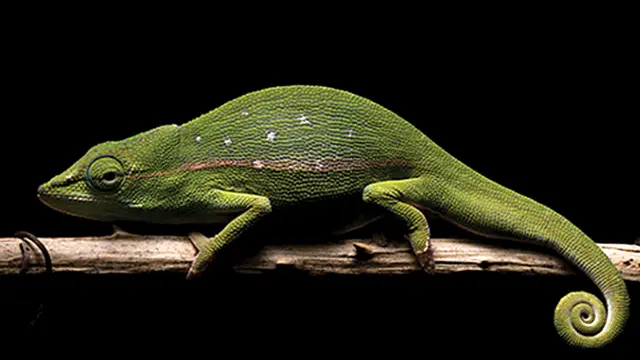
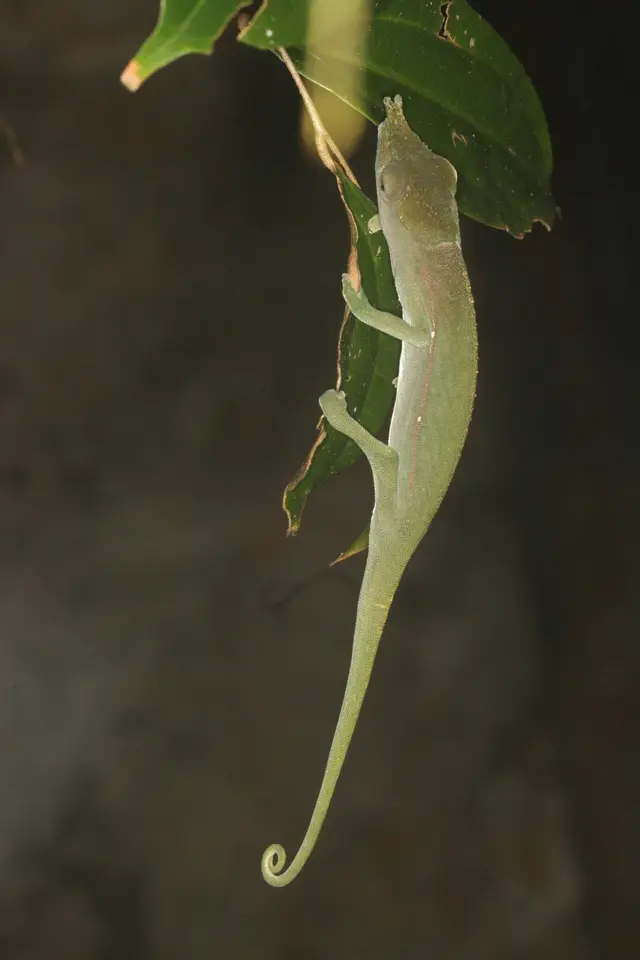
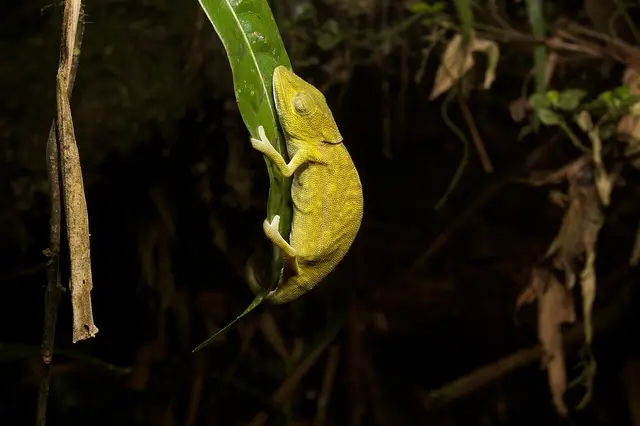
The Tarzan chameleon (Calumma tarzan) is a small green to pale yellow chameleon with a flat, spade-shaped snout, found only in forest fragments in eastern Madagascar. The IUCN Red List rated it Endangered in 2025, after an earlier Critically Endangered listing (2011). It was described in 2010.
How to recognise it
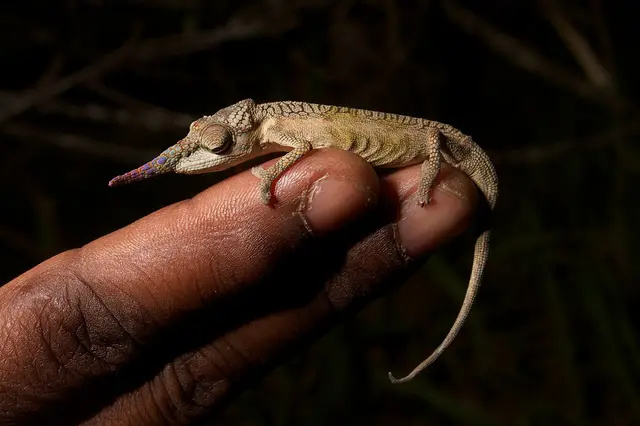
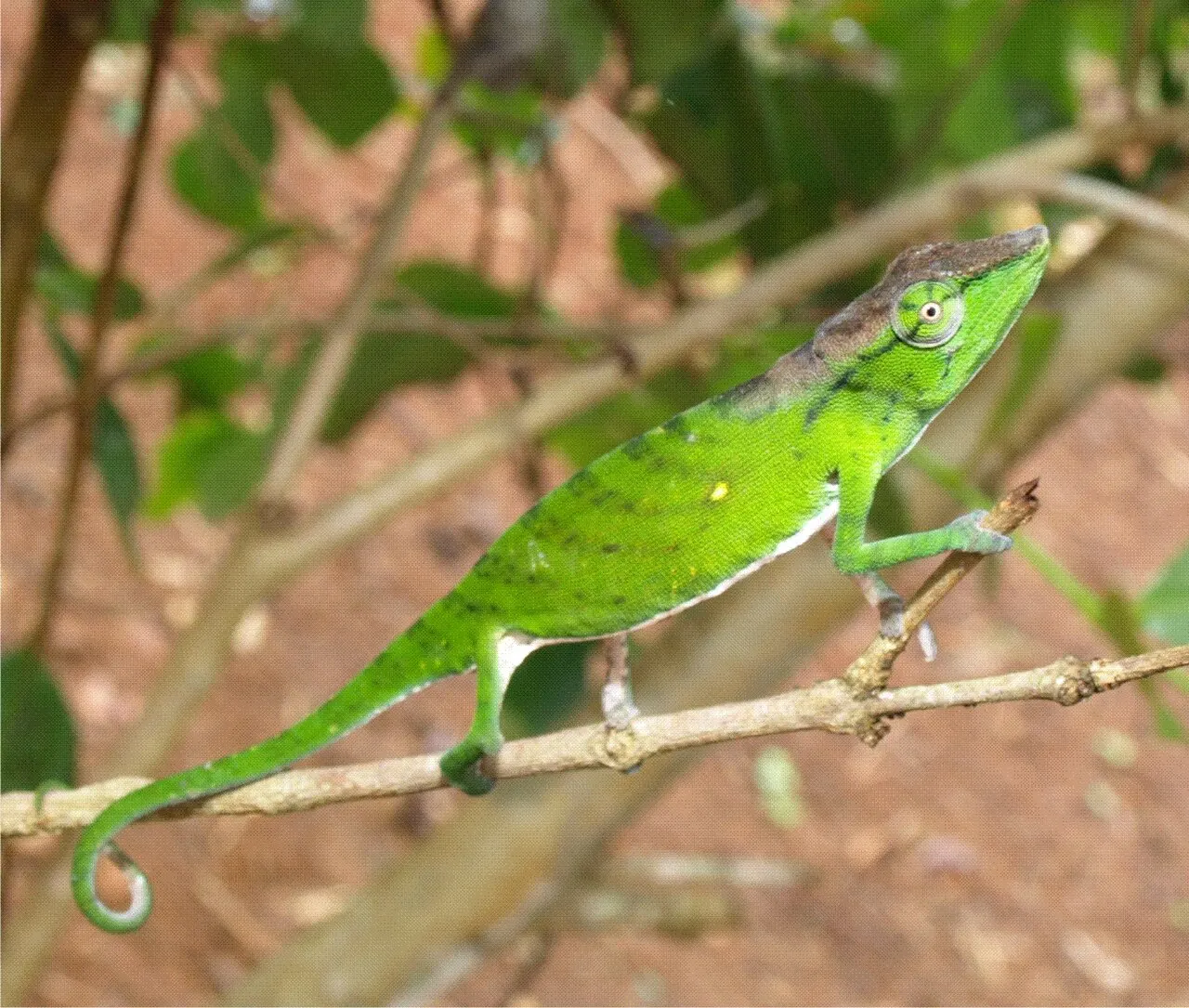
This is a medium-sized chameleon, with a body of 61 to 72 mm and a total length of 119 to 150 mm. Its colour runs from green to pale yellow, and a dark crossband appears when it is stressed. The casque on the head is very low compared with most chameleons.
The snout gives it away. The front crests are fused into a flat, spade-like ridge that sticks out slightly past the tip. Males have a brown to blackish casque and neck, while females are green to pale yellow there and have a less angular snout profile.
Where it lives
The species is endemic to the Alaotra-Mangoro region of central-eastern Madagascar. It was described in 2010 in the journal Salamandra by a team of German and Malagasy researchers led by Philip-Sebastian Gehring, from a forest fragment near a village then called Tarzanville (now Ambodimeloka), at about 847 m. The team picked the name of the fictional jungle hero to draw attention to the threatened forest and promote its conservation.
A later survey, published in the African Journal of Herpetology, searched 23 forest fragments between February 2020 and March 2021 and found the chameleon in 14 of them, all new records, at 604 to 1,048 m. The IUCN gives a wider elevation span, 79 to 1,048 m, and describes the population as severely fragmented. Density estimates in the survey ranged from 25 to 78 animals per hectare.
Pins are Wikidata “endemic to” fields. Orange dots, when present, are GBIF occurrence tiles — survey bias included.
Why it is in trouble
Its lowland rainforest is being cleared. The IUCN lists shifting agriculture, small-holder farming and mining and quarrying as threats, and the trend is decreasing. The Malagasy group Madagasikara Voakajy names slash-and-burn farming and logging as the main pressures.
When the species was described, news reports put the combined forest at about 10 square kilometres, in isolated patches some no bigger than a soccer field. The later survey found it in more fragments than were known then.
What is being done
The describing team proposed the species as a flagship for new reserves in fragmented forest. Madagasikara Voakajy reported in March 2022 that a five-year action plan was being developed through workshops in December 2021 and February 2022, focused on the Ambatofotsy and Ankorabe protected areas in the Anosibe An'Ala district.
The IUCN records habitat protection, area management, awareness work, policy measures and livelihood alternatives among the actions needed. In the 2025 assessment, no recovery plan and no systematic monitoring scheme were in place.
Sources
Written for this catalog in our own words from the sources below, checked against them on 12 November 2026. Population figures are estimates and carry the year they were made. Status and assessment year: IUCN. 2026. The IUCN Red List of Threatened Species. Version 2026-1. iucnredlist.org.
- IUCN Red List assessment, Calumma tarzan (2025)
- Calumma tarzan, Wikipedia
- Calumma tarzan, The Reptile Database
- New distribution records and population density of the Tarzan chameleon, African Journal of Herpetology abstract
- Tarzan chameleon action plan, Madagasikara Voakajy (2022)
- Tarzan chameleon found in Tarzan forest, National Geographic (2010)
- Tarzan chameleon discovered in Madagascar, Mongabay (2010)