Endangered
Calumma andringitraensis
Calumma andringitraense
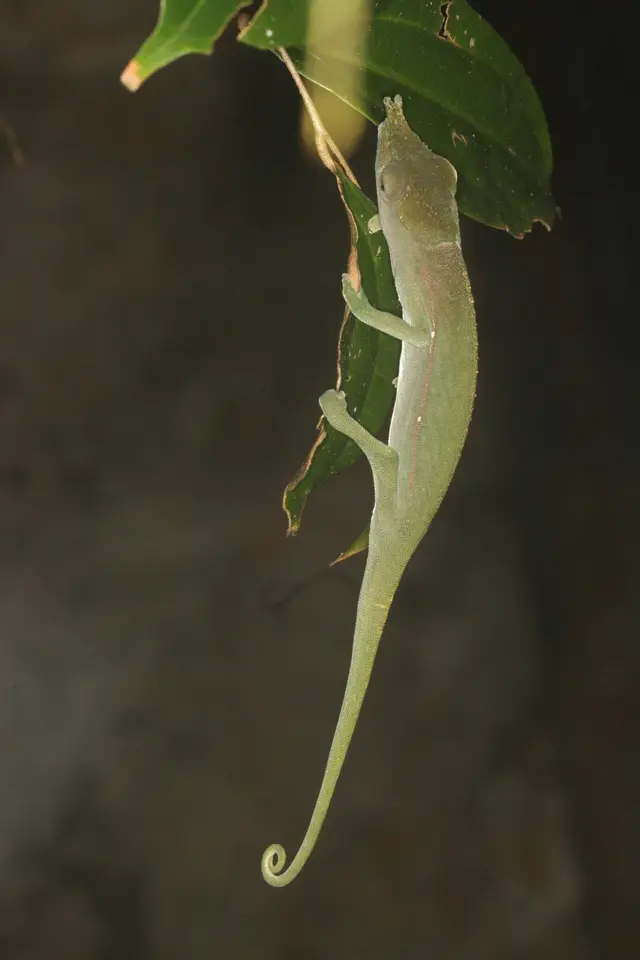
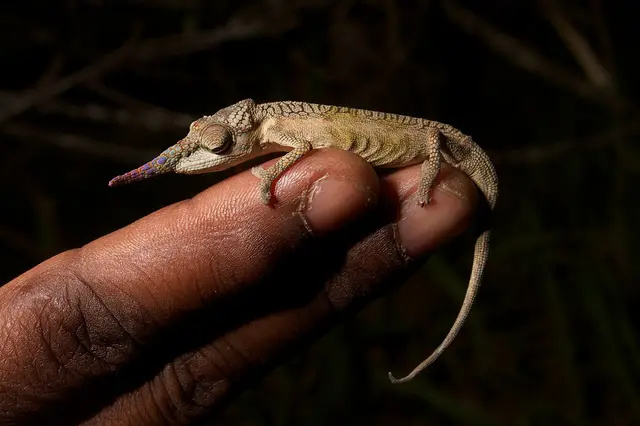
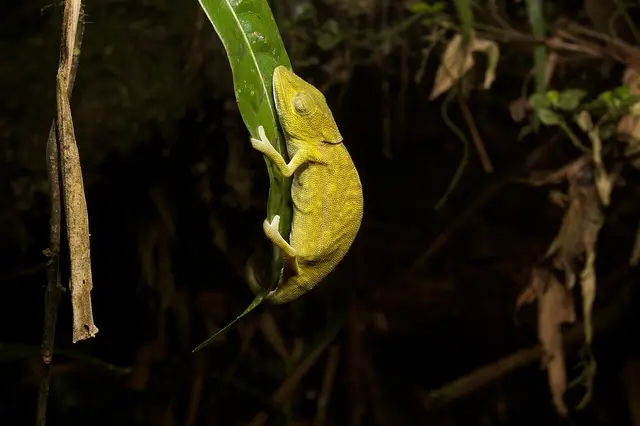
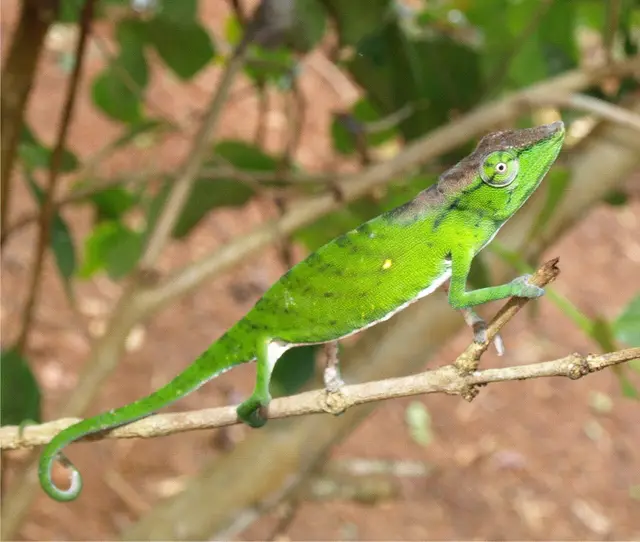
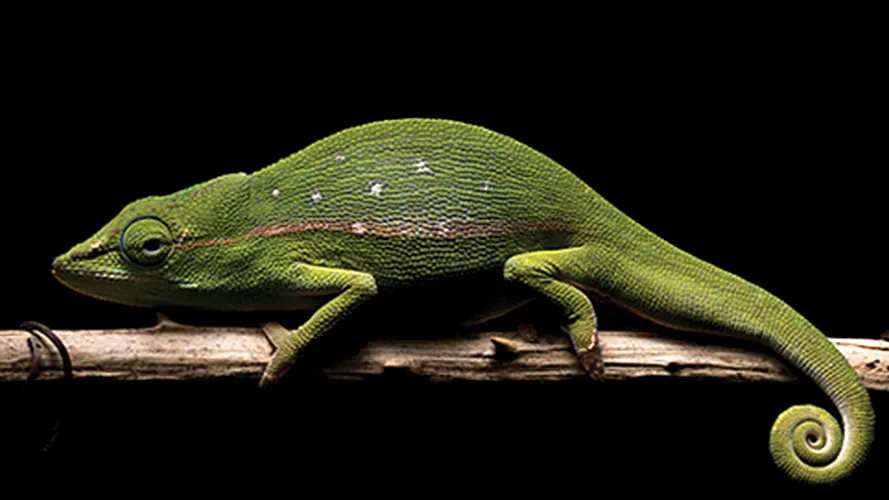
Calumma andringitraense, also written Calumma andringitraensis, is a chameleon found only in the humid mountain forests of southeastern Madagascar. The IUCN Red List rated it Endangered in 2011. It was first described as a subspecies of the Perinet chameleon and is known from just three locations.
Where it lives
The species is endemic to Madagascar. It was described in 1972 from the Andringitra massif, with the type locality along the Ampanasana River at Ambalamarovandana at 1,530 m. It is also known from Andohahela National Park, and reportedly from Kalambatritra Reserve.
The IUCN estimates its extent of occurrence at about 1,220 km2 and counts three locations. It lives in montane rainforest, recorded between 1,550 and 1,680 m, and is described as favouring intact, relatively high forest. A 2021 survey of forest fragments in the Haute Matsiatra region found it on the eastern slopes of Andringitra at roughly 1,480 to 1,560 m.
Pins are Wikidata “endemic to” fields. Orange dots, when present, are GBIF occurrence tiles — survey bias included.
How it lives
Surveyors in 2021 found these chameleons at night, asleep on branches in dense rainforest. They were abundant at one site, Imaitso, and rarer at another, Fivahona-Ambavanala. The species lays eggs. Beyond roosting habits and habitat, its diet, breeding season and behaviour are poorly documented.
The same survey, by Belluardo and colleagues, found the Andringitra animals genetically uniform, with about 5.5% difference in the COI gene from an individual sampled at Andohahela.
Why it is in trouble
A small range and continuing loss of forest underlie the Endangered listing. The IUCN names shifting agriculture, small-scale farming and grazing, and more frequent fires as pressures behind forest conversion and degradation, with some unintentional deaths from small-scale harvesting. It rates the population trend as decreasing.
What is being done
The species occurs in at least one protected area, and conservation sites have been identified across its whole range. It is covered by international trade controls. The IUCN also records that no recovery plan or monitoring scheme exists for it, and that it is not held in captive breeding.
Sources
Written for this catalog in our own words from the sources below, checked against them on 12 November 2026. Population figures are estimates and carry the year they were made. Status and assessment year: IUCN. 2026. The IUCN Red List of Threatened Species. Version 2026-1. iucnredlist.org.