Endangered
Nevis skink
Oligosoma toka
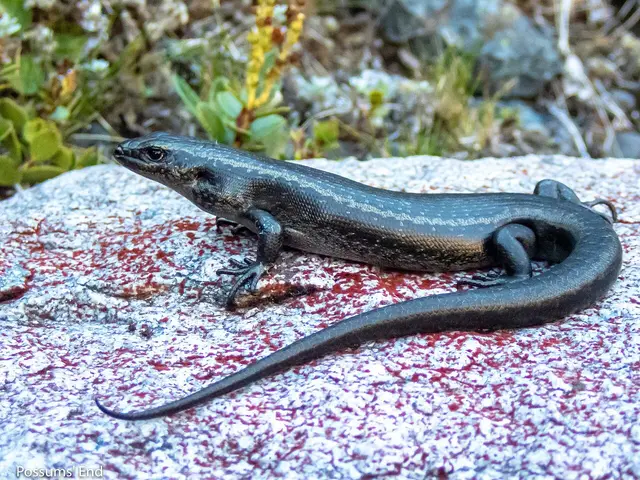
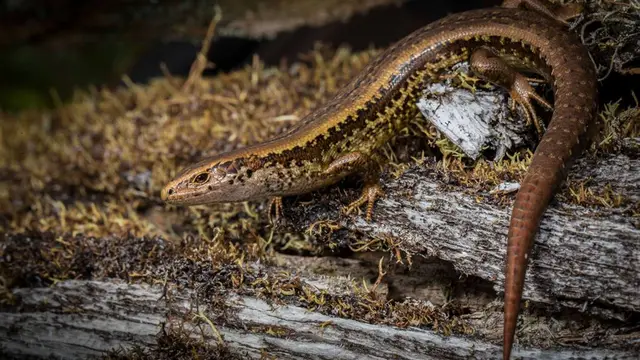
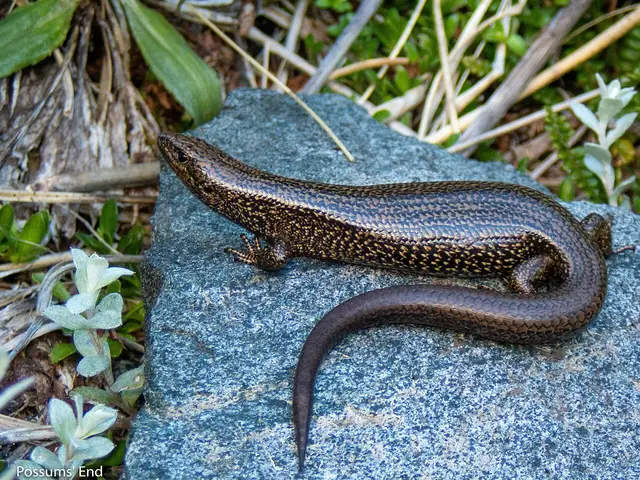
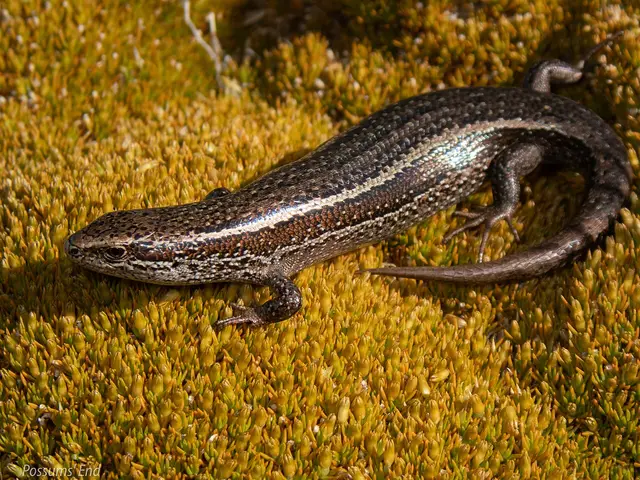
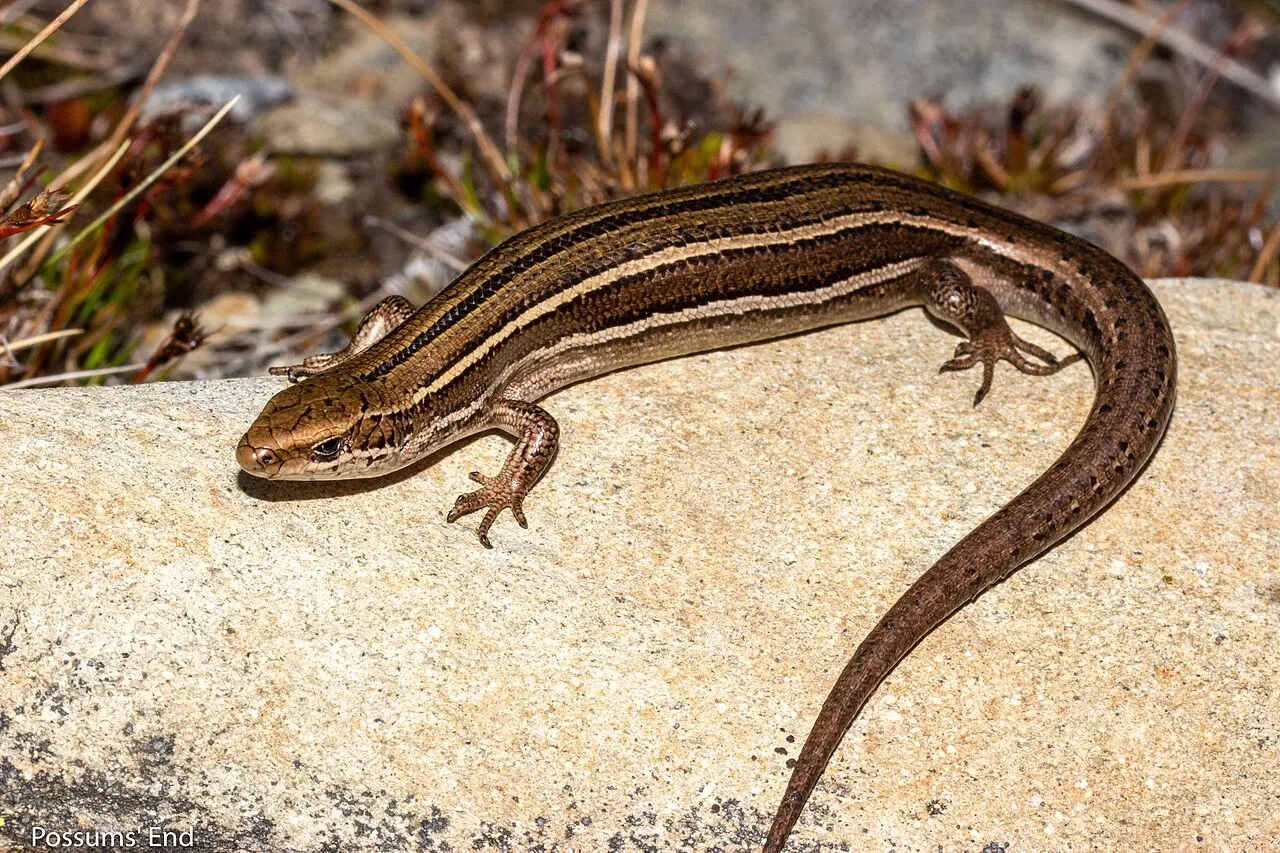
The Nevis skink (Oligosoma toka) is a rock-dwelling lizard of the southern South Island of New Zealand, first named as a species in 2011. The IUCN rated it Endangered in 2019 and a decreasing population is recorded. It is dark above, with pale stripes and a mustard-yellow belly.
How to recognise it
This is a small, glossy skink, up to about 71 mm from snout to vent, with a tail longer than the body. The back is dark brown or black, often flecked, with a dark stripe down the middle and thick cream or yellowish stripes along each side. The belly is mustard yellow, and the throat is white with black speckles. The eyes are cream to pale brown.
It looks a lot like other small grass skinks. One useful check is the scales above the eye, where it has three large ones in the second row over each eyelid.
Where it lives
The species is found only in New Zealand, and the type specimen came from Schoolhouse Flat in the Nevis Valley of Central Otago. That valley gives the skink its common name, and the scientific name comes from toka, the Maori word for rock.
For a while it was thought to live only in the Nevis. It has since been reported from the Hector Mountains, the Old Woman Range, Mt Cardrona, Mt Alpha, the Lindis Pass and the St Bathans Range. The IUCN assessment (made in 2018, published in 2019) counts just two locations, with an area of occupancy of 20 square kilometres and an extent of occurrence of about 295 square kilometres, a much narrower picture than the later records suggest. It lives up to about 1,020 m according to the IUCN, while other sources give a range from roughly 500 or 700 m to 1,800 or 1,900 m.
Pins are Wikidata “endemic to” fields. Orange dots, when present, are GBIF occurrence tiles — survey bias included.
How it lives
It is active by day and basks to warm up. Rock is the key feature of its habitat: rock piles, talus, screes, old gold tailings, river terraces and tussock grassland or herbfield with loose stones. The IUCN lists temperate grassland and rocky areas as its habitats.
Its diet is probably small invertebrates such as beetles, spiders and flies, plus berries from native plants. Pregnant females have turned up in November and December, but little else is known about breeding. If threatened, it can raise its tail over its body and, like many skinks, drop the tail to distract a predator.
Why it is in trouble
The IUCN names introduced mice, feral cats and ship rats as ongoing threats, along with mining and quarrying, and a possible future threat from large dams. The Otago Regional Council lists land development, fire, and predators such as rodents, hedgehogs, weasels, stoats, ferrets and cats.
New Zealand's own rating has shifted. A 2012 Department of Conservation assessment reportedly put it at Nationally Vulnerable. A 2024 Otago factsheet lists it as At Risk: Declining, both nationally and in the region, and says Otago holds more than 20 percent of the population.
What is being done
Little is aimed at this skink directly. It is not actively managed, though surveys have been used to estimate numbers and assign its threat ranking. The IUCN notes that it occurs in at least one protected area and lists control of invasive species among the actions needed.
Sources
Written for this catalog in our own words from the sources below, checked against them on 12 November 2026. Population figures are estimates and carry the year they were made. Status and assessment year: IUCN. 2026. The IUCN Red List of Threatened Species. Version 2026-1. iucnredlist.org.