Endangered
Yellow-snouted ground gecko
Lucasium occultum
The Alligator River gecko (Lucasium occultum), also called the yellow-snouted ground gecko, is a tiny ground-dwelling lizard known only from the Northern Territory of Australia. The IUCN Red List rated it Endangered in 2018. Its name means hidden, a nod to the dense understorey it favours.
How to recognise it
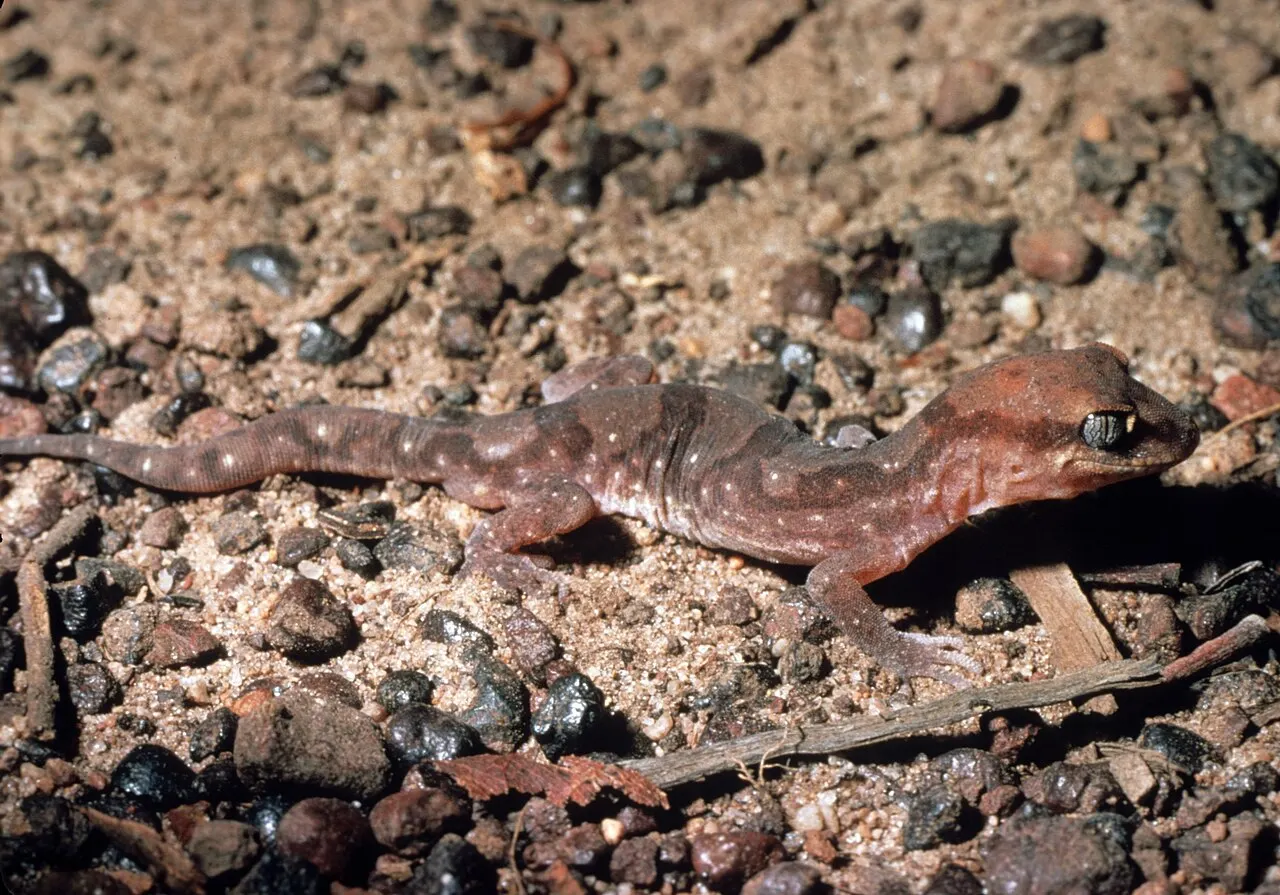
This is a small gecko, about 40 mm from snout to vent. It's dark brown above with a reddish head, four large pale brown blotches down the back, and whitish spots scattered over the flanks and limbs.
The body is long and thin and the tail is tapered and round. The head is deep with a short snout, and the toes are long and slender. The original technical description also singled out its toe pads, which have rectangular scales rather than the small granular ones of most close relatives.
Where it lives
The species is endemic to Australia and is known from the Alligator Rivers Region of the Northern Territory. The first specimen, an adult male, was collected there on 11 August 1981. It was described in 1982 as Diplodactylus occultus and has since been placed in the genus Lucasium.
The IUCN assessment counts a single location and puts the extent of occurrence at about 2,378 square kilometres. The habitat is tropical dry forest, where the gecko shelters in leaf litter. It lays eggs. All known records come from land reserved for conservation.
Pins are Wikidata “endemic to” fields. Orange dots, when present, are GBIF occurrence tiles — survey bias included.
Why it is in trouble
Fire is the main concern. Burning that is too frequent or too hot strips away the leaf litter the gecko hides in, which leaves it more exposed to predators. Invasive pasture grasses make this worse. Gamba grass and other exotic weeds grow tall and dense, and studies in the Wildman River Reserve (Rossiter and colleagues, 2003) suggest such grasses raise fuel loads and fire intensity in open forest.
The IUCN also lists feral cats as a threat, though the scale of their impact is unknown. Nobody knows whether the population is rising or falling, so the Endangered listing rests on its tiny range and the continuing decline in habitat.
What is being done
The gecko is listed as Endangered nationally in Australia and as Vulnerable in the Northern Territory. Every known record lies inside land reserved for conservation, and the 2018 assessment notes that it occurs in at least one protected area. The actions the IUCN identifies are habitat protection and control of invasive species.
Sources
Written for this catalog in our own words from the sources below, checked against them on 12 November 2026. Population figures are estimates and carry the year they were made. Status and assessment year: IUCN. 2026. The IUCN Red List of Threatened Species. Version 2026-1. iucnredlist.org.




