Endangered
Yellow-headed day gecko
Phelsuma klemmeri
The yellow-headed day gecko (Phelsuma klemmeri) is a small, vividly coloured lizard from Madagascar that lives almost entirely on bamboo. It is known from just two places, in the northwest and the west, and the IUCN Red List rates it Endangered (assessed 2011) because its range is tiny.
How to recognise it
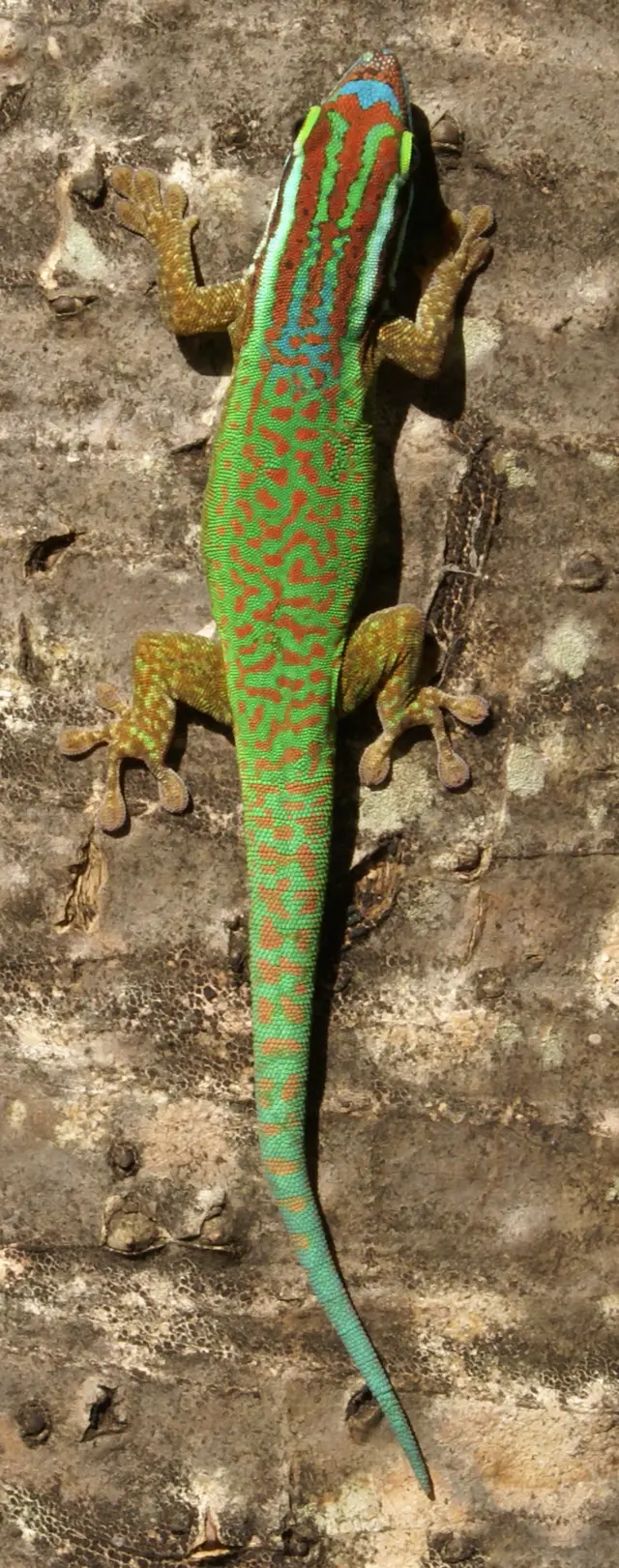
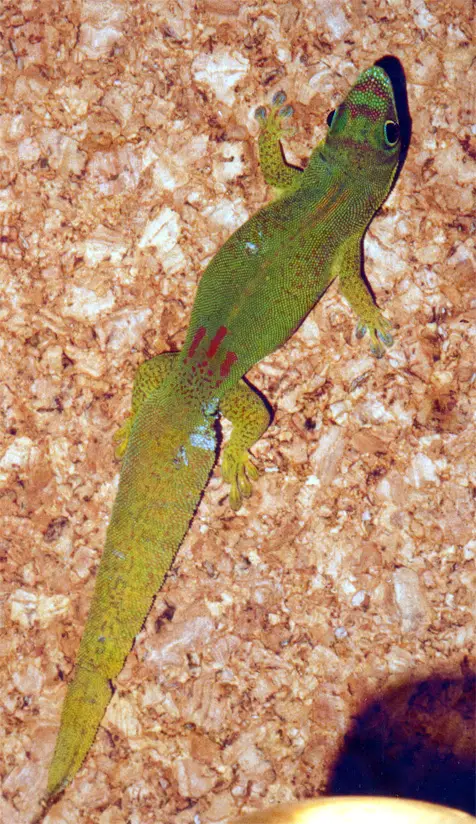
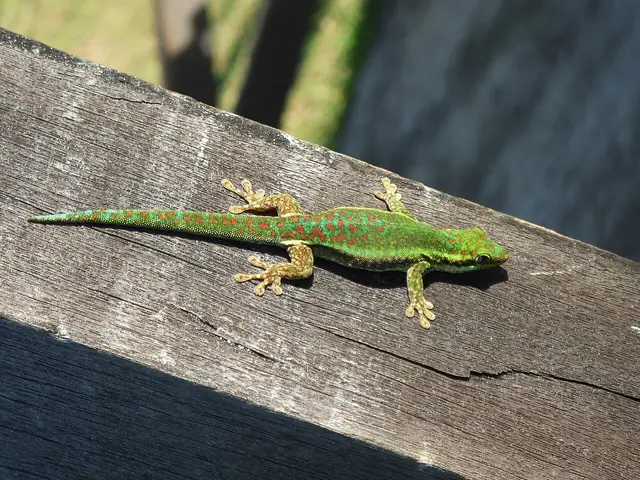
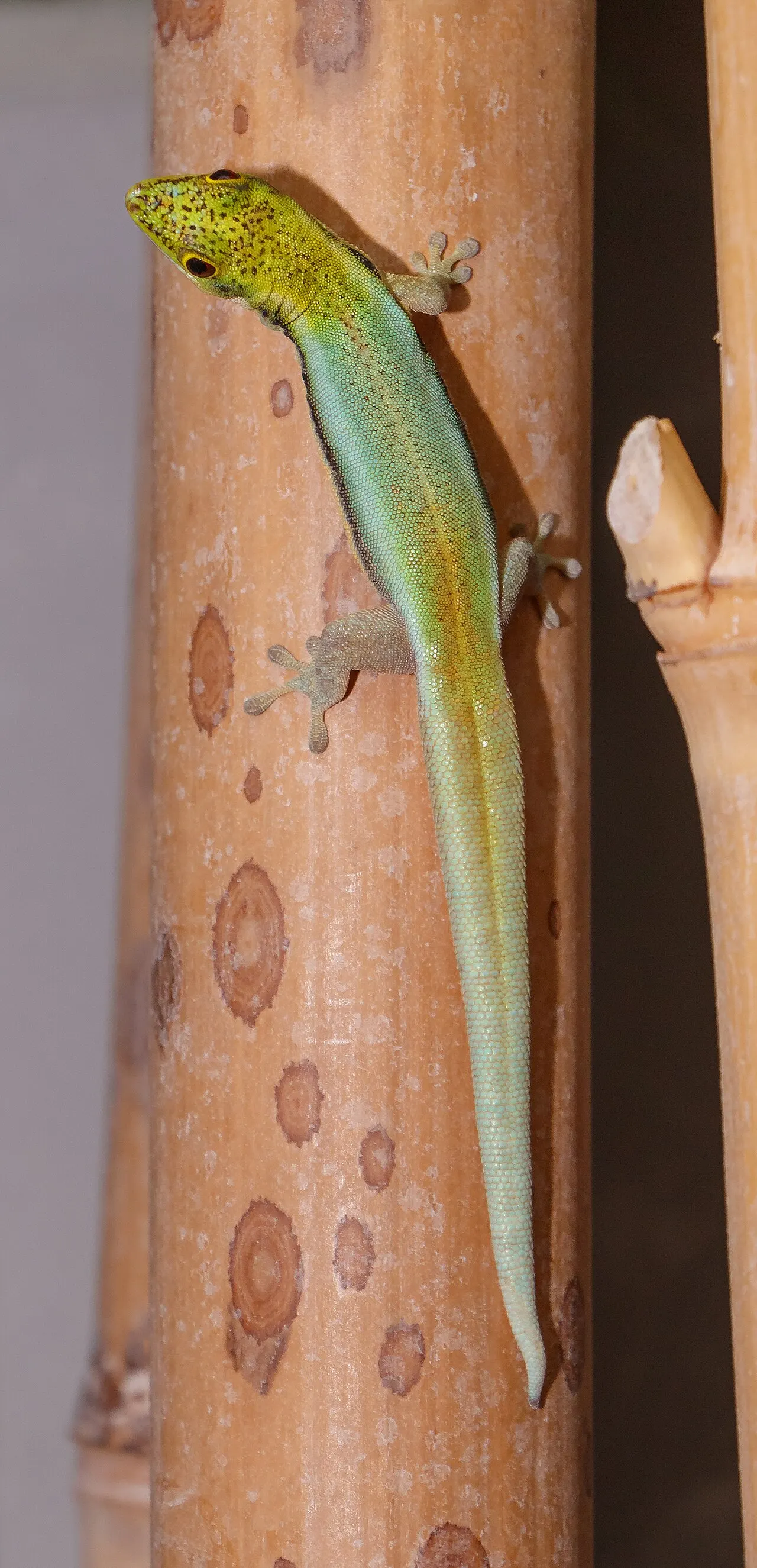
This is one of the more colourful day geckos. It is slim and roughly 8 to 9.5 cm long including the tail. The head and neck are yellow to orange, with a black spot behind the eye that continues as a dark stripe. The front of the back is bluish, the rear is brown, and the tail is turquoise. Males have orange colouring around the pores on the inner thighs.
It is also called the cheerful day gecko, Klemmer's day gecko or the neon day gecko. The name honours the German herpetologist Konrad Klemmer, and the species was described by Seipp in 1991.
Where it lives
For years it was known only from the coast of the Ampasindava Peninsula in the Sambirano region of northwestern Madagascar. In March 2008 survey teams found two individuals, about 500 m apart, in a bamboo patch of roughly 2 hectares at Mandrozo, in fragmented dry deciduous forest in western Madagascar. That site lies about 600 km further south, and no records exist from the ground in between, despite surveys at several parks including Ankarafantsika and Tsingy de Bemaraha.
The IUCN counts two locations, an estimated range of about 955 square kilometres, and records from sea level up to 400 m.
Pins are Wikidata “endemic to” fields. Orange dots, when present, are GBIF occurrence tiles — survey bias included.
How it lives
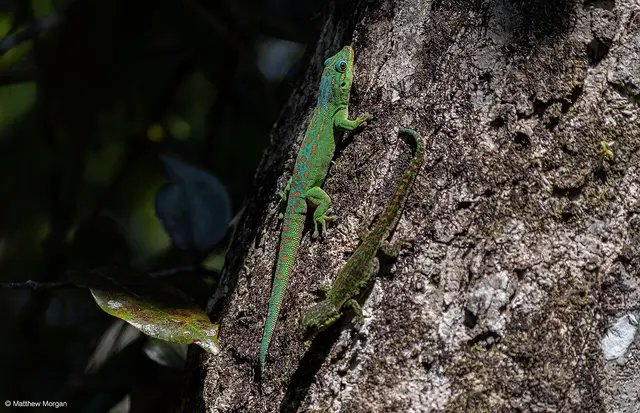
It is tied to bamboo. Every record comes from bamboo patches or secondary bamboo forest, usually on or at the edge of primary forest, and researchers describe it as highly specialised to that habitat. It is active by day. The Mandrozo geckos were seen basking on bamboo stems 1.5 and 2.5 m above the ground. Insects and other small invertebrates are reportedly its main food, and it also licks nectar, pollen and soft sweet fruit.
Females reportedly lay a pair of eggs and tuck them into bamboo canes. In captivity at about 27 degrees C they are said to hatch after roughly 39 to 52 days, into hatchlings of about 22 to 29 mm.
Why it is in trouble
The 2011 assessment lists shifting agriculture as an ongoing threat across much of the range and records the population trend as unknown. With only two known sites and a need for bamboo, the species has little room for error.
Collection for the pet trade is listed as a past threat. The gecko is reportedly bred widely in captivity, and the IUCN has an entry for captive production. It is listed on Appendix II of CITES, which controls international trade. Keepers can read more at /exotic-pet-laws-by-state/.
What is being done
The IUCN records that the gecko occurs in at least one protected area, that conservation sites have been identified across its range, and that education and awareness programmes have been run. When the Mandrozo find was published in 2010, the site was in the process of joining Madagascar's protected area network, which would give the species permanent protection there. No recovery plan or monitoring scheme was in place at the time of the assessment.
Sources
Written for this catalog in our own words from the sources below, checked against them on 12 November 2026. Population figures are estimates and carry the year they were made. Status and assessment year: IUCN. 2026. The IUCN Red List of Threatened Species. Version 2026-1. iucnredlist.org.