Endangered
Flat-tailed day gecko
Phelsuma serraticauda
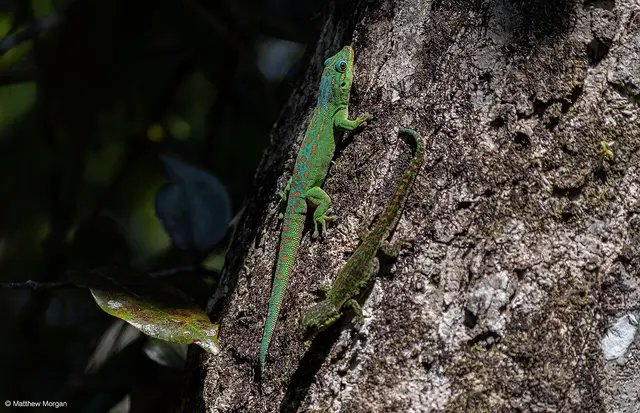
The flat-tailed day gecko (Phelsuma serraticauda) is a small, green, daytime gecko from the east coast of Madagascar, where it lives mostly on coconut palms near Toamasina. The IUCN Red List rates it Endangered (2011 assessment), mainly because wild geckos are collected for the pet trade.
How to recognise it
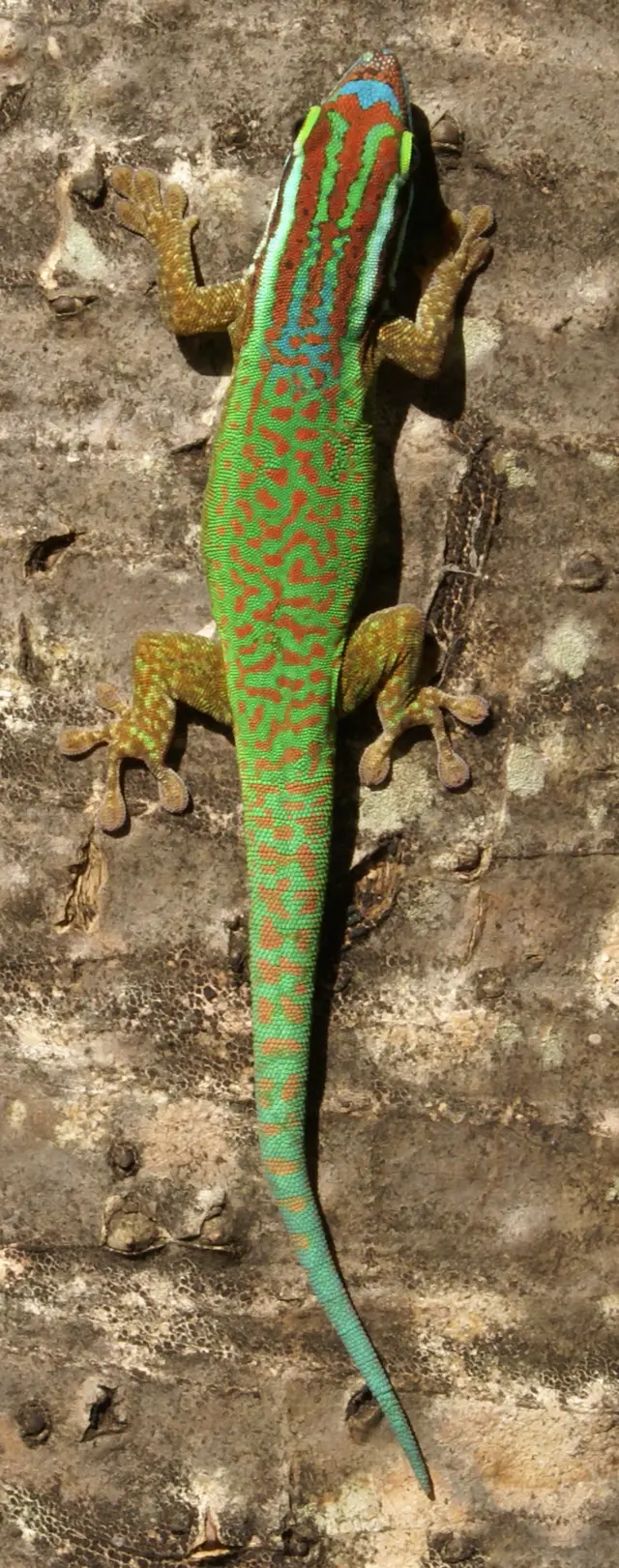
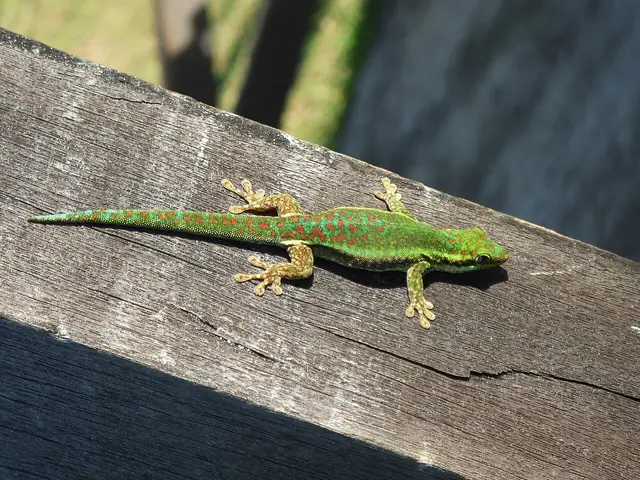
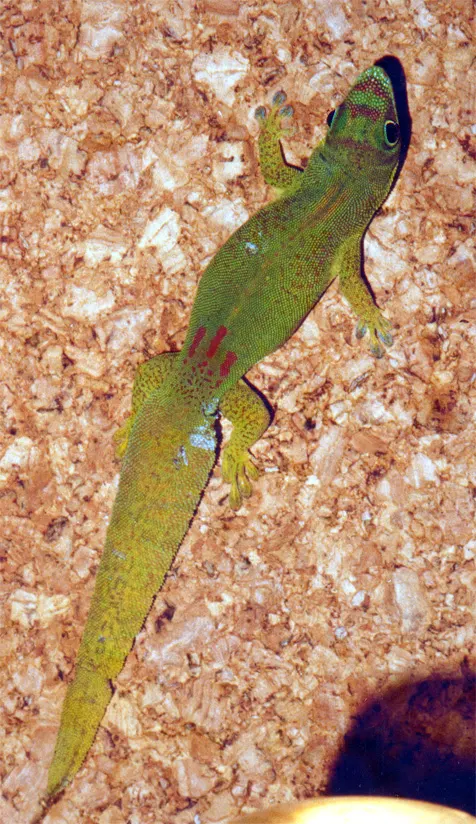
It is a slim day gecko, usually about 13 cm in total length. Females are a little smaller, and the biggest males reach around 15 cm. The body is dark green to yellowish green.
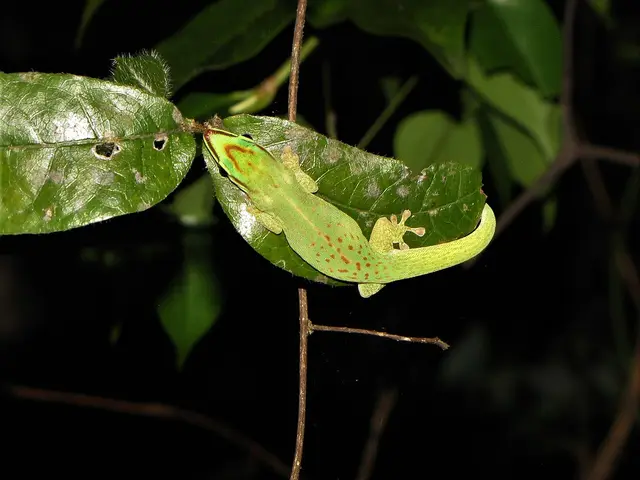
The name comes from the tail, which is broad and flattened with a serrated edge. Three red, tear-shaped marks sit on the lower back, and three red bars cross the snout and head. The neck can look bluish, with two yellow stripes running along it.
Where it lives
It is known from a small part of eastern and northeastern Madagascar. The species was described from Ivoloina, about 12 km north of Toamasina, and a 2008 field survey of 57 sites focused mostly on that area. The Red List puts its extent of occurrence at roughly 4,464 square kilometres and its upper elevation at about 75 m.
In that survey, 84% of observations were on coconut palms, 5% on breadfruit trees and 8% on houses. It was rarely found on eucalyptus, jackfruit and other palms. It was absent from a humid lowland forest site and a coastal forest edge that were checked, so it seems to favour planted and disturbed ground more than intact forest.
Pins are Wikidata “endemic to” fields. Orange dots, when present, are GBIF occurrence tiles — survey bias included.
How it lives
It is active by day. Droppings collected in the 2008 survey showed a diet of spiders, beetles, wasps and ants, true bugs and their larvae. It shares its range with two other day geckos, Phelsuma lineata and P. quadriocellata.
Counts ranged from one to five geckos per site, with a mean of about 2.6 per plant and 1.7 per house. It lays eggs. In captivity, females reportedly lay up to four pairs of eggs a year, hatching in roughly two months at 28 degrees C.
Why it is in trouble
The Red List names collection for the pet trade as the main threat, and a 2008 field survey in Madagascar Conservation and Development recorded illegal collecting. Wild collection can be legal under authorisation and CITES export quotas, but unlicensed taking was seen as well.
The population is also severely fragmented, and habitat loss adds to the pressure. The survey team described theirs as the first study of the species in the wild and urged a monitoring system, since none was in place.
What is being done
Conservation sites have been identified over part of its range, and the species has had some education and awareness work and international trade controls. It is not known to occur in any protected area, and there is no recovery plan or harvest management plan. The survey team called for a dedicated conservation site and more study of its habitat needs.
Sources
Written for this catalog in our own words from the sources below, checked against them on 12 November 2026. Population figures are estimates and carry the year they were made. Status and assessment year: IUCN. 2026. The IUCN Red List of Threatened Species. Version 2026-1. iucnredlist.org.