Endangered
Seipp's day gecko
Phelsuma seippi
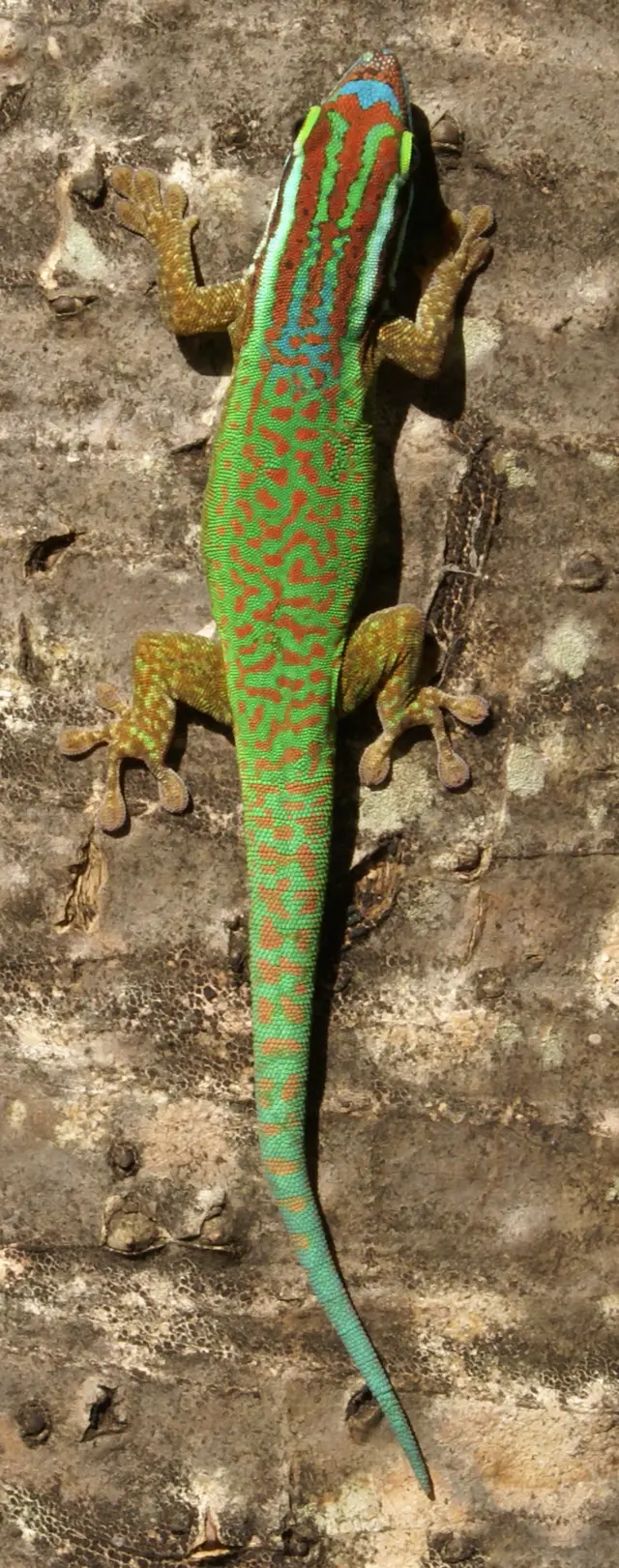
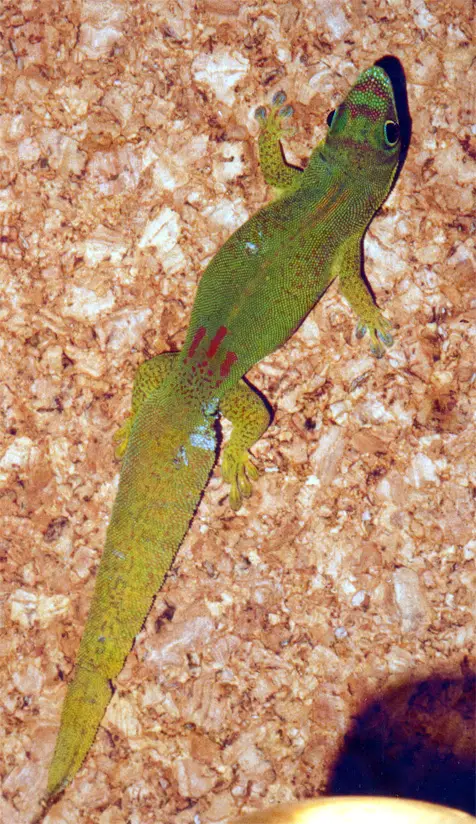
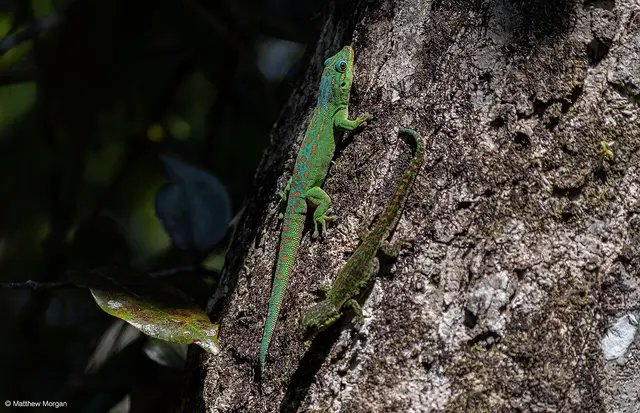
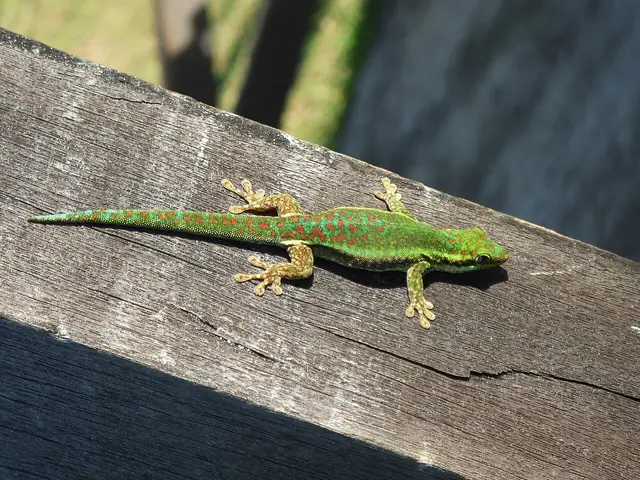
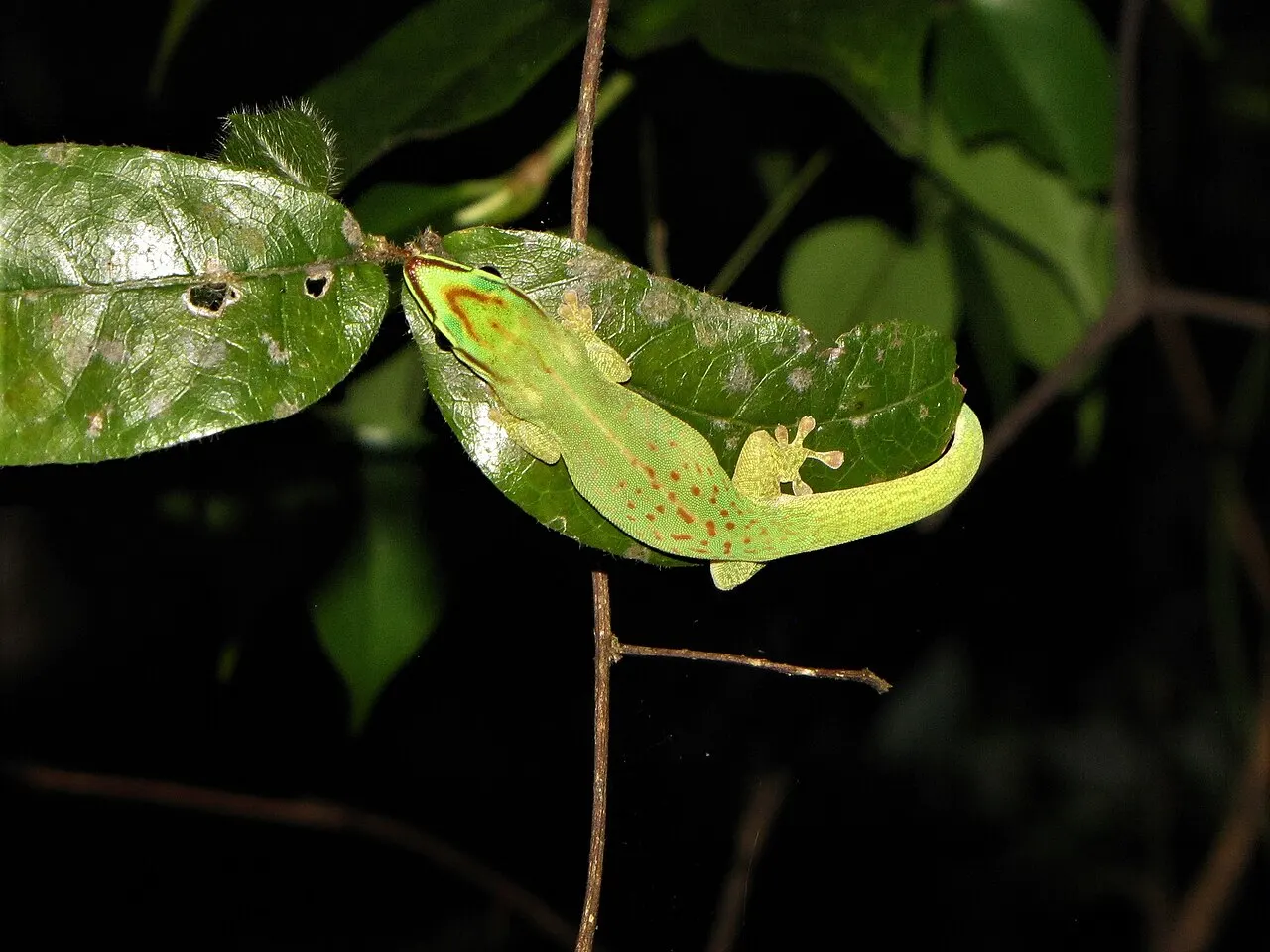
Seipp's day gecko (Phelsuma seippi) is a slim, green, long-snouted lizard of northwestern Madagascar, Nosy Be and Nosy Komba. It lives in rainforest and forest edges, often among bamboo. The IUCN Red List rates it Endangered (assessed 2011) because its forest is fragmented and still being cleared.
How to recognise it
It is a slender, long-snouted day gecko reportedly about 14 centimetres long including the tail (the Reptile Database gives a maximum of 150 millimetres). The body is green to yellowish green, with small red or rust-coloured spots on the back. A rust-coloured stripe runs through the eye, and some animals have a red V-shaped mark on the head and V-shaped stripes on the throat. The belly is pale pink.
The species was described in 1987 by Harald Meier and named for Robert Seipp, a gecko specialist from Frankfurt. The type locality is Nosy Be. It sits in the Phelsuma guttata group of day geckos.
Where it lives
It is found in northwestern Madagascar and on the nearby islands of Nosy Be and Nosy Komba. The Red List records it from sea level up to about 400 metres, in moist lowland forest.
It climbs trees in the forest and along its edges, and reportedly avoids bright sun. A 2018 survey on Nosy Be noted that it is often detected on the fringes of rainforest in stands of bamboo, and suggested it may depend on bamboo forest.
Pins are Wikidata “endemic to” fields. Orange dots, when present, are GBIF occurrence tiles — survey bias included.
How it lives
Like other day geckos it is active in daylight. It reportedly eats insects and other small invertebrates, along with soft, sweet fruit, pollen and nectar. Adults are said to be frequently found in pairs on one tree, while young animals mostly stay in the low shrubs around them.
It lays eggs. Females reportedly lay two at a time, tucking them under leaves or wood on the ground, or beneath loose bark. In captive conditions at 28 degrees Celsius, incubation is said to take about 45 to 50 days.
Why it is in trouble
The Red List criteria point to a restricted range within fragmented forest that is still being converted, with shifting agriculture named as a threat and the area of habitat recorded as declining. Whether numbers are rising or falling is listed as unknown.
A 2018 survey by Humphrey and Ward in Tropical Conservation Science compared Sambirano rainforest, forest fragments and farmland on Nosy Be. Three other day gecko species were encountered more often on farmland than in forest, but Seipp's day gecko was not. It was one of the two rarest geckos found, with eight sightings in total, and its numbers fell with recent human disturbance. The survey concluded it is probably a habitat specialist, more sensitive to forest loss and fragmentation than its relatives.
What is being done
The Red List names site and area protection as the action needed. It records that the species occurs in at least one protected area and is covered by international trade controls, but lists no recovery plan and no monitoring scheme.
The 2018 Nosy Be paper called for more research on the gecko's habitat requirements to guide conservation planning, and for study to extend beyond protected forests into disturbed land.
Sources
Written for this catalog in our own words from the sources below, checked against them on 12 November 2026. Population figures are estimates and carry the year they were made. Status and assessment year: IUCN. 2026. The IUCN Red List of Threatened Species. Version 2026-1. iucnredlist.org.