Endangered
Mauritius upland forest day gecko
Phelsuma rosagularis
The Mauritius upland forest day gecko (Phelsuma rosagularis) is a green, daytime gecko found only in a few patches of mountain forest on the island of Mauritius. The IUCN Red List assessed it as Endangered in 2021, with its habitat shrinking and its numbers still falling.
How to recognise it
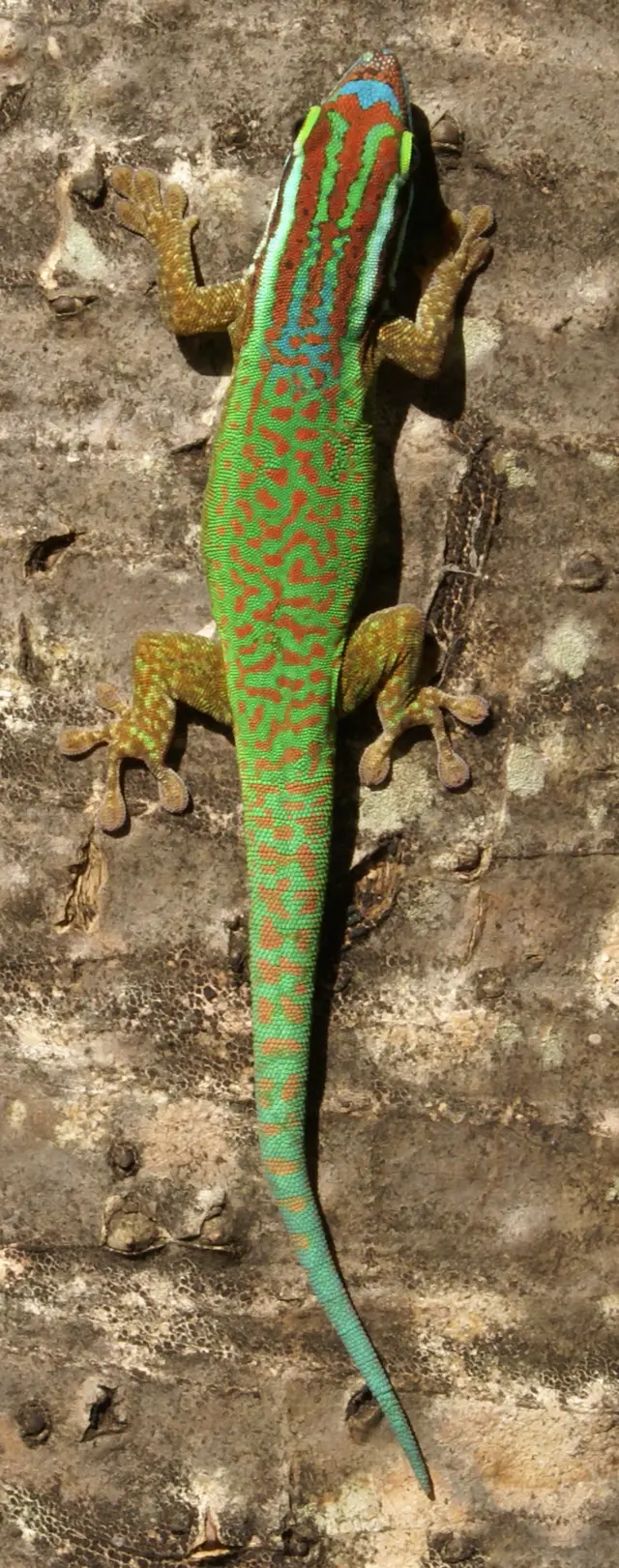
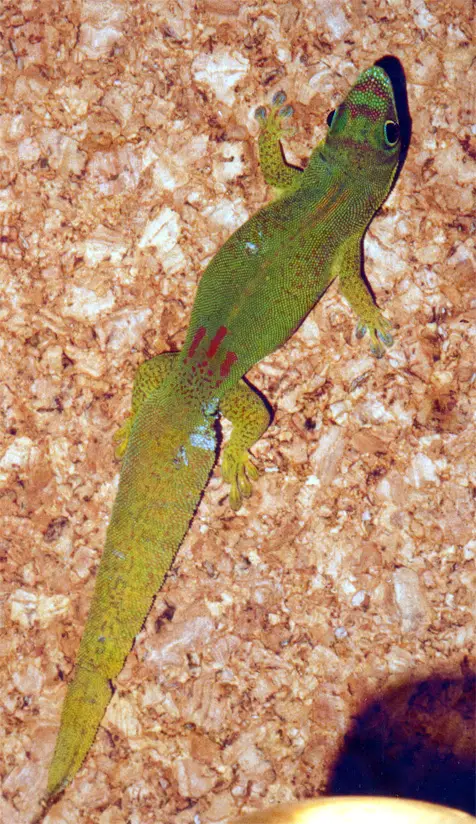
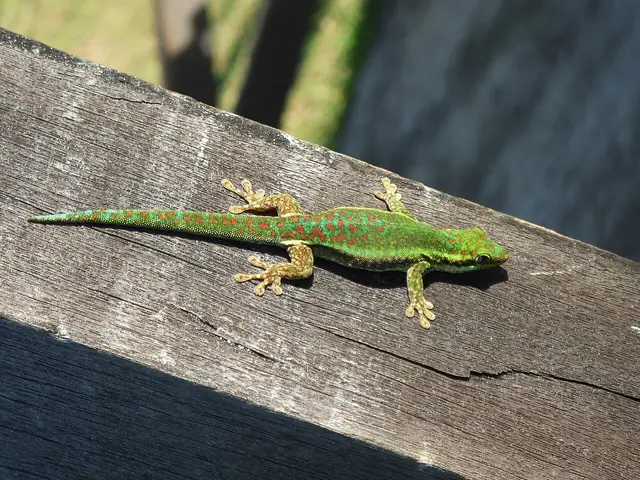
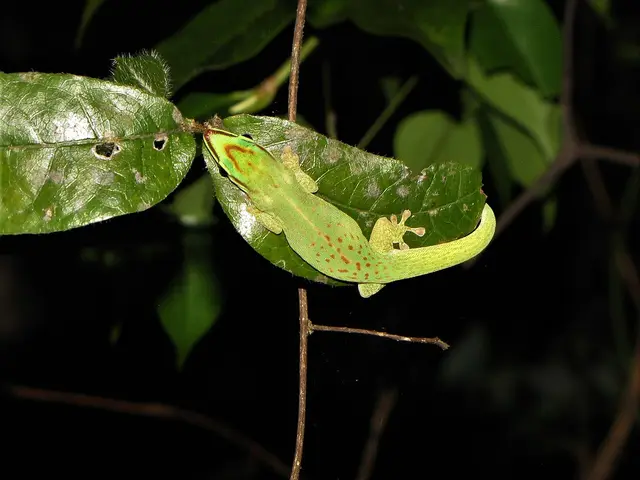
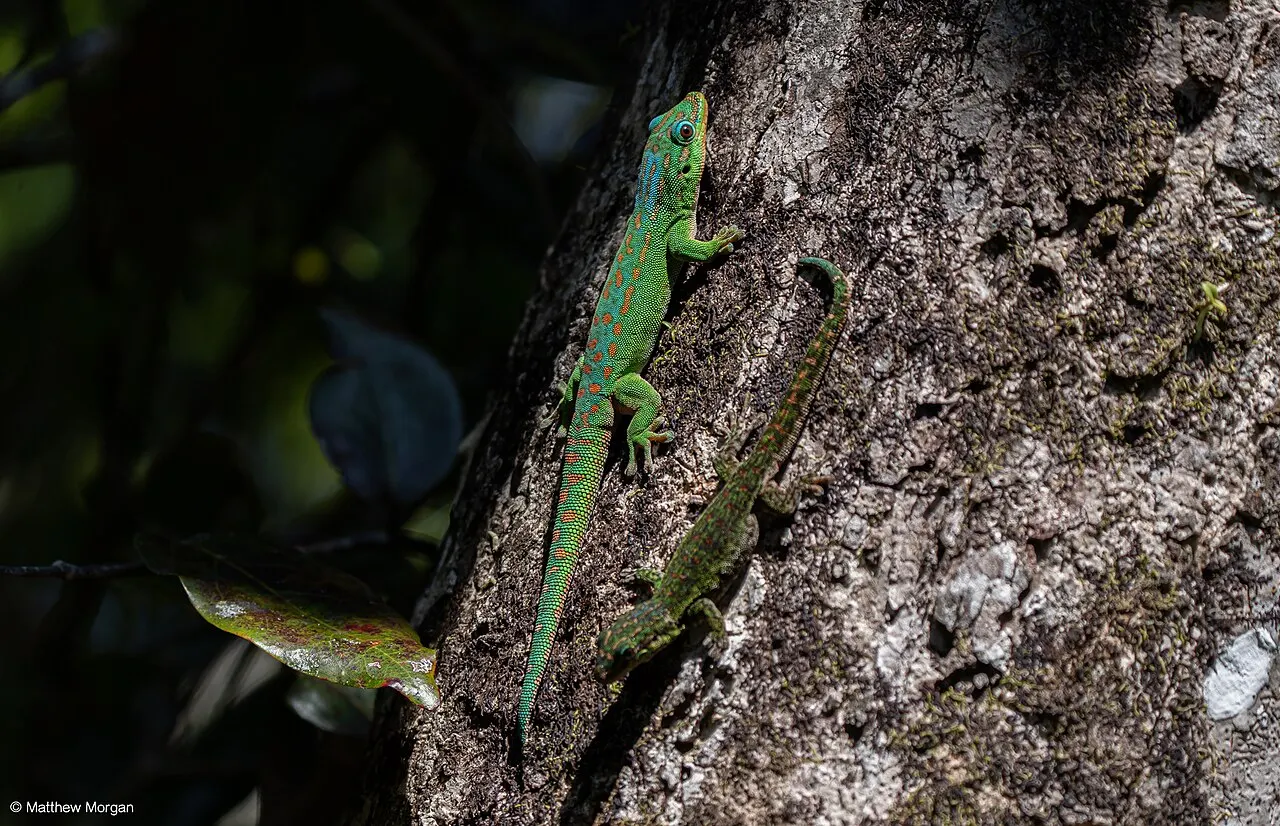
This is a fairly compact day gecko. Males reach up to about 17 cm including the tail, and females are smaller, around 9 to 13 cm. The body is a paler green than that of its lowland relative, with a diffuse bluish patch on the neck and irregular pale orange-red bars and spots across the back and tail. The back end of the tail is often turquoise or blue.
The name rosagularis means pink throat. The chin is pink or rust-coloured. Young geckos look quite different, greyish brown with small white spots, and only start to turn green at about six months. They reach adult colouring at 12 to 15 months.
Where it lives
It is endemic to Mauritius and lives only in scattered upland areas in the southwest and east of the island. Reported sites include the forests around Macchabee and Les Mares (the type locality), the Brise Fer area and Montagnes Bambous. The IUCN lists it from the main island only and records its habitat as moist tropical forest. It puts the area the gecko actually occupies at about 52 square km, inside a wider range of roughly 174 square km.
It prefers large native forest trees and is rarely seen in secondary growth, which is one reason it copes poorly with forest clearance. It is usually found basking high on trunks.
Pins are Wikidata “endemic to” fields. Orange dots, when present, are GBIF occurrence tiles — survey bias included.
How it lives
Like other day geckos it feeds on insects and other small invertebrates, and it also takes soft ripe fruit, pollen and nectar. It is described as shy, which makes sense for a lizard preyed on by several bird species. It lays eggs.
It was first described in 1969 by Vinson and Vinson as a subspecies of the Mauritius lowland forest day gecko (Phelsuma guimbeaui). Since a 2004 study of the Mascarene day geckos by Austin and colleagues, it has been treated as a species in its own right.
Why it is in trouble
The IUCN rates it Endangered because it lives in few places, its populations are split up, and both its range and the quality of its forest are still declining. The listed threats are more frequent and more intense fires, storms and flooding, and introduced species that compete with the gecko or kill it. Forest damage and conversion add to the pressure.
The IUCN also records use in the pet and display trade, and notes that the species is subject to international legislation and trade controls.
What is being done
At least part of its range lies inside a protected area. The conservation actions the IUCN records are restoring native habitat, controlling invasive species and managing key sites. No exact population count is available, so how many geckos remain is not known.
Sources
Written for this catalog in our own words from the sources below, checked against them on 12 November 2026. Population figures are estimates and carry the year they were made. Status and assessment year: IUCN. 2026. The IUCN Red List of Threatened Species. Version 2026-1. iucnredlist.org.