Endangered
Réunion Island day gecko
Phelsuma borbonica
The Réunion Island day gecko (Phelsuma borbonica) is a green, daytime gecko of about 16 cm that lives on Réunion in the Indian Ocean, with a separate form on the Agaléga Islands of Mauritius. The IUCN Red List lists it as Endangered (assessed 2021), with a declining population and a patchy range.
How to recognise it
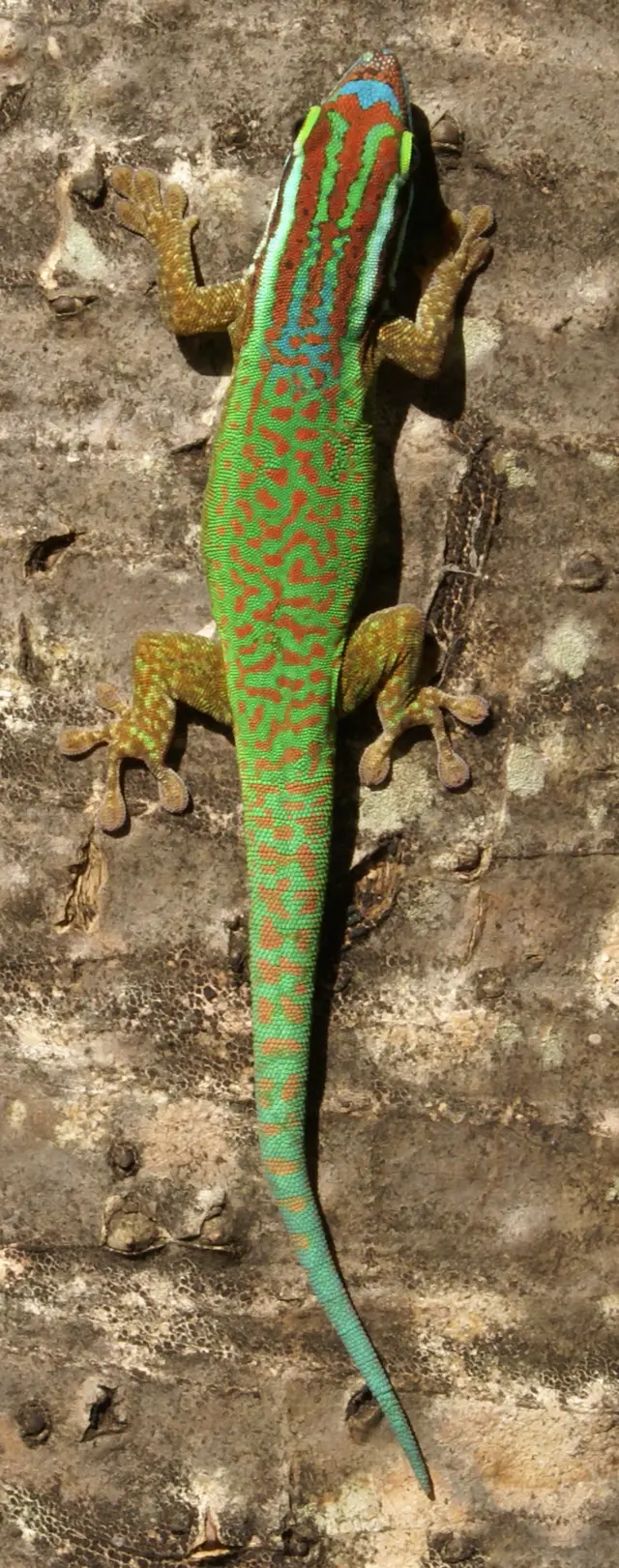
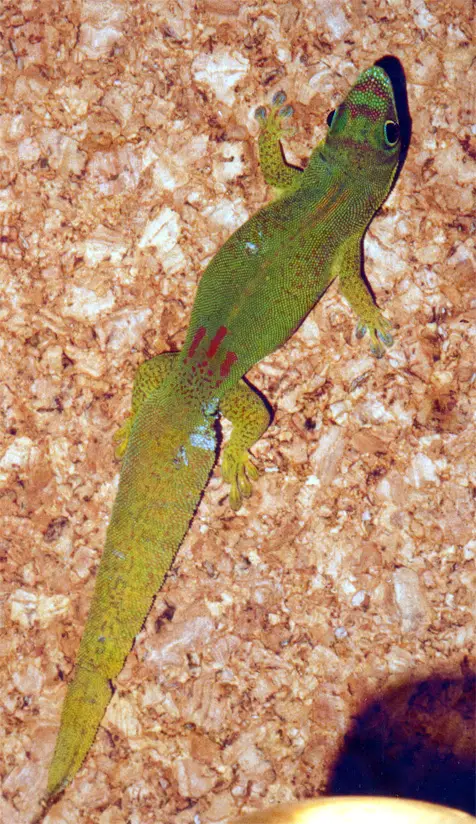
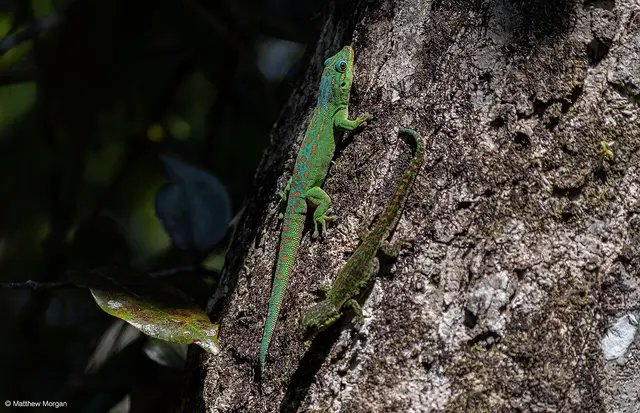
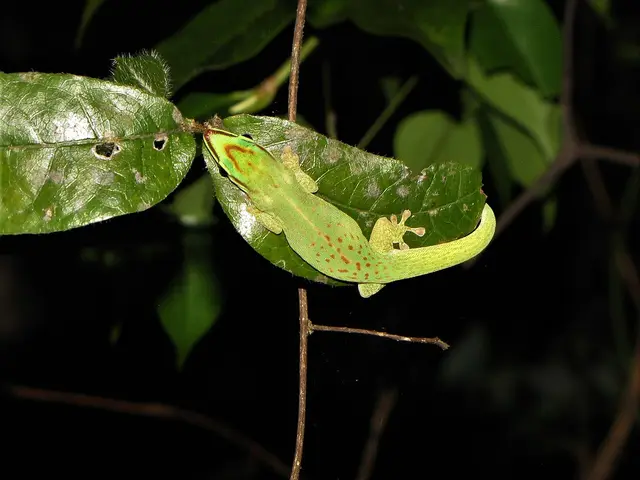
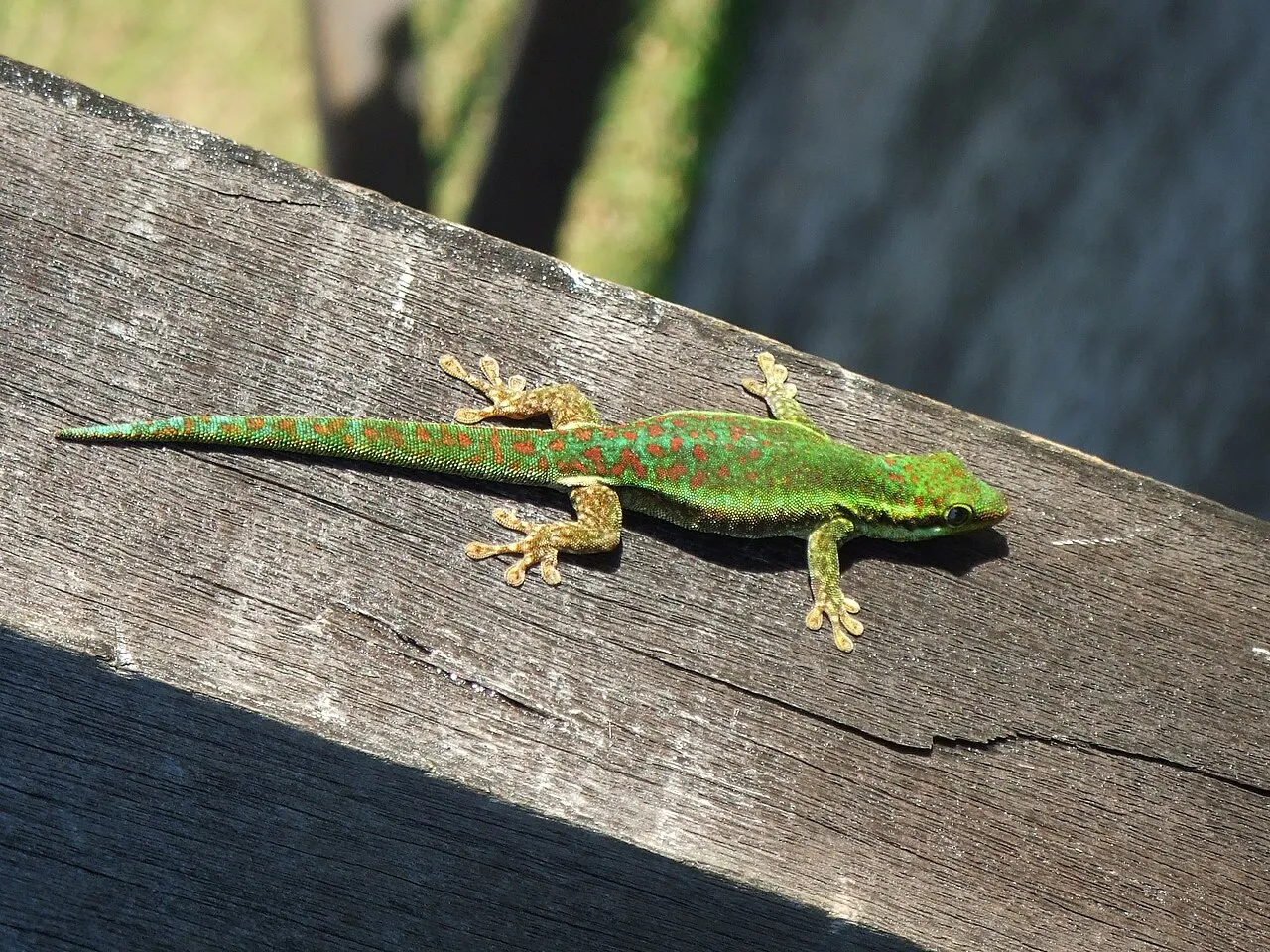
It's a mid-sized day gecko, reaching about 16 cm in total length. Colour varies from place to place. The body is bluish green or dark green, the head is yellowish with fine brown mottling, and brownish or brick-red spots on the back and tail join into a netlike pattern of bars. The underside is yellowish and marbled with brown.
A coastal population at Bois Blanc, near Sainte-Rose on the east coast, has a distinctive brown pattern on the head.
Where it lives
The species is native to Réunion, where it is found mainly in the north, east, southeast and south, with some groups in the west and centre. A third recognised form, Phelsuma borbonica agalegae, lives on the Agaléga Islands of Mauritius, about 1,000 km to the north. Fossil eggs and bones suggest the gecko once ranged across all of Réunion before people arrived in the 17th century.
It occurs from sea level to an upper limit of about 2,800 m, though not continuously. Groups above 2,000 m live on cliffs and rocky ridges. Lower down it uses humid forest, semi-dry forest on the west coast, coastal Pandanus thickets and, in places, introduced vegetation. On Agaléga it is found on coconut and banana palms and around buildings.
Groups in the west, centre and north of Réunion are highly fragmented, while those in the east and south are more continuous. The Red List puts the area occupied on Réunion at about 250 square kilometres, and counts two locations.
Pins are Wikidata “endemic to” fields. Orange dots, when present, are GBIF occurrence tiles — survey bias included.
How it lives
It is active by day and mostly lives in trees. Banana trees are a typical perch. It eats insects and other small invertebrates, and also licks soft, sweet fruit, pollen and nectar. In April 2024 researchers photographed native and introduced day geckos feeding on the same fleshy fruit stalk of a Pandanus at Bois Blanc.
Three subspecies are recognised, but they were described from very few animals and their status is doubtful. Some highly divergent populations, such as those in high-altitude heather shrubland, may turn out to be separate taxa. A 2024 paper in Conservation Genetics, titled for deep genetic divergence within the island, links variation in appearance to genetic differences between populations.
Why it is in trouble
Sugarcane fields and towns have replaced much of its former habitat, and urban growth continues. Fires, deliberate and accidental, are increasing. The Red List calls invasive plants the main threat in natural habitats, because they close open habitat and make it more fire-prone. Introduced rats and cats prey on the geckos, and black rats eat eggs laid inside tree trunks.
A newer worry is the gold dust day gecko, a Madagascan species introduced to the west of Réunion in 1975 and now found around the island up to 600 m. Where introduced day geckos have spread on Mauritius, some native populations have died out. Réunion's gecko doesn't share its native range with other day geckos, so a 2025 natural history note in the Herpetological Bulletin suggests it may cope poorly with competition for food and basking spots.
The pet trade is a smaller and less certain pressure. Some animals are probably taken from the wild for sale in Europe and the US, but the amount is unknown.
What is being done
A national action plan covering Réunion's two green day geckos was published in 2019, and the Red List records a recovery plan as in place. The species is in CITES Appendix II, so international trade is controlled. A small conservation grant in 2012 funded sampling, genetic tests of the geckos' identity and an awareness campaign. In 2018 the national park moved 50 geckos from Plaine Affouches to Cap Francis in the north. The Red List still lists reintroduction and species recovery as needed.
Sources
Written for this catalog in our own words from the sources below, checked against them on 12 November 2026. Population figures are estimates and carry the year they were made. Status and assessment year: IUCN. 2026. The IUCN Red List of Threatened Species. Version 2026-1. iucnredlist.org.