Endangered
Yellow-bellied Day Gecko
Cnemaspis flaviventralis
The yellow-bellied day gecko (Cnemaspis flaviventralis) is a small gecko known from forest around Amboli in the northern Western Ghats of Maharashtra, India. It was described in 2016 and assessed by the IUCN as Endangered in 2021, because its small range is fragmented and shrinking.
How to recognise it
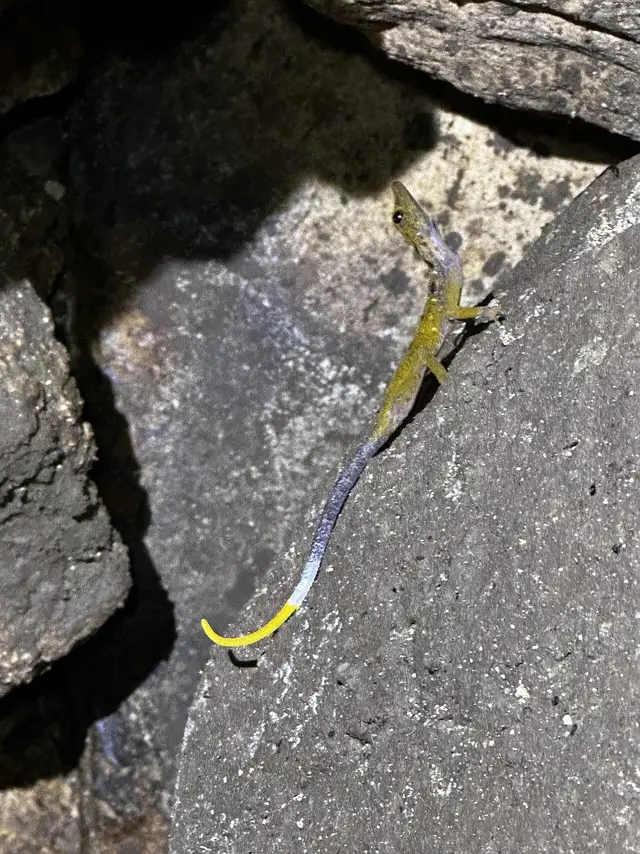
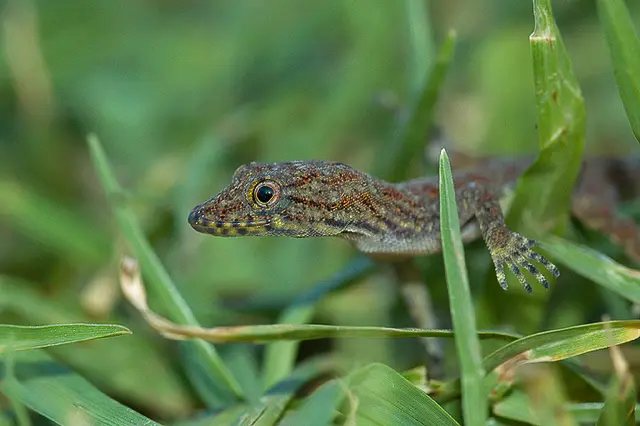
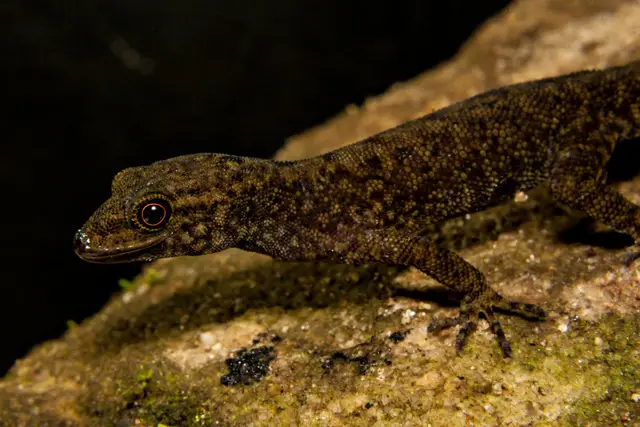
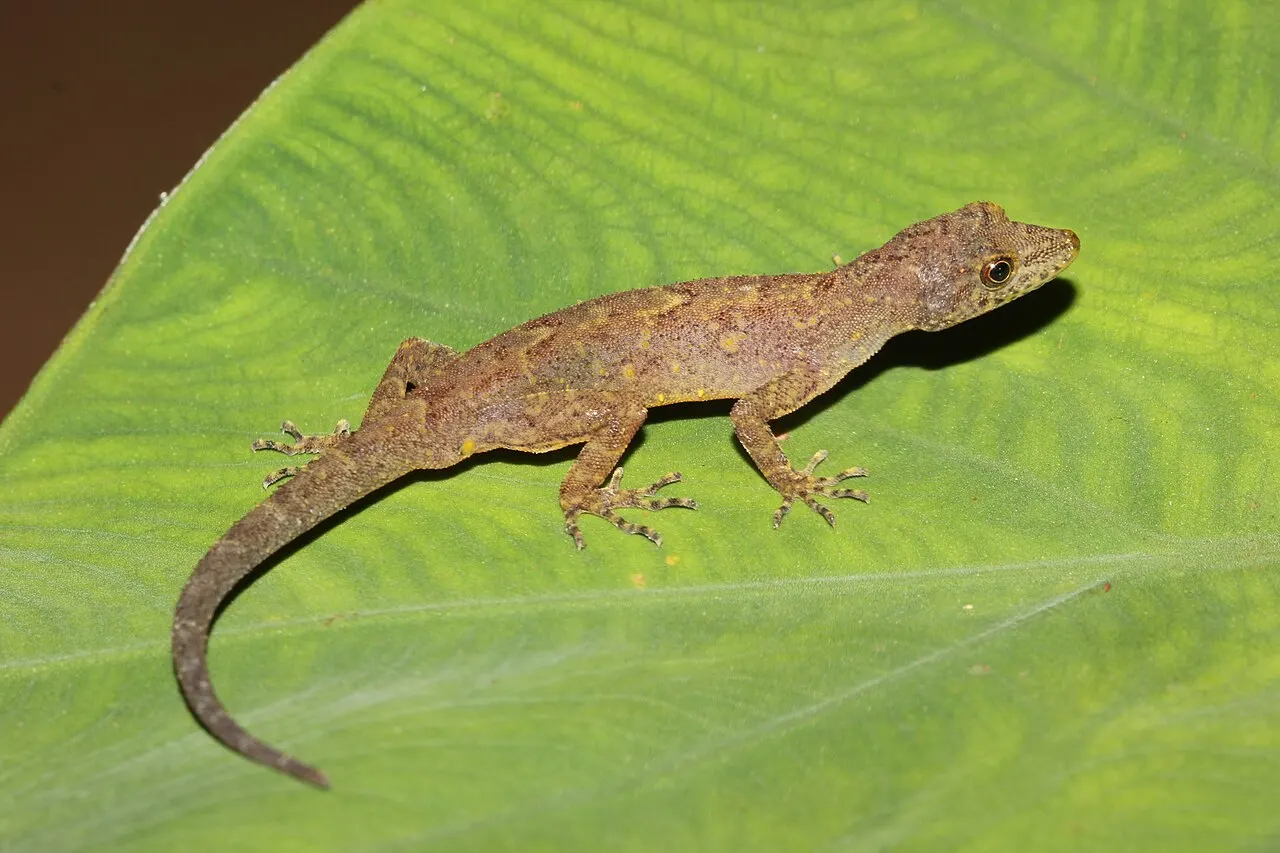
This is a small gecko. The eight specimens in the original description measured 30 to 36 millimetres from snout to vent, and none was known to exceed 37 millimetres. In life the back is reddish brown with bright yellow bumps along the back and flanks, while the belly and thighs are bright yellow, which gives the species its name. The throat is white.
Faded W-shaped marks in brownish black cross the shoulder region, with horseshoe-shaped marks on the lower back. Both sexes have small spurs behind the vent, and males have three femoral pores on each side.
Where it lives
It was described from Amboli in Sindhudurg District, at about 735 metres above sea level, and the 2016 paper knew it only from there. The IUCN estimates its extent of occurrence at about 1,000 square kilometres, treats the population as severely fragmented, and gives 735 metres as its upper elevation limit. It occurs in at least one protected area.
Before it was described it was easy to mistake for neighbouring day geckos such as Cnemaspis girii, C. indraneildasii, C. kolhapurensis and C. goaensis. Mitochondrial DNA shows it is distinct, with C. girii as its closest relative.
Pins are Wikidata “endemic to” fields. Orange dots, when present, are GBIF occurrence tiles — survey bias included.
How it lives
Despite the name, the describers collected their specimens at night, between about 10 pm and 2 am, at air temperatures of 22 to 27 degrees Celsius. The geckos lived in dense forest, mostly semi-arboreal. Four were on a tree trunk about two metres above the ground, two in leaf litter and two on rock surfaces.
Breeding is presumed to run from September to November, with eggs laid in October and November. Females reportedly lay two eggs under rocks, on boulders or in tree holes. These are field notes from a small sample, not a systematic study.
Why it is in trouble
The IUCN lists agro-industry farming as the threat, converting and degrading its moist forest habitat, and records a continuing decline in the area of habitat. The population trend is unknown. The describers noted that several Western Ghats Cnemaspis geckos are already globally threatened.
What is being done
Resource and habitat protection is listed as the needed action, and part of the species' range lies inside a protected area. The assessment records no recovery plan or captive programme.
Sources
Written for this catalog in our own words from the sources below, checked against them on 12 November 2026. Population figures are estimates and carry the year they were made. Status and assessment year: IUCN. 2026. The IUCN Red List of Threatened Species. Version 2026-1. iucnredlist.org.