Critically Endangered
Rough-bellied day gecko
Cnemaspis tropidogaster
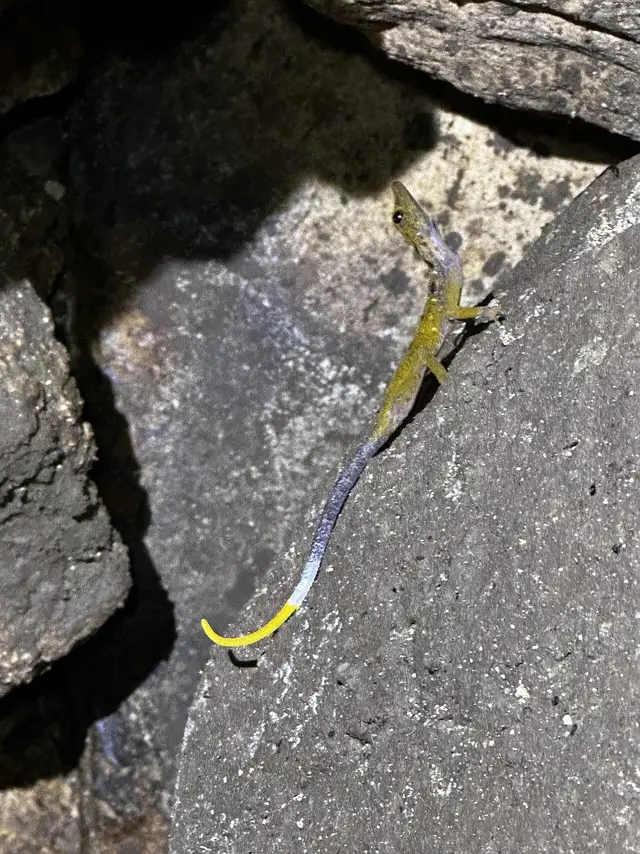
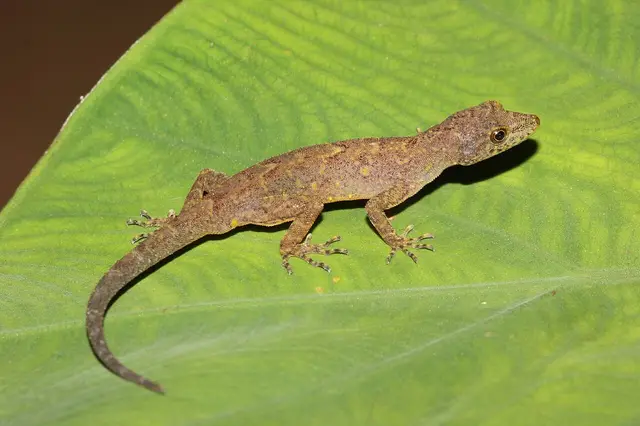
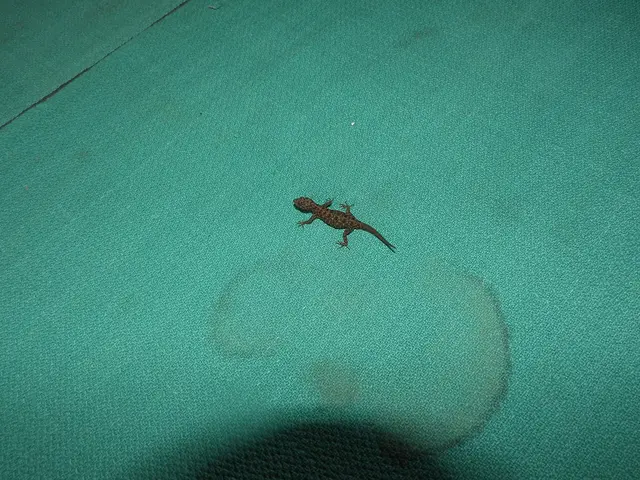
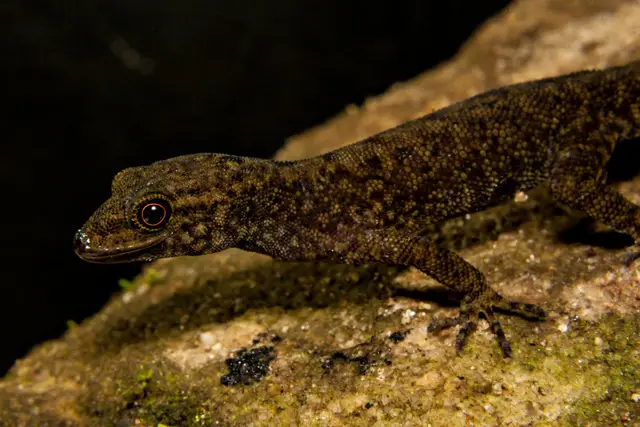
The rough-bellied day gecko (Cnemaspis tropidogaster) is a small, rock-dwelling lizard that vanished from the scientific record for about 120 years before live animals turned up again in Sri Lanka in 2016. The IUCN rated it Critically Endangered in 2021.
How to recognise it
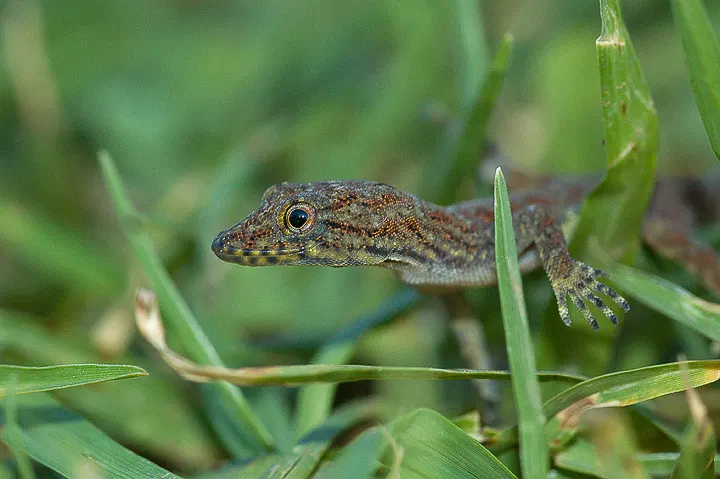
It reportedly has a distinct head with an elongated snout and keeled scales on the belly, which gives the species its common name. The back is dark brown with light and dark bands across it, the underside is pale brown to cream, and the sides carry spiny tubercles. Males reportedly have two to four preanal pores and three to six femoral pores, a feature used to tell day geckos apart.
Like other Cnemaspis it's active by day and at dusk. It is usually found on rock and low tree trunks. The IUCN describes it as confined to rocky outcrops within heavily disturbed wet forest.
A species that went missing
George Boulenger described it in 1885 as a variety of another gecko, giving only Ceylon as the locality. One of its type specimens, collected in 1871, was for a long time the only known animal, though one source gives about 1896 as the last record. Over the following century the name was applied to geckos across much of Sri Lanka, until researchers realised it covered a complex of several species.
In 2016 Thasun Amarasinghe and colleagues reported live animals in Zootaxa, found at 50 to 80 m above sea level in the wet zone and matched to the species by measurements and scale counts. According to the IUCN, six animals were found at two adjacent sites near Colombo, Pikikuttuwa and Maligatenna.
Where it lives
The IUCN treats the species as present in Sri Lanka only, at a single location between 52 and 78 m elevation in lowland moist forest, with an extent of occurrence of roughly 1 square kilometre. Some references also list the Western Ghats of India, but the IUCN regards it as endemic to Sri Lanka.
Both known sites lie within forest monasteries, and the IUCN estimates that 90 to 100 percent of the population is inside a protected area. The species is believed to have once been widespread around Colombo before the city grew.
Pins are Wikidata “endemic to” fields. Orange dots, when present, are GBIF occurrence tiles — survey bias included.
Why it is in trouble
With one tiny site, any damage there matters. The assessment names mining and quarrying, housing and urban development, and light pollution, and records a continuing decline in the area of habitat. It estimates that suitable habitat shrank by about 80 percent over 15 years, judging from satellite images. Granite quarrying could destroy the rock outcrops, and bright lights used for wedding photography at the sites may disturb the geckos.
Visits since 2016 found it not rare at the two sites. The population trend is still listed as unknown and no population count exists.
What is being done
The Red List lists site management and habitat restoration as the relevant actions, and the area is an archaeological reserve. It records no recovery plan and no systematic monitoring scheme. The IUCN recommends limiting photography and artificial lighting there.
Sources
Written for this catalog in our own words from the sources below, checked against them on 12 November 2026. Population figures are estimates and carry the year they were made. Status and assessment year: IUCN. 2026. The IUCN Red List of Threatened Species. Version 2026-1. iucnredlist.org.