Critically Endangered
Fairy Rock Gecko
Cnemaspis paripari
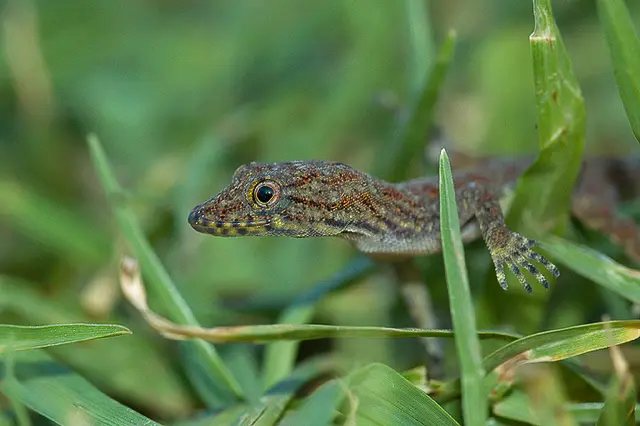
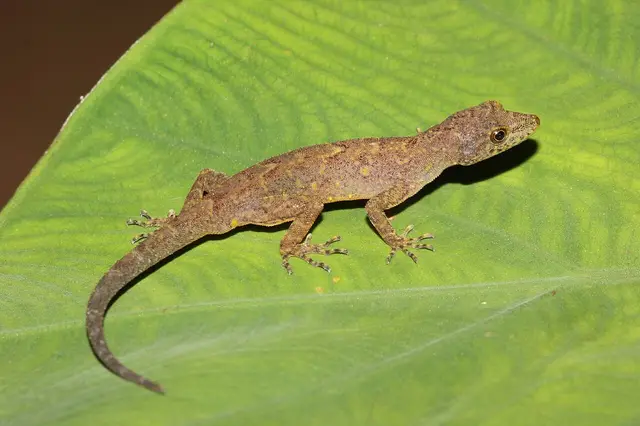
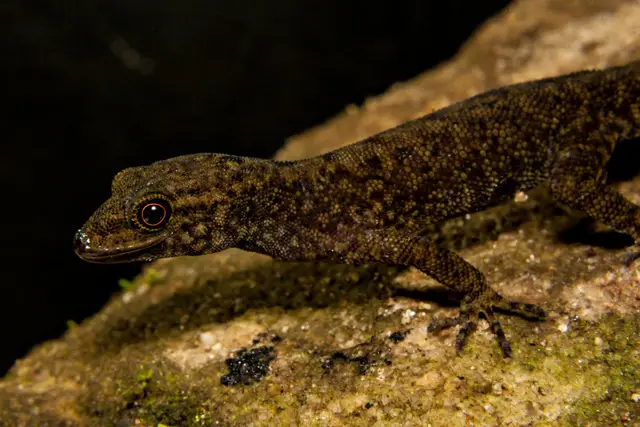
The fairy rock gecko (Cnemaspis paripari) is a small lizard known only from limestone hills at Bau in Sarawak, on Malaysian Borneo. Described in 2009 as the first Bornean Cnemaspis found to live only on limestone, it is rated Critically Endangered (assessed 2019), with quarrying the threat the assessment names.
How to recognise it
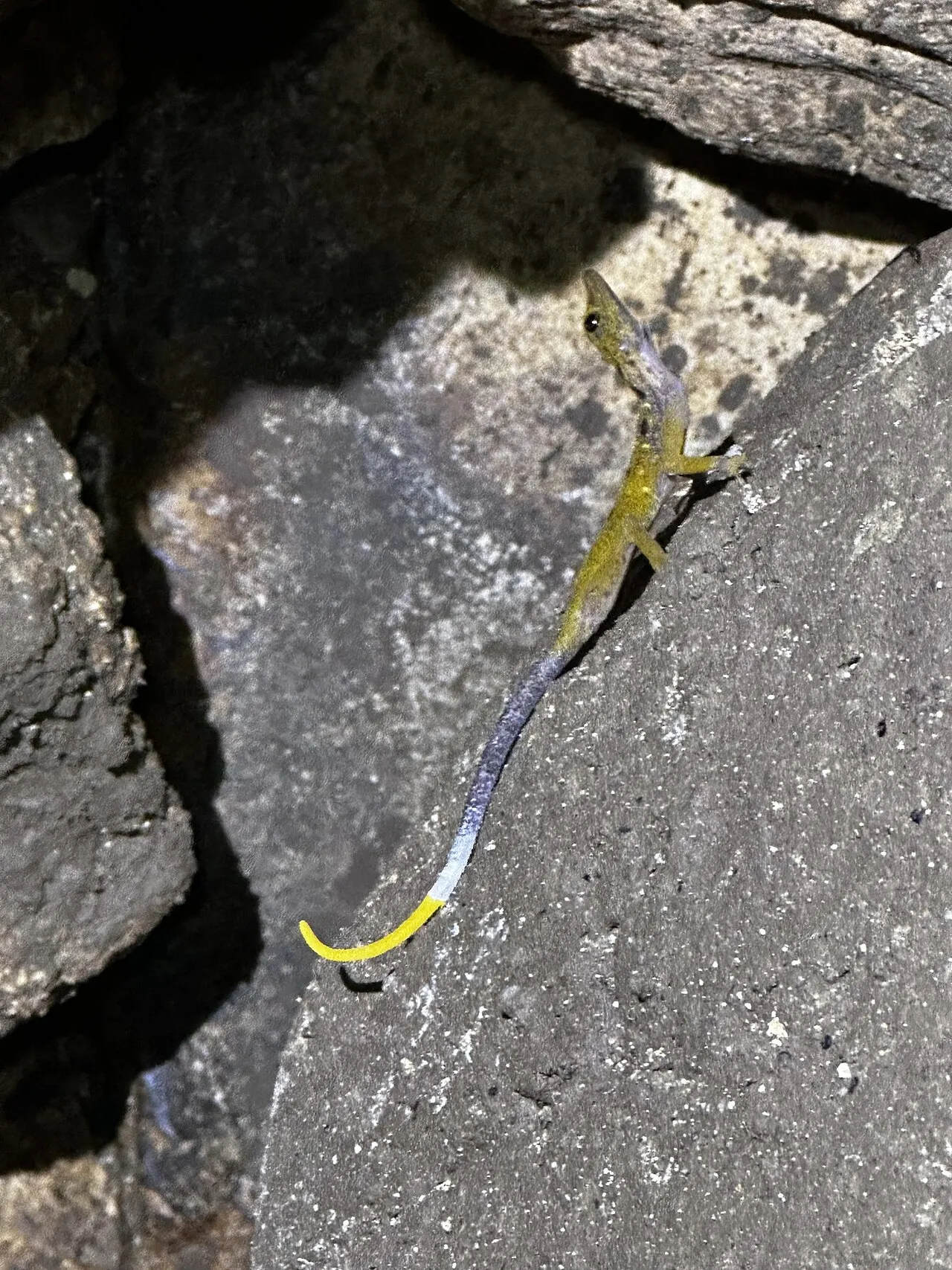
Adults reach a snout-to-vent length of about 50.7 mm. Males are the showy ones, with a yellow head, yellow limbs and a yellow regrown tail, while the back half of an original tail is white. The belly scales are keeled, and there are no enlarged scales on the thighs or shins.
Its scientific name comes from Gua Pari-pari, the cave where the first specimen was found. Pari-pari is the Malay word for fairies, which gives the animal its English name.
Where it lives
Larry Lee Grismer and Chan Kin Onn described the species in 2009 in Zootaxa, in a paper titled "A new species of karst dwelling Cnemaspis." The type specimen, an adult male, was collected in February 2009 at Gua Pari-pari in Bau District, Sarawak.
It is recorded from Gua Pari-pari (Fairy Cave) and Gua Angin (Wind Cave) in the Bau region. A 2021 paper in the Journal of Threatened Taxa by Nashriq and Das lists limestone as its preferred surface and describes it as endemic to limestone formations. The Red List assessment treats it as occurring at a single location and lists lowland rainforest and caves as habitat.
Pins are Wikidata “endemic to” fields. Orange dots, when present, are GBIF occurrence tiles — survey bias included.
How it lives
Nashriq and Das recorded the gecko as active at night, with collecting done between 20:00 and 23:00. At some sites it shares the rock with other Cnemaspis species. In their account, crevices serve as shelter when a gecko is threatened, and as nurseries, with eggs found in pairs set into depressions in damp mineral surfaces.
The Reptile Database lists it as egg-laying, though that is inferred from related species and not observed directly. Nobody has published a count of how many there are.
Why it is in trouble
Quarrying is the threat named in the assessment. Some of the Bau limestone hills are mined for cement, and Nashriq and Das note that mining and shifting agriculture are widespread in Sarawak and split Cnemaspis populations apart.
The population at Fairy Cave lives on an isolated karst hill of about 4 hectares, separated from the main Bau limestone formation by roughly 800 m of lowland. The assessment records a continuing decline in the area where the gecko lives, while its population trend is unknown.
What is being done
The Red List assessment lists resource and habitat protection and site or area protection among the conservation actions for the species. It also records that the species does not occur in any protected area, though Nashriq and Das describe Fairy Cave as a nature reserve. They argue that keeping limestone areas within rainforest is essential to maintain species diversity.
Sources
Written for this catalog in our own words from the sources below, checked against them on 12 November 2026. Population figures are estimates and carry the year they were made. Status and assessment year: IUCN. 2026. The IUCN Red List of Threatened Species. Version 2026-1. iucnredlist.org.