Endangered
Golden Gecko
Gekko badenii
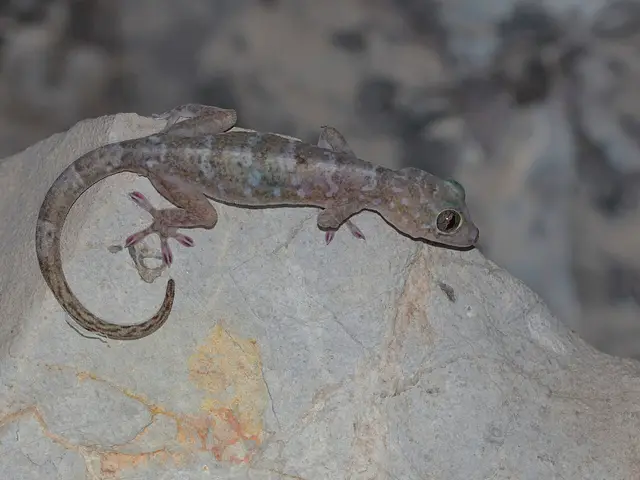
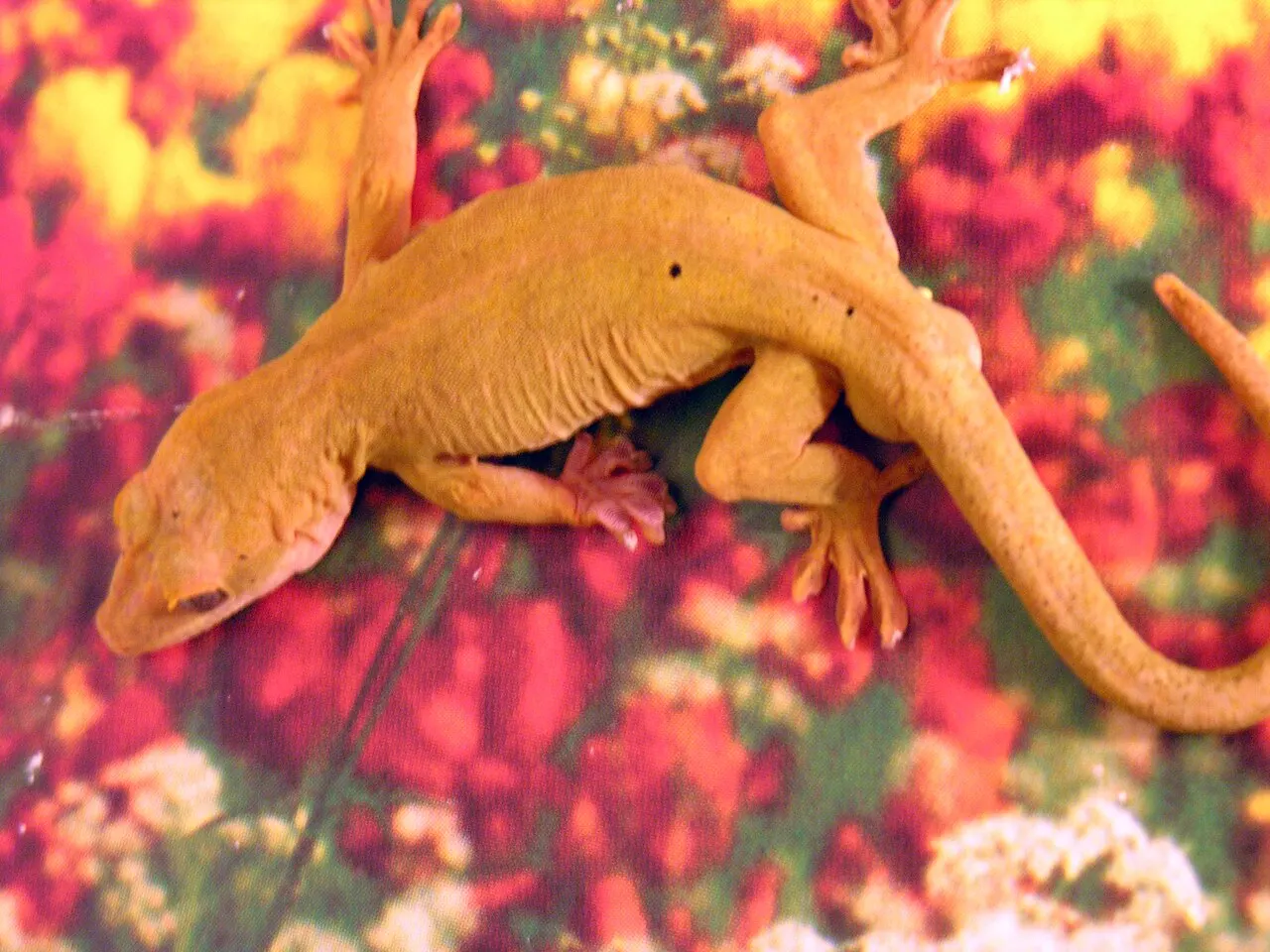
The golden gecko (Gekko badenii) is a gold-scaled lizard from southern Vietnam, first recorded on Ba Den Mountain in Tay Ninh Province. The IUCN Red List lists it as Endangered (assessed 2018), with a decreasing population. It lives on rock and in lowland forest, and is hunted for meat and the pet trade.
How to recognise it
The common name comes from the gold-coloured scales on its body. Males are the bigger sex, reaching roughly 18 to 20 cm in total length including the tail, while females stop at around 13 to 15 cm.
Males also have a longer tail base with fleshy bumps and pores along the inside of the hind legs. Females lack the leg pores. The species is also called Baden's Pacific gecko, and its Latin name honours Nui Ba Den, or Black Lady Mountain.
Where it lives
The gecko was described in 1994 from Ba Den Mountain, in Tay Ninh Province. A second name published the same year, Gekko ulikovskii, was based on animals from Kon Tum Province, and the two are now treated as one species. In 2014, conservation biologists from the Institute of Ecological and Biological Resources and the group Wildlife At Risk also found it in Kien Giang Province, a few hundred metres from a rescue station.
The IUCN gives an extent of occurrence of about 4,081 square kilometres, spread over three locations, at elevations from sea level to 986 m. Its habitats are lowland moist forest and rocky areas such as cliffs and outcrops. The IUCN records that it does not occur in any protected area.
Pins are Wikidata “endemic to” fields. Orange dots, when present, are GBIF occurrence tiles — survey bias included.
How it lives
Golden geckos eat mostly insects with a little fruit, and reportedly drink rainwater that collects on leaves. They lay eggs.
In captivity, two geckos of the same sex kept together fight. Beyond that, little has been published about their behaviour in the wild, their breeding season or their lifespan.
Why it is in trouble
The IUCN lists intentional use, meaning deliberate collecting of the animal itself, as the threat to the species, and records a continuing decline. It notes use of the gecko as human food and as a pet or display animal. On Ba Den Mountain, geckos are hunted both for meat and for the pet trade.
Because the gecko is not especially popular with keepers, most animals sold as pets are reportedly wild-caught. A zoo that keeps the species names overharvesting for food and the international pet trade as its biggest threats.
The Kien Giang discovery shows the species lives beyond Ba Den Mountain, but no one has published a population count, and it still has a small known range.
Sources
Written for this catalog in our own words from the sources below, checked against them on 12 November 2026. Population figures are estimates and carry the year they were made. Status and assessment year: IUCN. 2026. The IUCN Red List of Threatened Species. Version 2026-1. iucnredlist.org.