Critically Endangered
Lauhachinda's cave gecko
Gekko lauhachindai
Lauhachinda's cave gecko (Gekko lauhachindai) is a medium-sized, whitish-spotted gecko known only from limestone caves in central Thailand. It was described in 2010. The IUCN Red List assessed it as Critically Endangered in 2018, with a single known location and a tiny range under pressure from quarrying.
How to recognise it
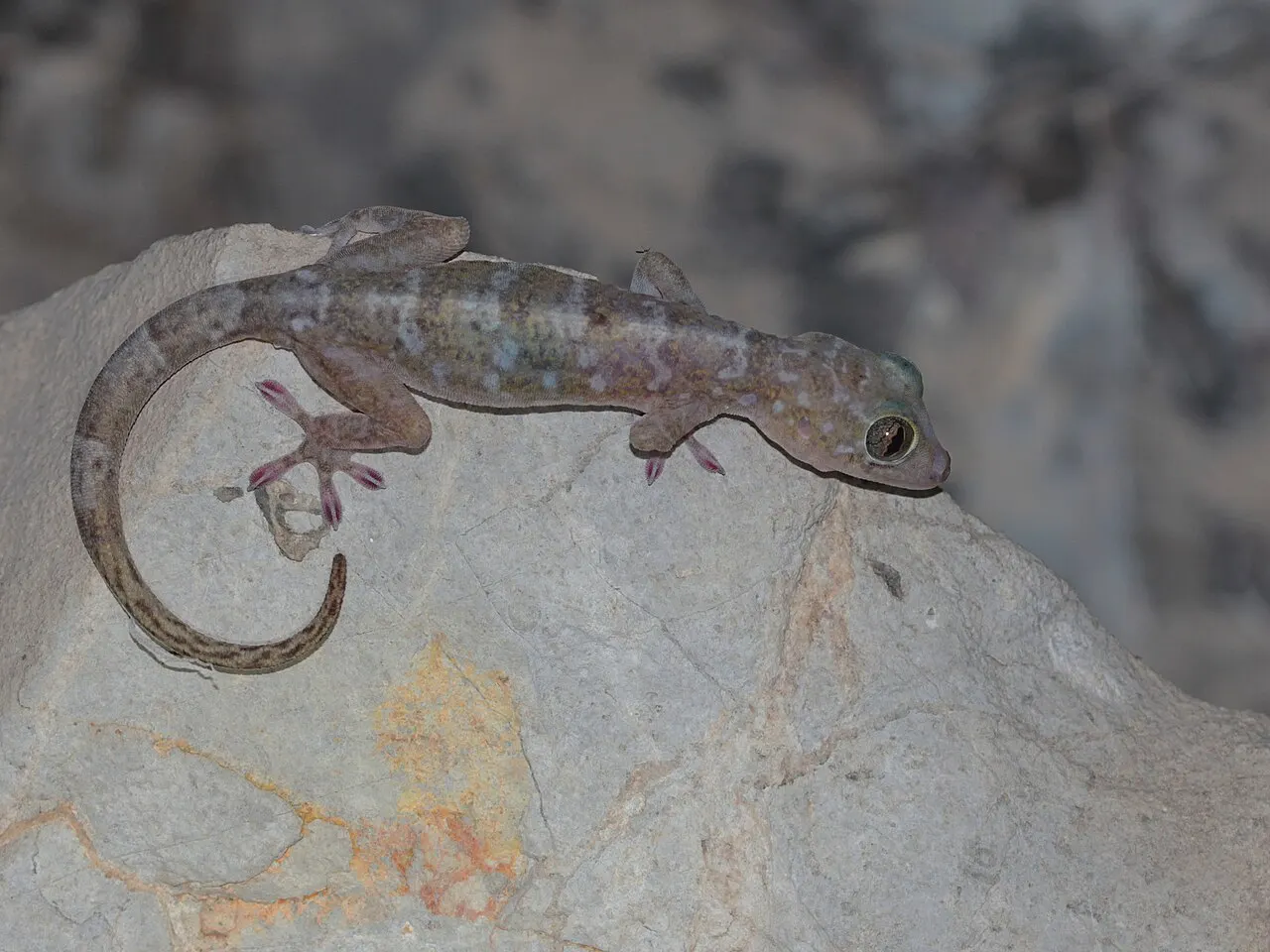
This is a moderately large, slender gecko. Adults measure at least 98 mm from snout to vent, so with the tail they are well over 10 cm long. The back carries large, bright whitish spots, which in some animals stretch into five or six narrow pale crossbars, with a dotted pale line running down the middle from neck to hips. The iris is coppery brown or greenish grey.
Scale counts settle identification. It has 14 rows of small tubercles on the back and 12 to 14 pores in front of the vent, with none on the thighs. The species belongs to the Gekko petricolus group of mid-sized Asian geckos, and the 2010 description placed it closest to G. grossmanni and G. scientiadventura, among others.
Where it lives
The type locality is Sub Cha-om Cave in Chalermphrakiat District, Saraburi Province, in central Thailand. Panitvong, Sumontha, Konlek and Kunya named the species in 2010 in the journal Zootaxa, in honour of the Thai herpetologist Virayuth Lauhachinda. It was the seventh Gekko species known from Thailand. It appears to be restricted to limestone caves in karst forest, a habitat it shares with other Gekko species.
The IUCN assessment counts one location. It estimates the extent of occurrence at about 149 square kilometres and the area actually occupied at 8 square kilometres. No population size has been estimated.
Pins are Wikidata “endemic to” fields. Orange dots, when present, are GBIF occurrence tiles — survey bias included.
How it lives
Very little has been recorded. The IUCN lists caves as its only habitat. It reportedly feeds mainly on insects, stays near cave entrances and lays eggs in the dry months. Snakes and domestic cats are reportedly among its predators.
Why it is in trouble
The Red List criterion is B2ab(iii): a very small occupied area, a single location, and continuing decline in habitat quality. The assessment names mining and quarrying as an ongoing threat across essentially the whole range, and lists feral cats as another. The population trend is decreasing.
Quarrying removes the limestone caves and forest that cave geckos depend on. With a single location and only about 8 square kilometres occupied, losing one cave system could remove much of the population.
What is being done
The IUCN assessment records no conservation actions in place and says the species is not known to occur in any protected area. Protecting the cave and the surrounding karst forest from quarrying is the most direct step that would help. Surveys of nearby limestone hills would also show whether the gecko lives anywhere else.
Sources
Written for this catalog in our own words from the sources below, checked against them on 12 November 2026. Population figures are estimates and carry the year they were made. Status and assessment year: IUCN. 2026. The IUCN Red List of Threatened Species. Version 2026-1. iucnredlist.org.