Endangered
Black-tailed horned pit viper
Black-tailed horned pit viper
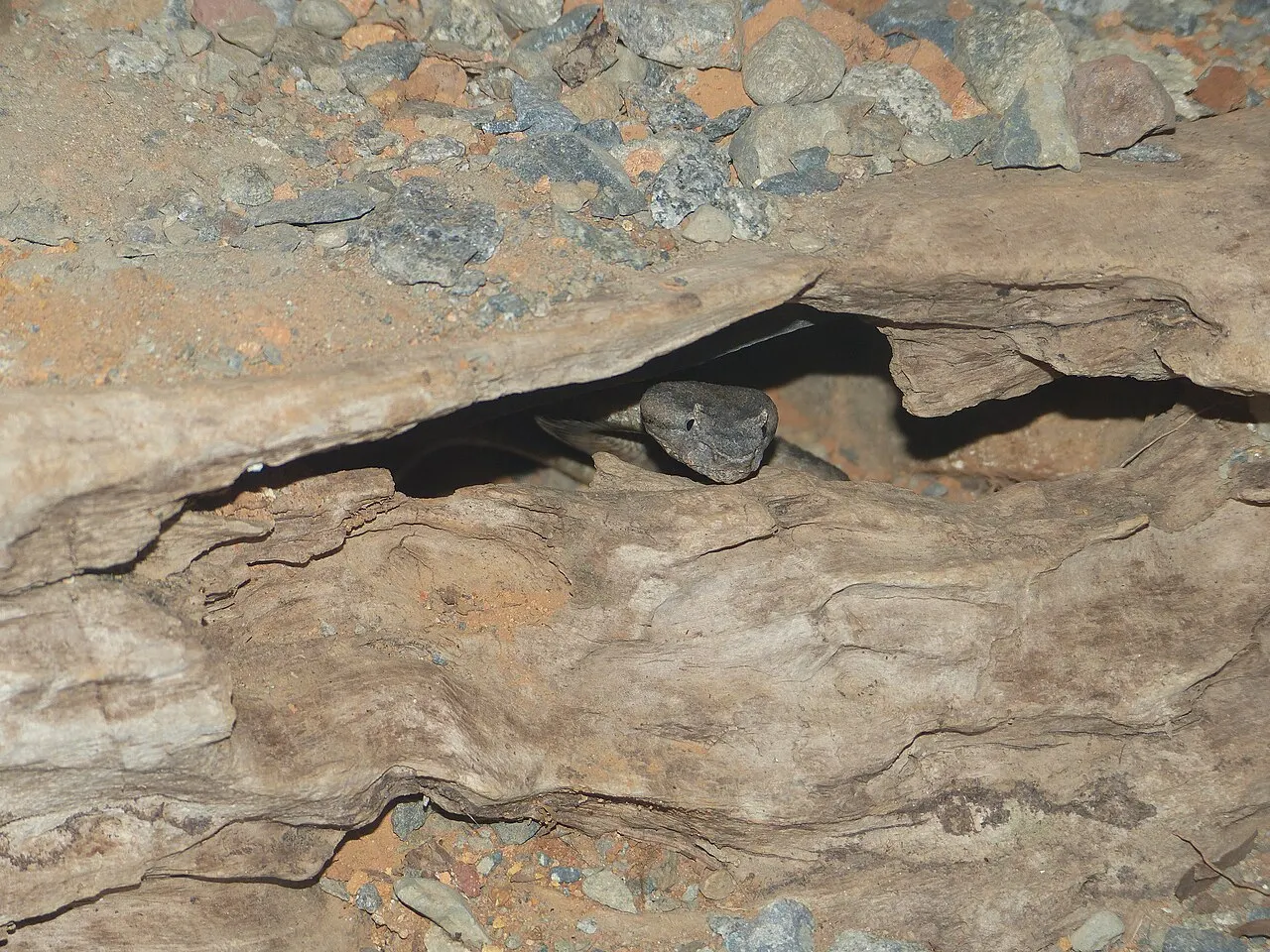
The black-tailed horned pit viper (Black-tailed horned pit viper) is a venomous snake of the highlands of southern Mexico, known only from southern Puebla and Oaxaca. The IUCN Red List last assessed it in 2007 as Endangered, with a falling population. Little about its daily life has been documented.
How to recognise it
This is a moderately stout pit viper, with adults reaching roughly 37.5 to 50 cm in total length. It is one of the horned pit vipers, and the Mexican name necazcoatl comes from Nahuatl words meaning eared serpent, a reference to the horn-like projections. The species name melanurus comes from Greek words for black and tail.
In Spanish it is called cornuda cola negra. Detailed descriptions of its colour and scalation are hard to find, so a field identification is best left to a herpetologist.
Where it lives
It is endemic to Mexico and found in just two states, southern Puebla and north-western Oaxaca, at elevations of about 1,600 to 2,400 m. The IUCN lists forest, dry subtropical forest, moist montane forest and Mediterranean-type shrubland as its habitats.
The snake was described in 1924 by Lorenz Muller, from a specimen whose collection point was recorded only as Mexico. It has moved between several genera since then, including Trimeresurus, Bothrops, Porthidium and Ophryacus, before researchers placed it in Mixcoatlus in 2011. Some databases still use the older name Ophryacus melanurus. No subspecies are recognised.
Pins are Wikidata “endemic to” fields. Orange dots, when present, are GBIF occurrence tiles — survey bias included.
How it lives
Very little has been recorded. It lives on the ground and gives birth to live young rather than laying eggs. It is venomous. Nothing detailed has been published on its diet, breeding season or behaviour. Its two relatives in the genus, Mixcoatlus barbouri and M. browni, are thought to eat mostly lizards, large insects and small mammals, but nobody has recorded this for the black-tailed species.
Why it is in trouble
The IUCN's 2007 assessment rates the species Endangered under criterion B1ab(iii), which covers a small range and continuing loss of habitat quality. It lists small-holder farming, small-holder grazing and ranching, and persecution as ongoing threats. Conversion and degradation of its ecosystems, plus direct killing of snakes, are the pressures named.
The population trend is decreasing. No population estimate has been published in the structured assessment, and the assessment is now almost two decades old.
What is being done
The IUCN records the snake in at least one protected area, but lists no species-specific conservation action. Surveys of where it lives, and how many remain, would be the first useful step.
Sources
Written for this catalog in our own words from the sources below, checked against them on 12 November 2026. Population figures are estimates and carry the year they were made. Status and assessment year: IUCN. 2026. The IUCN Red List of Threatened Species. Version 2026-1. iucnredlist.org.




