Critically Endangered
Gran Canaria Giant Lizard
Gallotia stehlini
The Gran Canaria giant lizard (Gallotia stehlini) is a large omnivorous lizard found naturally only on Gran Canaria, in Spain's Canary Islands. The IUCN Red List rated it Critically Endangered in 2024, after an invasive American snake wiped it out across large parts of the island.
How to recognise it
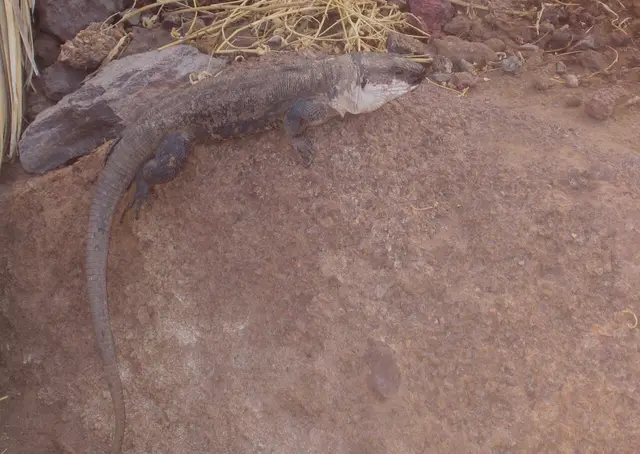
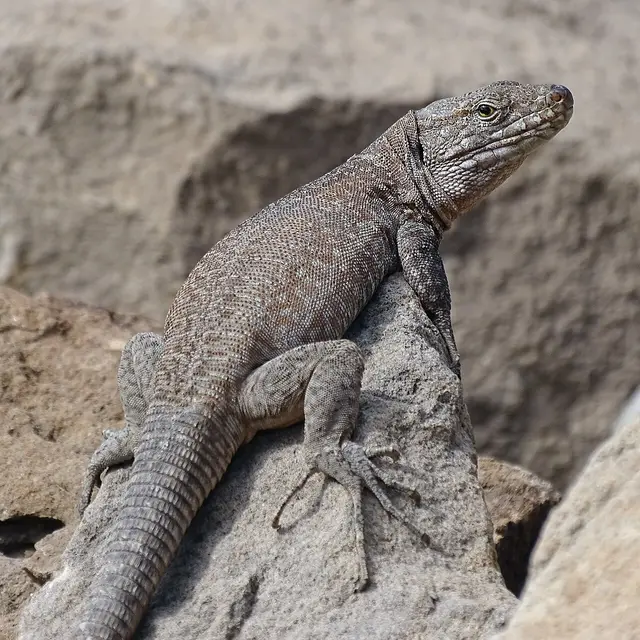
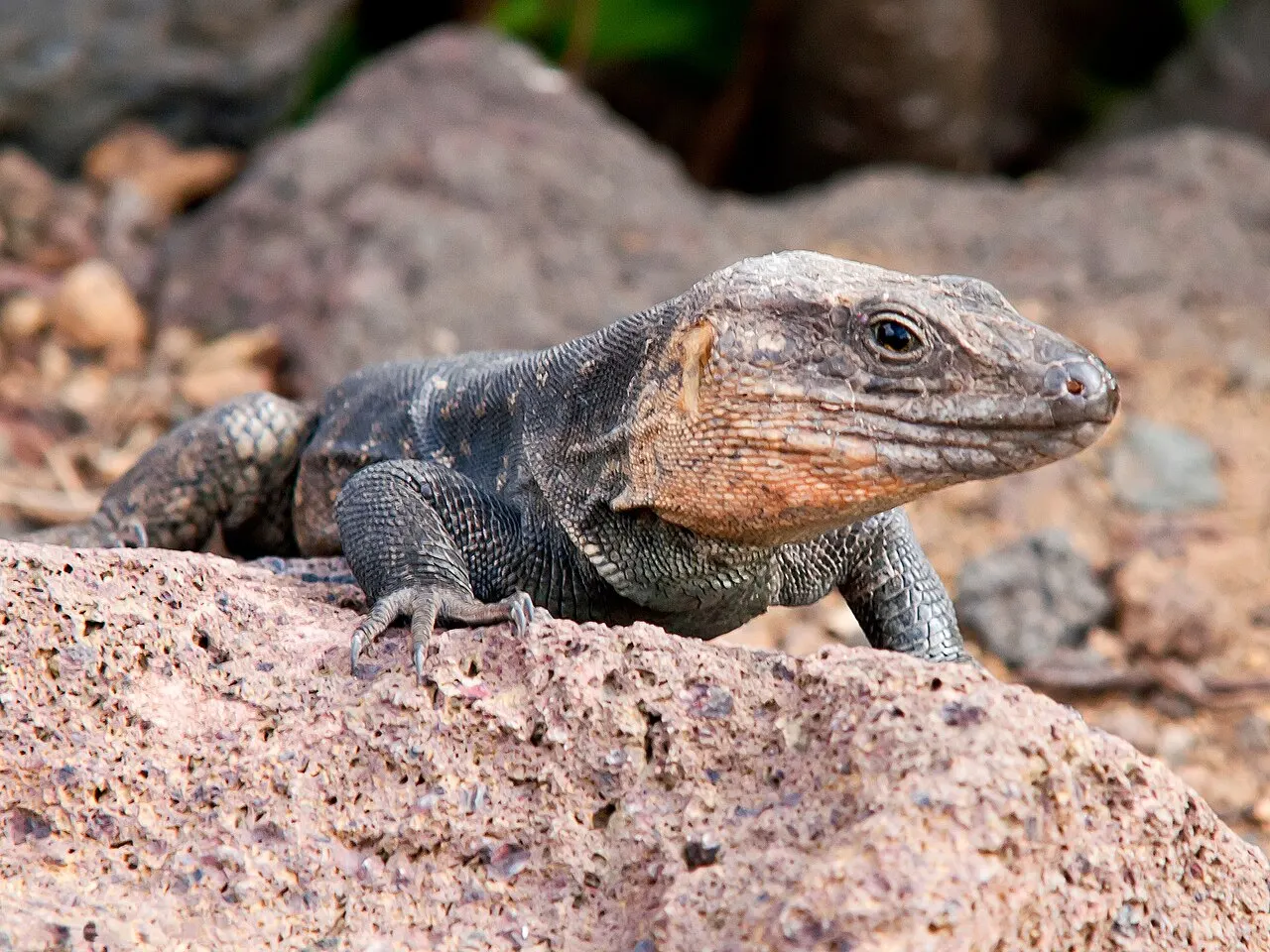
This is among the largest lizards in the family Lacertidae. It is reportedly colored in grays, browns and reddish tones. A total length of up to about 80 cm including the tail is often quoted, though the figure is poorly documented.
Schenkel described it in 1901 as a variety of another Canary lizard. The species name honours the Swiss palaeontologist Hans Georg Stehlin, who collected the first specimen.
Where it lives
It is native to Gran Canaria alone, from sea level up to 1,850 metres. It uses rocky ground, shrubland, pasture and rocky shores. An earlier IUCN summary (assessment from 2004) said it is absent from forest and turns up in open ground, shrubland and humid rocky gorges.
People also moved it to Fuerteventura, where an introduced population lives in farmland. Records from La Gomera and La Palma were of introduced animals, and it was unclear whether they formed established populations.
Pins are Wikidata “endemic to” fields. Orange dots, when present, are GBIF occurrence tiles — survey bias included.
How it lives
Young lizards eat insects and other invertebrates along with plants and soft fruit. Adults eat mostly plant material. It lays eggs. Researchers at the Spanish research institute IPNA-CSIC say two of the island's three native reptiles take part in plant reproduction and seed dispersal, and all three help hold down invertebrate numbers.
Why it is in trouble
The California kingsnake was introduced to Gran Canaria in 1998, and an albino form was first found there in 2007. The island and regional governments have tried to contain it since 2009, but its population has kept growing. It preys on the island's native reptiles.
A 2021 study in Proceedings of the Royal Society B by Julien Piquet and Marta López-Darias measured the losses. Giant lizard numbers were about 90 percent lower at invaded sites. The research group's press release put the loss in invaded areas at 99 percent. The same study found the Gran Canaria skink down by more than 80 percent, and Boettger's gecko by about half or more. The gecko fared better because it is nocturnal and hides under rocks by day.
The 2024 Red List assessment records a decreasing population and cites the effects of introduced species. The earlier IUCN summary had called the lizard abundant, with feral cats and rats as its main predators, and rated it Least Concern, so the change is recent and sharp.
What is being done
The lizard occurs in a number of protected areas. The 2024 assessment lists site and area management, control of invasive species, policy and regulation, and reintroduction among the conservation actions. IPNA-CSIC researchers recommend stronger snake control, tighter checks on goods and animals moved between islands, and public help in controlling the snake.
Sources
Written for this catalog in our own words from the sources below, checked against them on 12 November 2026. Population figures are estimates and carry the year they were made. Status and assessment year: IUCN. 2026. The IUCN Red List of Threatened Species. Version 2026-1. iucnredlist.org.