Endangered
Ctenosaura oedirhina
Ctenosaura oedirhina
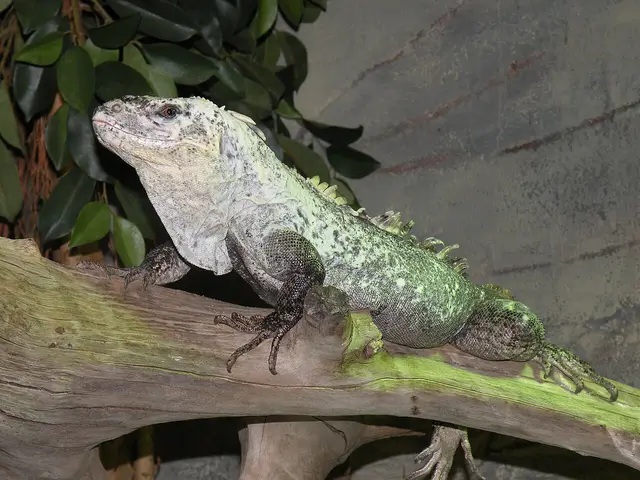
The Roatán spiny-tailed iguana (Ctenosaura oedirhina) is a medium-sized lizard found only on Roatán, the largest of Honduras's Bay Islands. The IUCN Red List rates it Endangered (assessed 2019). Most of the wild population lives on a tiny share of the island.
How to recognise it
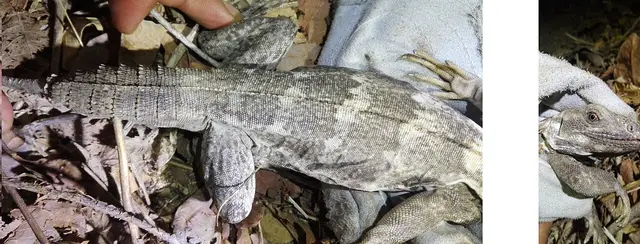
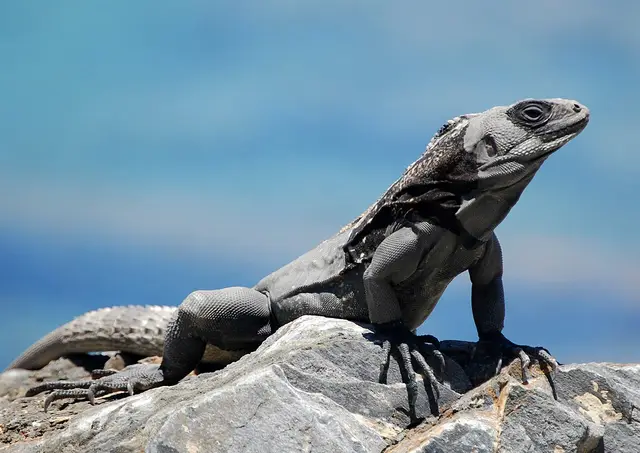
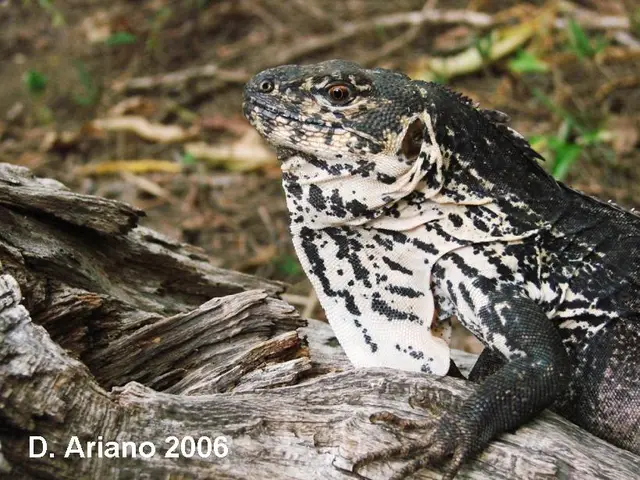
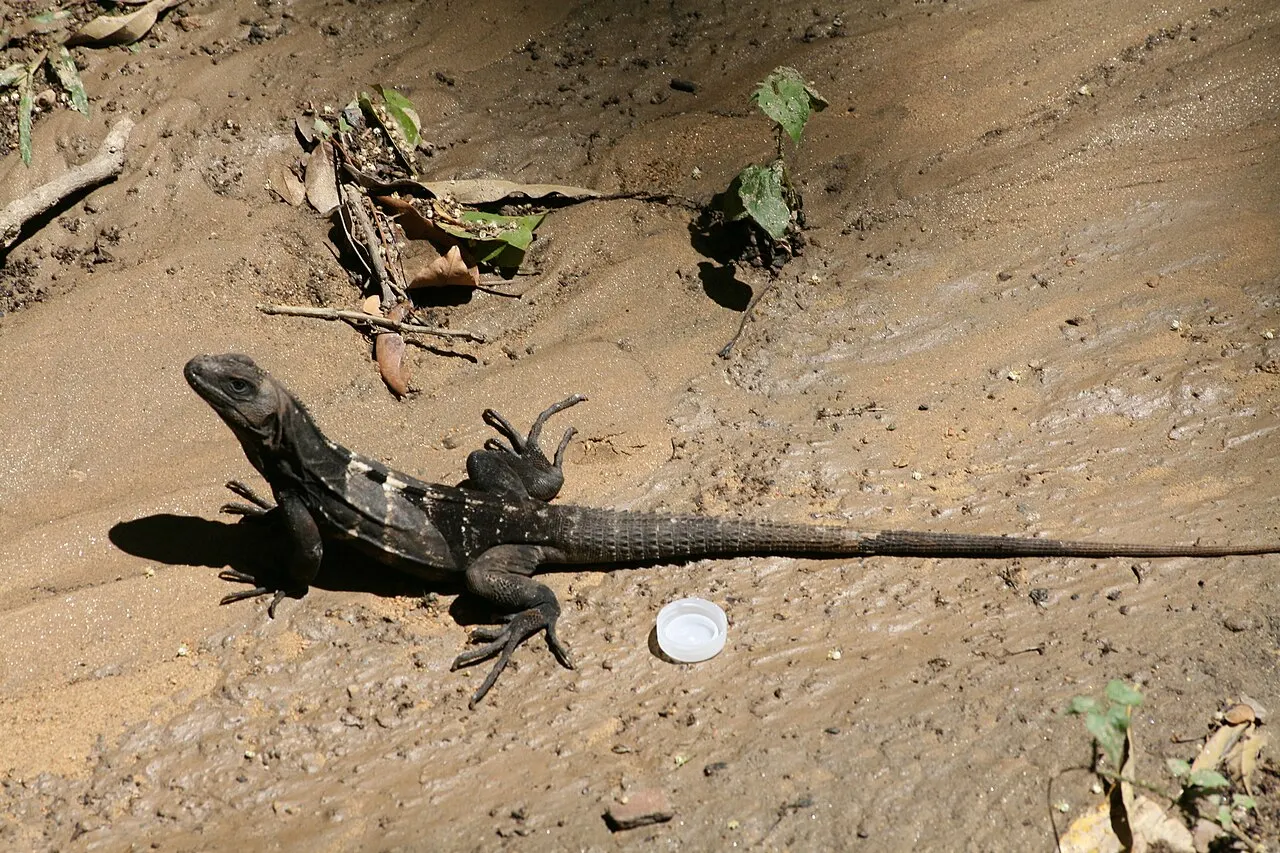
This is a spiny-tailed iguana with a rounded snout, which gave it its species name, oedirhina. Its crest scales are short. Adults reach a snout-to-vent length of roughly 15 to 32 cm (about 6 to 12.75 inches), and males tend to be longer and heavier than females.
It was only recognised as distinct from Ctenosaura bakeri, the spiny-tailed iguana of Utila, in 1987, when herpetologist Kevin de Queiroz described it.
Where it lives
It is found only on Roatán. The IUCN lists just two locations and records it from sea level up to about 300 m. It uses a wide range of habitats on the island, from dry and moist lowland forest to mangroves, rocky shore, rural gardens and even urban areas.
In practice, though, the animals are not spread evenly. Most of them live on less than 1 percent of the island's area, in small, privately protected sites. Outside those sites densities are very low, reported as 1 to 5 iguanas per 0.4 square miles (about 1 square km), if any are present at all.
Pins are Wikidata “endemic to” fields. Orange dots, when present, are GBIF occurrence tiles — survey bias included.
How it lives
It is an omnivore. A 2019 monitoring report from the International Iguana Foundation noted that it takes food provided by people, and showed an iguana that had swallowed a piece of plastic film in that food.
Since 2010 a team has run a mark and recapture study on the island. By 2019, the ninth year of intensive work, 1,146 iguanas had been marked. The study has shown large swings in population size and structure over the years, and recaptures of animals first marked in 2010 are giving researchers data on how long individuals live.
Why it is in trouble
Illegal hunting for food is intense, according to the International Iguana Foundation, and hunters were still intruding on some study sites in 2019. The IUCN also lists tourism and recreation development, housing, commercial building and new roads, all of which take or break up habitat on a small island. Domestic cats and dogs prey on the lizards.
Hybridisation is a further risk. Ctenosaura bakeri has been reported to interbreed with the mainland Ctenosaura similis on Utila. Monitoring teams have found an introduced C. bakeri population on a small cay off Roatán, and they want to prevent hybridisation and genetic swamping of the Roatán iguana. The IUCN assessment records the population as decreasing and severely fragmented.
Population estimates differ. The International Iguana Foundation puts the total at about 4,500, while the 2019 Red List assessment gives a range of 3,760 to 7,360 animals in six subpopulations, the largest about 3,600.
What is being done
In 2009 the species had no active national or local protection. Since then, grassroots groups of landowners and managers have protected the key sites, and the International Iguana Foundation has made small grants for work on the species in most years from 2009 to 2019.
Local stakeholders and international organisations drafted a conservation action plan in late 2019. Monitoring teams have also changed cat control methods at the newest study site and plan to focus management on the introduced C. bakeri cay population, working with the Honduran government. The species is listed on CITES Appendix II.
Sources
Written for this catalog in our own words from the sources below, checked against them on 12 November 2026. Population figures are estimates and carry the year they were made. Status and assessment year: IUCN. 2026. The IUCN Red List of Threatened Species. Version 2026-1. iucnredlist.org.