Endangered
Black-chested spiny-tailed iguana
Black-chested spiny-tailed iguana
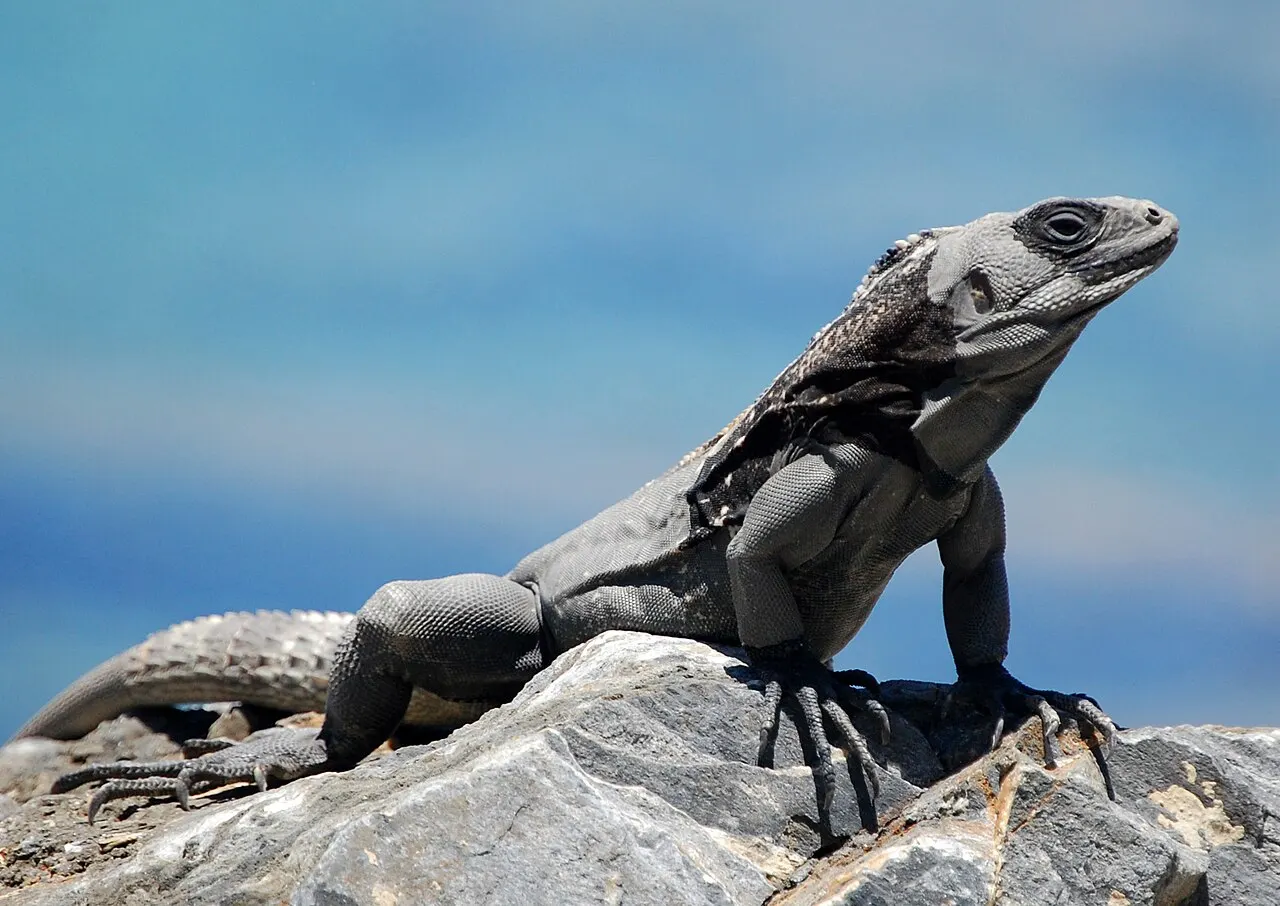
The black-chested spiny-tailed iguana (Black-chested spiny-tailed iguana), also called the Honduran spiny-tailed iguana, lives nowhere but Honduras, in the Aguán Valley and on two small islands of the Cayos Cochinos. The IUCN Red List rated it Endangered in 2012, with an estimated 2,500 to 5,000 adults.
How to recognise it
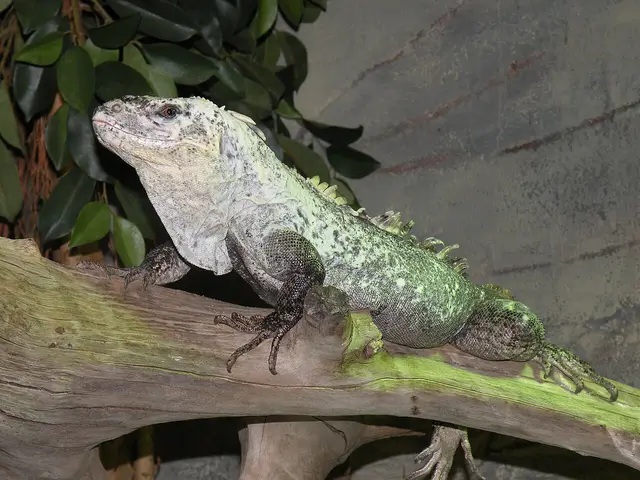
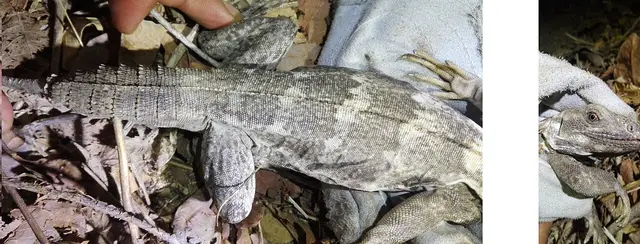
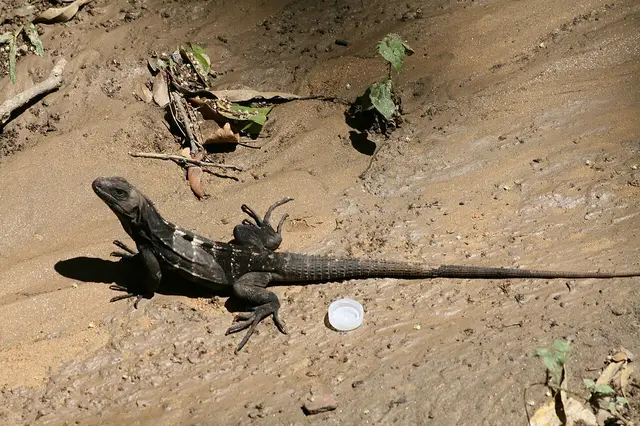
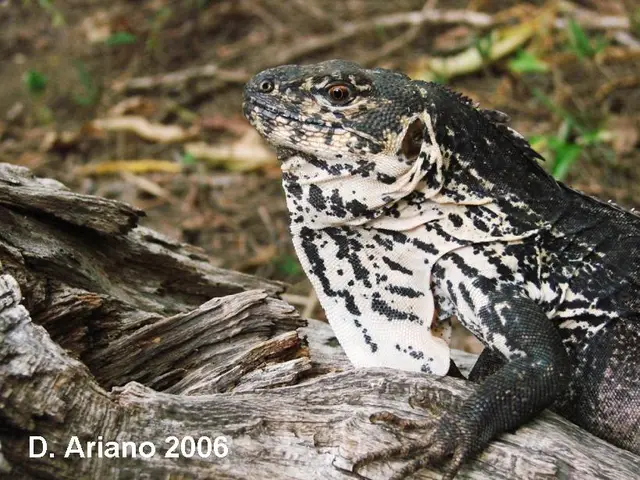
This is a stout, long-tailed iguana with a dark chest that gives it its common name. Adults show blocks of black and white, with speckles and streaks, and the head and dewlap carry several colors. The eyes are orange.
Size differs between the two homes. On Cayos Cochinos, males average about 24 cm (9.5 inches) long and can reach about 32 cm (12.5 inches) and 1.4 kg (3.1 pounds). Males in the Aguán Valley are about 5 cm shorter and roughly half the weight.
Where it lives
The mainland population is in the Aguán River Valley in northern Honduras, in dry forest and scrub that reportedly includes acacia and cactus. The island population lives on Cayo Grande and Cayo Pequeño in the Cayos Cochinos, a small archipelago off the Caribbean coast, where it uses open forest, rocky cliffs and sandy shore. The Red List counts two locations, with an extent of occurrence of about 1,318 square kilometers, and records the species from sea level up to about 250 m.
It is also recorded in rural gardens and pasture, which suggests it tolerates some disturbance.
Pins are Wikidata “endemic to” fields. Orange dots, when present, are GBIF occurrence tiles — survey bias included.
How it lives
It is an omnivore. Adults eat flowers, fruit and leaves, along with insects, mollusks and crustaceans, and they tend to eat more plants as they age. Adult males hold territories and sometimes fight each other.
Breeding runs from March to June. Females dig nests underground in loose, sandy soil along beaches, in low vegetation and in palm forest, with chambers usually about 30 cm (12 inches) down. The Red List gives a generation time of about 8 years.
Why it is in trouble
The Red List describes a shrinking, badly fragmented population. Forest in the Aguán Valley is being cleared for farming, and the iguanas and their eggs are hunted for food even though iguana hunting is banned in Honduras. The International Iguana Foundation also names an illegal international pet trade. The much more numerous green iguana reportedly competes with it.
A field survey in 2006, by Stesha Pasachnik of the University of Tennessee, found the mainland situation dire. She saw no adult black-chested iguanas in the Aguán Valley and very few hatchlings, judged hunting pressure there to be greater than almost anywhere else she worked, and warned the population could vanish within a few years without action. On Cayo Pequeño the animals were thriving, since hunting and habitat destruction had stopped. On Cayo Grande they were skittish and large individuals were missing, which she took as a sign of regular hunting. These are 2006 observations and may no longer describe the situation.
What is being done
The whole Cayos Cochinos archipelago is a protected national marine reserve, and Cayo Pequeño has a research station that gives it extra protection. The Red List records the species in at least one protected area and under international trade controls. The International Iguana Foundation funded projects between 2006 and 2008 on island ecology, genetics and mainland distribution.
As of 2012 the Red List showed no species recovery plan and no systematic monitoring scheme. Its listed conservation actions include harvest and trade management, invasive species control and awareness work.
Sources
Written for this catalog in our own words from the sources below, checked against them on 12 November 2026. Population figures are estimates and carry the year they were made. Status and assessment year: IUCN. 2026. The IUCN Red List of Threatened Species. Version 2026-1. iucnredlist.org.
- IUCN Red List assessment, Black-chested spiny-tailed iguana (2012)
- IUCN Red List taxon record, Black-chested spiny-tailed iguana
- International Iguana Foundation, black-chested spiny-tailed iguana
- Pasachnik 2006, Ctenosaurs of Honduras: notes from the field, Iguana 13(4)
- Black-chested spiny-tailed iguana (encyclopedia article)