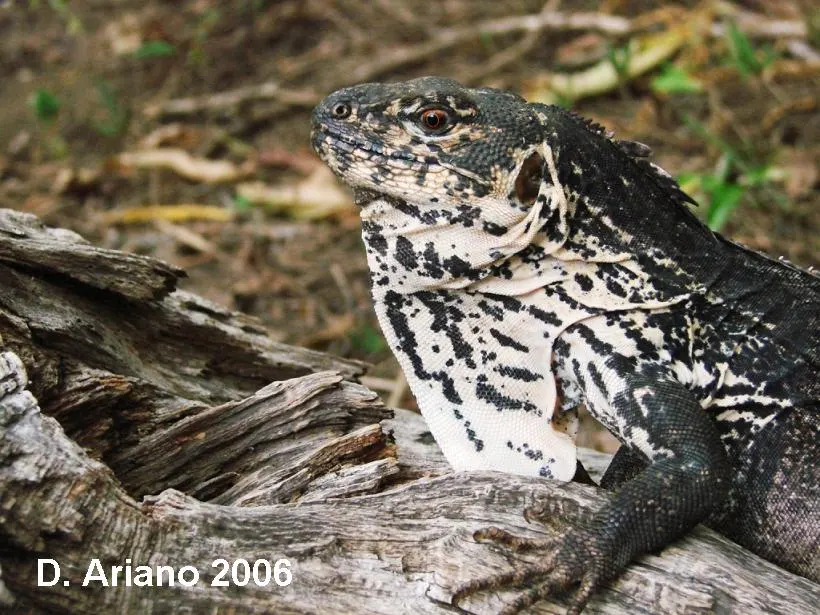
Endangered
Ctenosaura palearis
Ctenosaura palearis
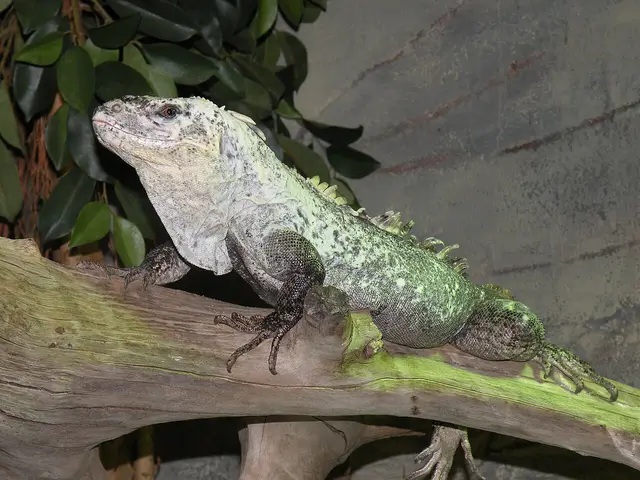
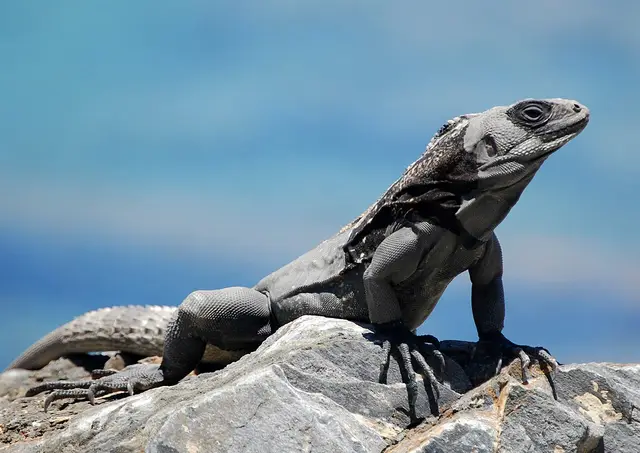
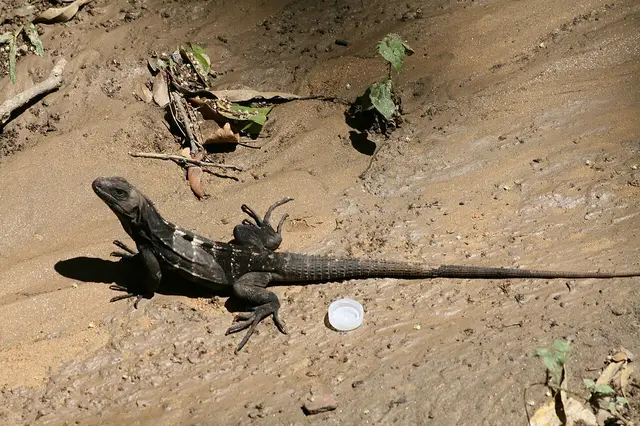
The Motagua spiny-tailed iguana (Ctenosaura palearis) lives only in the dry forests of Guatemala's Motagua Valley. The IUCN Red List rated it Endangered in 2019 and estimates about 2,530 individuals. It climbs cacti and trees, eats their fruit, and is hunted for its meat and eggs.
How to recognise it
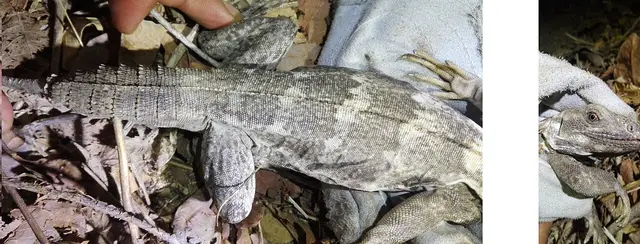
It is one of the spiny-tailed iguanas, and the tail carries the spines that give the group its name. Males average about 8 inches (roughly 20 cm) from snout to vent, and females are a little smaller. With the tail included, the total length is around 16 to 17 inches (about 41 to 43 cm), and the average weight is reported as about 6.5 ounces (roughly 185 g). It is also called the Guatemalan spiny-tailed iguana.
Where it lives
The species is endemic to Guatemala, where it survives in what is left of the seasonally dry tropical forest and dry scrub of the Motagua Valley, at roughly 200 to 900 metres elevation. The IUCN counts four to five locations, an area of occupancy of 498 square kilometres and an extent of occurrence of 1,151 square kilometres. It does not migrate.
A genetic study reported in 2017 of 45 iguanas from six sites across the valley found three distinct lineages: one in the central and western valley, one on the southern bank of the Motagua River in the east, and one on the northern bank.
Pins are Wikidata “endemic to” fields. Orange dots, when present, are GBIF occurrence tiles — survey bias included.
How it lives
It spends most of its time in trees and on cacti. Hollow trunks and branches serve as shelters, and the iguana backs in head first and plugs the entrance with its spiny tail. By day it basks in the crowns of trees or on top of cacti. Camera traps reported in 2016 showed adults leaving their shelters around 9 a.m. and returning around 4 p.m.
Its diet is mostly plant material, including fruit, flowers and leaves, plus some ants and crickets. It is closely tied to the pitayo organ pipe cactus, whose fruit can stain its face and forelimbs red, and cactus seeds that pass through its gut germinate better. Females dig nest tunnels in dry stream banks, gullies and sandy ground and lay 6 to 12 eggs between late March and late April. Hatchlings start emerging in late May as the rains begin.
Why it is in trouble
Hunting is the main threat. The IUCN lists the animal as a target for food and for the pet and display trade, and rates the effect as very rapid decline across its whole range. It also records a past population reduction of 50 percent, with a generation length of 6 years, and a population that is still shrinking.
Habitat is being cleared as well. Small-scale and industrial farming, expanding melon fields, new housing and past mining are listed. Deforestation also pushes iguanas into shelters near houses and schools, which brings them into contact with people. International trade in the species is regulated under CITES Appendix II.
What is being done
Conservation centres on the Heloderma Natural Reserve, run by the Guatemalan group Zootropic, which has received grants from the International Iguana Foundation in 2010 and in each year from 2014 to 2024. Work there includes school education, tree planting and a conservation breeding programme. In 2019 two enclosures held eight rescued iguanas, six females and two males, and 490 trees were planted in degraded parts of the reserve.
The education work has had measurable effects. In a 2019 survey, the share of people who said they had eaten this species fell from 22.5 percent to about 18 percent, and correct identification of the iguana rose from 62.5 to 82 percent. The IUCN records that a recovery plan is in place but that there is no systematic monitoring scheme.
Sources
Written for this catalog in our own words from the sources below, checked against them on 12 November 2026. Population figures are estimates and carry the year they were made. Status and assessment year: IUCN. 2026. The IUCN Red List of Threatened Species. Version 2026-1. iucnredlist.org.
- IUCN Red List assessment, Ariano-Sanchez and others, 2019
- IUCN Red List API record 129419077
- International Iguana Foundation, Motagua spiny-tailed iguana
- International Iguana Foundation, 2019 report
- International Iguana Foundation, 2017 project update
- International Iguana Foundation, 2016 conservation report
- Ctenosaura palearis, encyclopedia entry