Critically Endangered
Ctenosaura oaxacana
Ctenosaura oaxacana
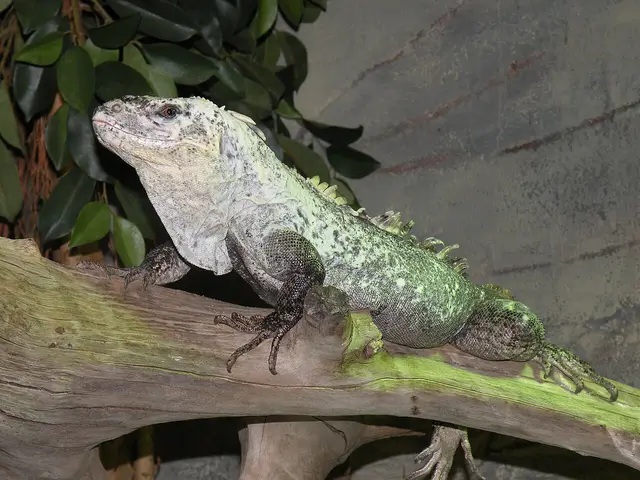
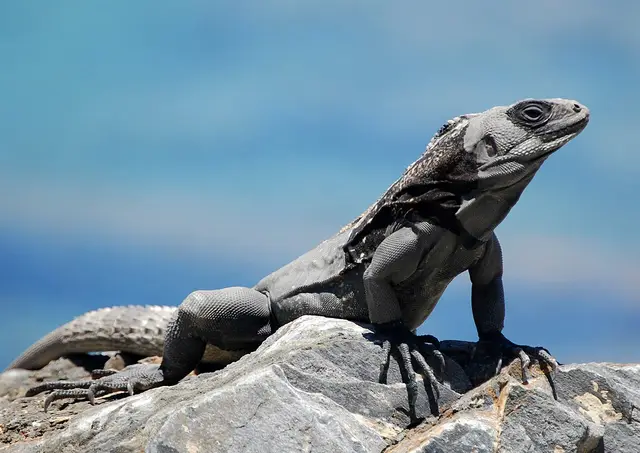
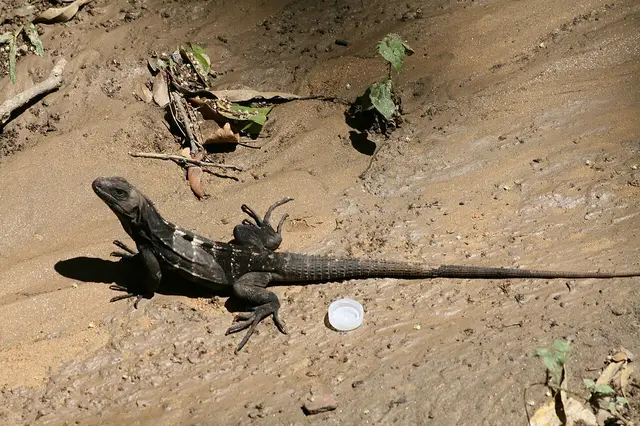
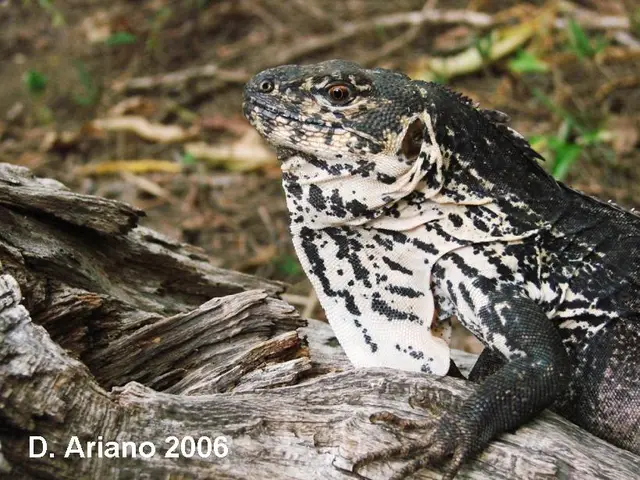
The Oaxacan spiny-tailed iguana (Ctenosaura oaxacana) is a small lizard found only in southern Oaxaca, Mexico, on the Pacific side of the Isthmus of Tehuantepec. It lives in dry forest and shelters in tree hollows. The IUCN has rated it Critically Endangered since its 2004 assessment.
How to recognise it
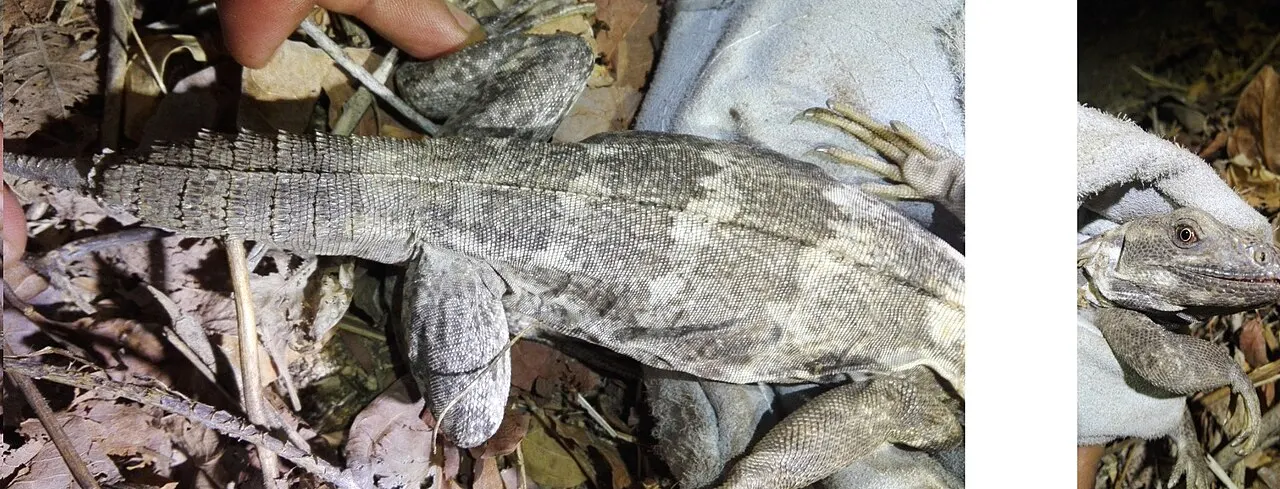
This is one of the smaller spiny-tails. Males reach a snout-to-vent length of up to 170 mm and females up to 124 mm, and the tail is roughly 1.3 to 1.45 times the body length. The International Iguana Foundation gives an average adult weight of about 2.2 ounces.
Compared with its close relative the five-keeled spiny-tailed iguana, it is smaller and has a shorter, less spiny tail, and it lacks that species' enlarged keeled thigh scales. It usually has a broad pale band down the middle of the back and no dewlap, and adult males have a well-developed crest on the chest.
Where it lives
The species is endemic to Mexico and known only from the state of Oaxaca, on the Pacific slope of the Isthmus of Tehuantepec. It was described in 2001. Until then these lizards were treated as part of the five-keeled spiny-tailed iguana (Ctenosaura quinquecarinata).
The IUCN lists subtropical or tropical dry forest as its habitat and puts its extent of occurrence at under 100 square kilometres, with the population split into 6 to 10 isolated groups.
A one-year study at a population south of Niltepec, Oaxaca, found the lizards most numerous in dry forest, at about 34 animals per hectare, and in nanche woodland, at about 19 per hectare. They avoided grassland, riverside vegetation and mangroves.
Pins are Wikidata “endemic to” fields. Orange dots, when present, are GBIF occurrence tiles — survey bias included.
How it lives
Oaxacan spiny-tailed iguanas shelter in hollows in trees and cacti. The foundation says they use the spiny tail as a firm wedge against the walls, which protects them from predators. They lay eggs.
At Niltepec, males and females used habitat in the same way, and the animals perched and sheltered on a range of trees, including live trees with hollows.
Why it is in trouble
The 2004 assessment rates it Critically Endangered under criterion B1ab(iii,v), meaning a very small range with ongoing loss of habitat quality and falling numbers. The population trend is recorded as decreasing. Dry forest is shrinking through deforestation and regular burning, and the foundation says it is often converted to cattle pasture. The IUCN also notes local hunting for meat.
The total population is not known. The IUCN suggests there may be fewer than 2,500 mature individuals, and the foundation gives a similar figure. That is an estimate, not a count. A 2004 paper by Burre described hybrids between this species and the five-keeled spiny-tailed iguana.
What is being done
Under the IUCN assessment, all wildlife is protected by Mexican national law, but the species is not known from any protected area. The assessment recommends more surveys, research on genetics and life history, and management and monitoring of the wild population and its habitat.
From 2013 to 2015 the International Iguana Foundation funded three grants for work on its natural history, numbers, range and threats, including how habitat fragmentation and hunting affect genetic diversity. The species is also reportedly on CITES Appendix II, which regulates international trade.
Sources
Written for this catalog in our own words from the sources below, checked against them on 12 November 2026. Population figures are estimates and carry the year they were made. Status and assessment year: IUCN. 2026. The IUCN Red List of Threatened Species. Version 2026-1. iucnredlist.org.