Endangered
Schreiber's Fringe-fingered Lizard
Acanthodactylus schreiberi
Schreiber's fringe-fingered lizard (Acanthodactylus schreiberi) is a small, sand-loving lacertid native to Cyprus, with a second population on the Turkish coast. The latest IUCN Red List assessment, published in 2024, rates it Least Concern with a stable population. Earlier assessments, including 2009, had it as Endangered.
How to recognise it
It's a small, slender lizard. In a 2025 study of two populations, adult males averaged about 65 to 70 mm from snout to vent and females about 58 to 65 mm. Males weighed around 6 to 8 g and females about 4 g. Males are the larger sex.
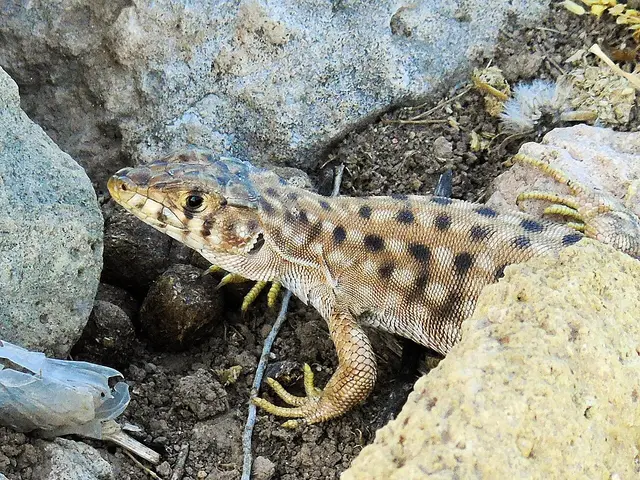
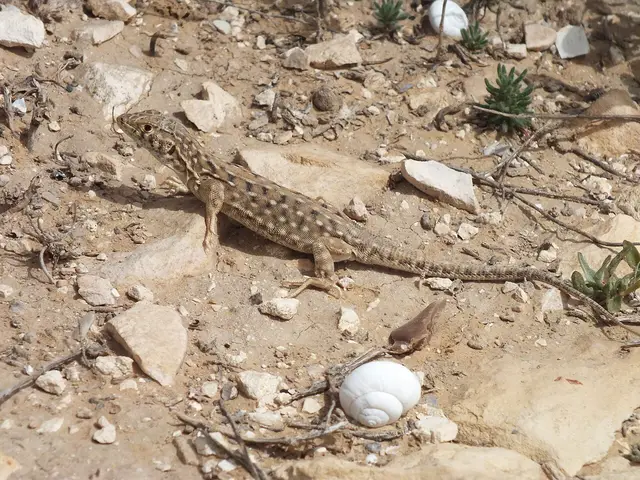
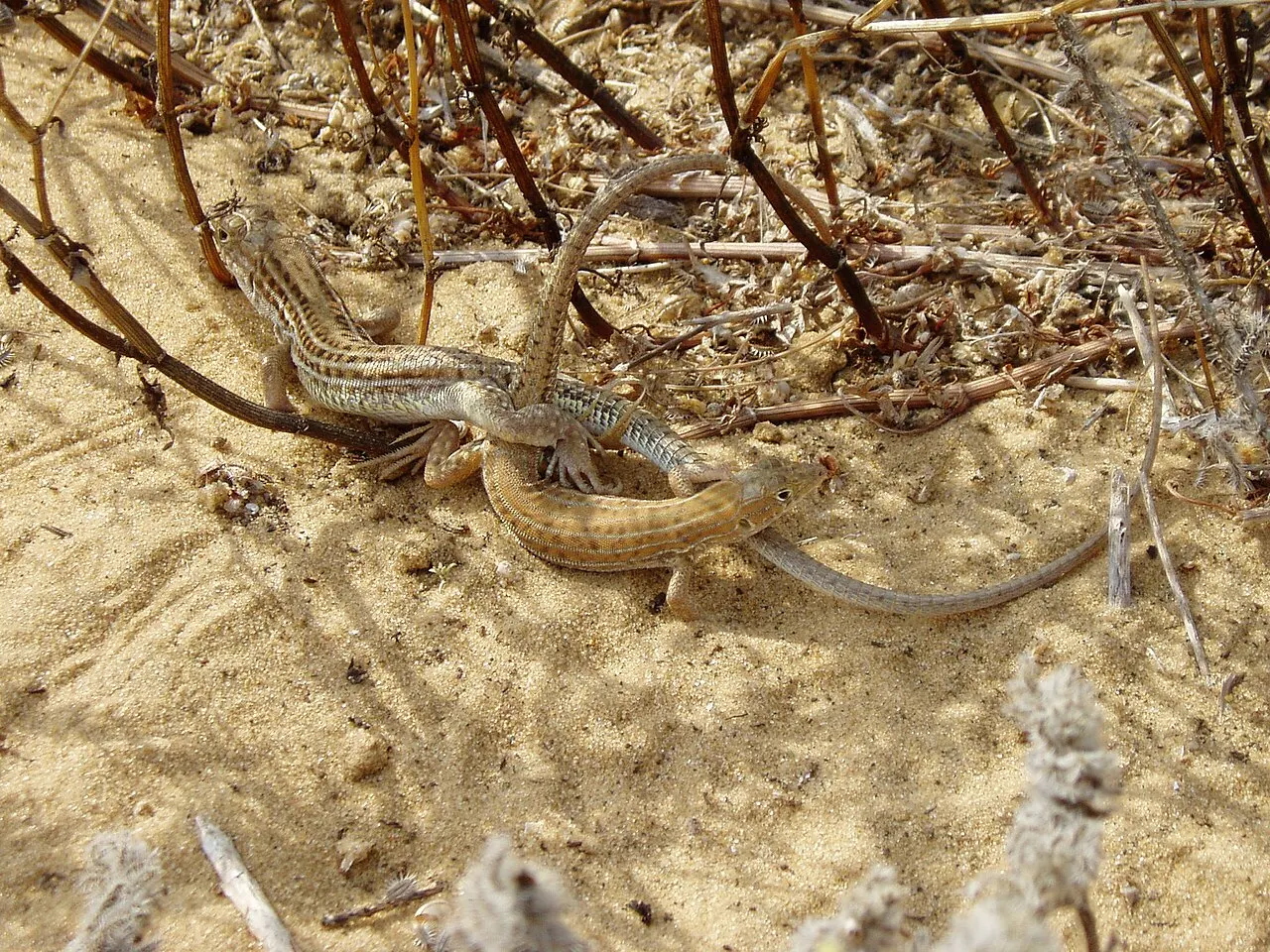
Young lizards are black with yellowish-white stripes along the back. Adults lose the stripes and show a more irregular pattern. Breeding males have reddish colour under the tail, while breeding females have a yellowish-green tail underside.
Where it lives
The species is native to Cyprus. The 2024 assessment lists it there from low ground up to about 1,219 m, in habitats that include coastal sand dunes, shrubland, pasture, plantations and arable land. It also occurs in a protected area. A Turkish population, studied at Botas on the coast, was moved there from Cyprus by people long ago, according to the 2025 study.
Older Red List and encyclopedia entries also list Lebanon and Israel. The Reptile Database, following a 2014 taxonomic revision, assigns those populations to a different lizard, Acanthodactylus boskianus asper, and restricts Schreiber's lizard to Cyprus and Turkey.
Pins are Wikidata “endemic to” fields. Orange dots, when present, are GBIF occurrence tiles — survey bias included.
How it lives
It lays eggs. The 2025 study compared a humid mainland site at Botas in Turkey with a drier, semi-arid site at Dipkarpaz in northern Cyprus, where insect prey is probably scarcer. Lizards reached breeding age at around 3 years. The oldest were 7 years on the mainland and 6 on the island, and yearly survival ran from about 75 to 82 percent depending on sex and site.
Why it was listed as threatened
The 2009 assessment, made under criteria A2c and B2ab, recorded a decreasing population and named mining and quarrying, housing and urban growth, tourism and recreation areas as ongoing threats. It noted that conservation sites had been identified over its whole range and listed site management and habitat restoration among the actions needed.
The 2025 study says the species was Endangered until June 2023, citing coastal urbanization, habitat destruction and pollution. It names coastal tourist development and the paving of sandy tracks as possible future threats.
Current Red List status
The 2024 assessment gives Least Concern, with a stable population. It lists tourism and recreation areas as a threat affecting a minority of the population, and roads as a threat of unknown scale.
Sources
Written for this catalog in our own words from the sources below, checked against them on 12 November 2026. Population figures are estimates and carry the year they were made. Status and assessment year: IUCN. 2026. The IUCN Red List of Threatened Species. Version 2026-1. iucnredlist.org.
- IUCN Red List assessment, 2024 (current, Least Concern)
- IUCN Red List API record, 2024 assessment
- IUCN Red List assessment, 2009 (superseded, Endangered)
- IUCN Red List API record, 2009 assessment
- Schreiber's fringe-fingered lizard (encyclopedia entry)
- Continental vs. Insular: Demographic and Growth Patterns in Acanthodactylus schreiberi (2025)
- Reptile Database, Acanthodactylus schreiberi