Critically Endangered
Acanthodactylus harranensis
Acanthodactylus harranensis
The Harran fringe-toed lizard (Acanthodactylus harranensis) is a large, stout lacertid known from the ruins of ancient Harran in south-eastern Turkey, plus one record from northern Syria. The IUCN Red List assessed it as Critically Endangered in 2009 because its range is tiny and its habitat is under pressure.
How to recognise it
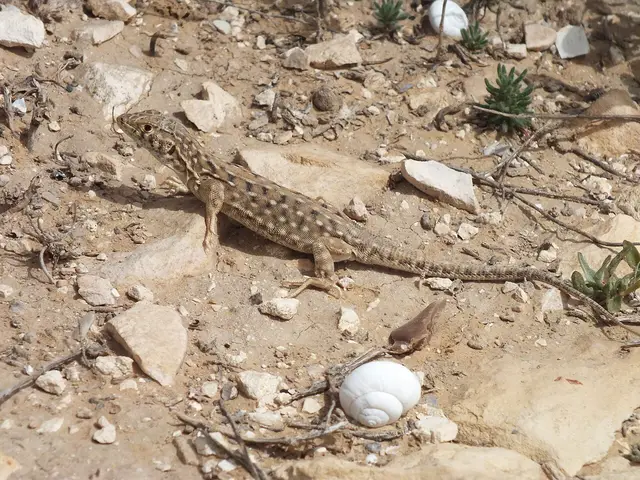
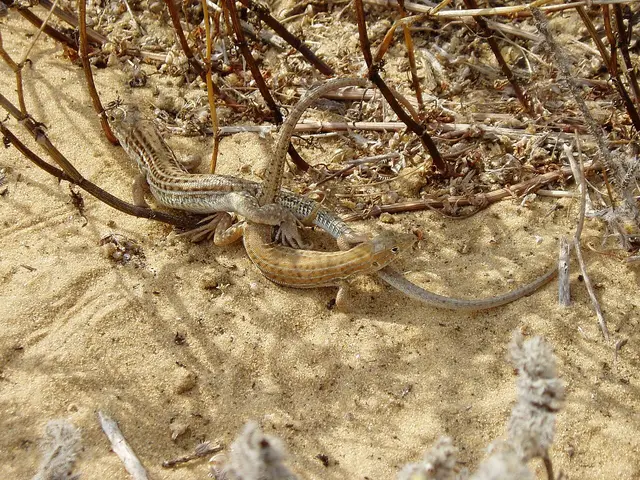
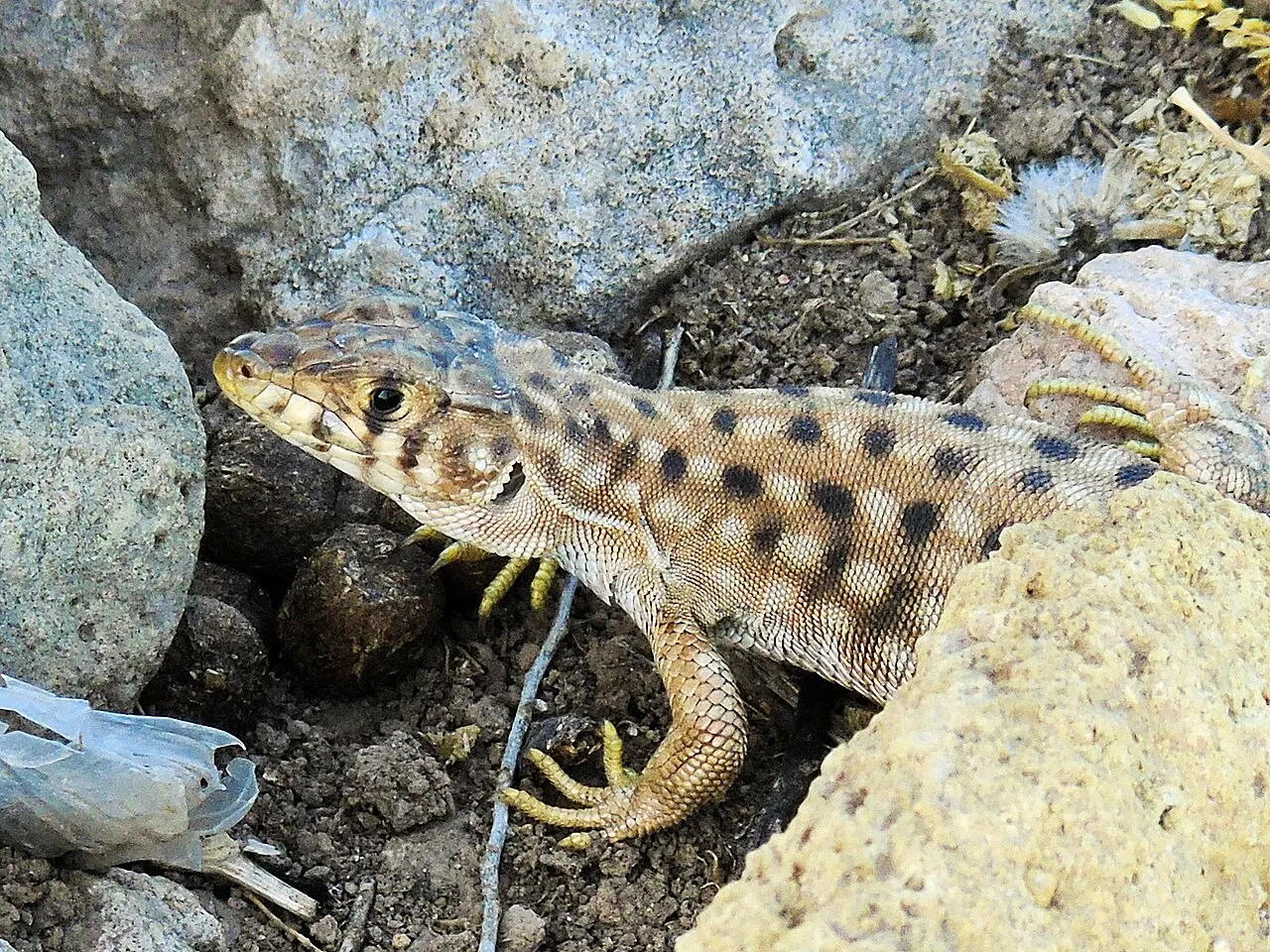
Among fringe-toed lizards this is a big, heavy-bodied one. Adults measure 76.5 to 94.8 mm from snout to vent, and in young and subadult animals the tail is more than one and a half times the length of the body. Juveniles are striped or spotted, while adults and subadults show a dark network of markings with light, roundish spots. A fringe of 3 to 6 enlarged scales borders the front of the ear opening, and there are 18 to 25 femoral pores along the underside of the right thigh.
It looks most like Acanthodactylus grandis and the A. tristrami group. A team of researchers from Turkey and Italy named it as a new species in 2005 from a specimen collected at Harran, and it takes its name from the ancient town.
Where it lives
The type locality is Harran, in Şanlıurfa Province, near the ruins of the ancient university, at about 380 to 390 m elevation and some 75 km from the city of Şanlıurfa. The lizard lives on rocky, sandy steppe and is seen running over open ground or sheltering among the roots of Peganum harmala, a hardy desert shrub. It does not live in the intensively farmed land around the ruins.
For years the species was thought to be found only in Turkey. In a 2021 note in the Commagene Journal of Biology, John Mulder reported a male he had caught in May 1995 beside a grain field in northern Syria, 7 km from the Turkish border and 61 km from Harran. It is preserved in a museum in Rotterdam. He argued that the species is probably endemic to the northern Mesopotamian plain rather than to Turkey alone.
Pins are Wikidata “endemic to” fields. Orange dots, when present, are GBIF occurrence tiles — survey bias included.
How it lives
It lays eggs. A 2019 study in Animal Biology used growth rings in the bones to age the lizards and reported a maximum age of 10 years in males and 9 in females. Males were older on average than females, and the lizards were larger than other lacertids studied in Şanlıurfa Province.
Why it is in trouble
The IUCN gave the total known range as about 3.6 square km and the number of mature adults at Harran as fewer than 1,000 in 2009, and it listed the population trend as decreasing. The threats named are tourism at the historic site, grazing of the habitat and possibly continuing excavation of the ruins. The lizard cannot tolerate the intensive agriculture around the site.
A larger change came from water. Mulder notes that the Harran Plain, once dry, has been irrigated with water from the Atatürk Dam since 1995, and that suitable ground reaching to the Syrian border has been turned into fields. That removes the semi-arid habitat the lizard depends on.
What is being done
The ruins lie inside an archaeological protected area, but the 2009 assessment says the area is managed for the historic site and tourism rather than for the lizard, and it lists no species-specific conservation action. It calls for more research on the species' biology. The 2019 age study was presented as a contribution to future conservation, and Mulder's Syrian record raises the question of how many lizards survive outside the Harran ruins.
Sources
Written for this catalog in our own words from the sources below, checked against them on 12 November 2026. Population figures are estimates and carry the year they were made. Status and assessment year: IUCN. 2026. The IUCN Red List of Threatened Species. Version 2026-1. iucnredlist.org.
- IUCN Red List assessment, Acanthodactylus harranensis (2009)
- Mulder 2021, Note on the endemic status of Acanthodactylus harranensis, Commagene Journal of Biology 5(1)
- Reptile Database, Acanthodactylus harranensis
- Acanthodactylus harranensis (encyclopedia entry)
- Age structure and body size of Acanthodactylus harranensis, Animal Biology 69 (2019), abstract as relayed by search results