Critically Endangered
Southern Ghats slender gecko
Hemiphyllodactylus aurantiacus
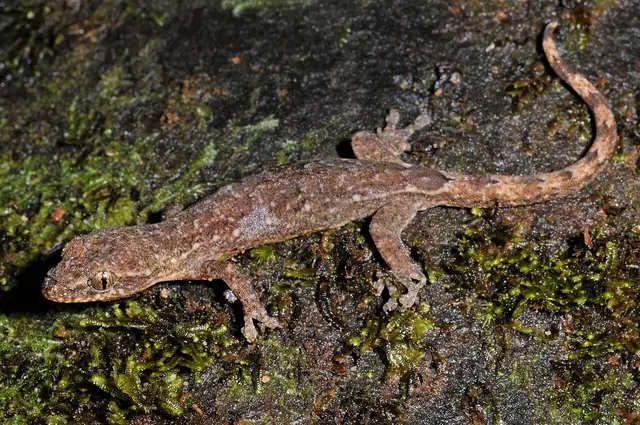
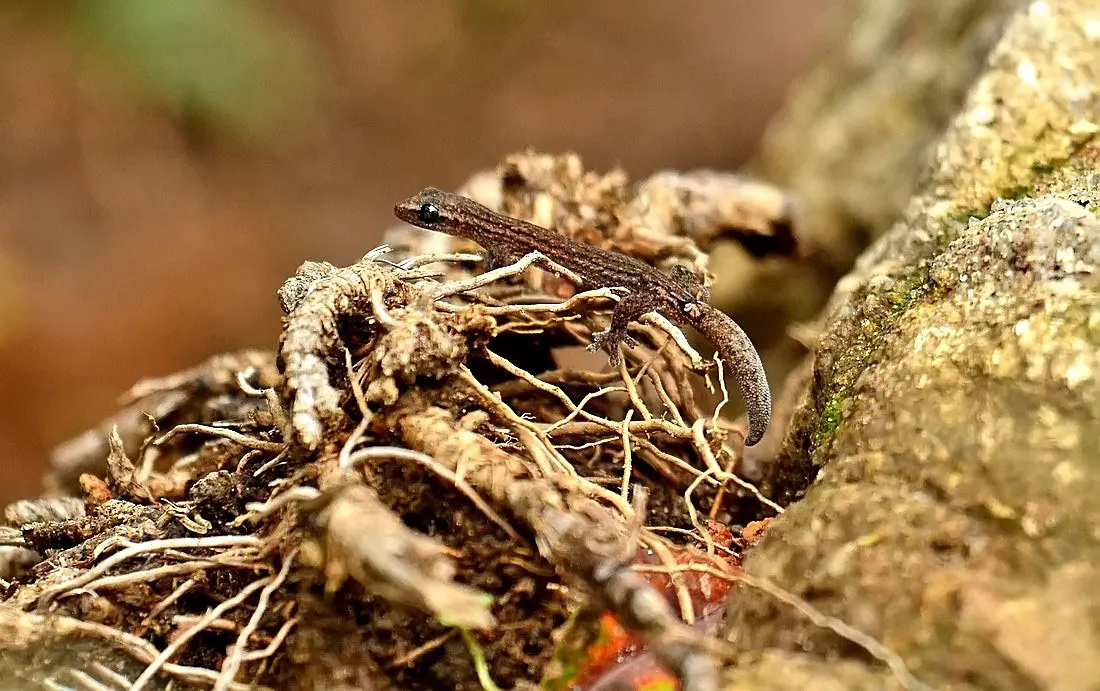
The Yercaud slender gecko (Hemiphyllodactylus aurantiacus) is a small, night-active gecko from the Shevaroy Hills of Tamil Nadu, India. The IUCN Red List rated it Critically Endangered in 2021. A 2019 study found it only around the hill town of Yercaud, a far smaller area than older books claim.
How to recognise it
It is a small, slender gecko. Older descriptions give a body about 36 mm from snout to vent, a grey-brown back marked with dark wavy lines and pale dots, a whitish speckled belly, and a tail with darker spots or rings. Males carry a row of 7 to 9 pores in front of the vent. Those descriptions may mix in related geckos, because the group was long treated as one widespread species.
Richard Beddome described it in 1870, first as a Hemidactylus. The herpetologist George Zug has suggested that the name aurantiacus, meaning orange, refers to the colour at the base of the tail.
Where it lives
The first specimens were found under stones around Yercaud in the Shevaroy Hills, at about 1,200 metres. Older sources also list the Anamalai Hills, the Kolli Hills, the Western Ghats and Bangalore, and Zug considered the Bangalore population a recent accidental introduction. A 2019 study by Ishan Agarwal and colleagues, which sorted a dozen Hemiphyllodactylus species living on isolated hills in peninsular India, concluded that this species is known only from near Yercaud in Salem District. Its localities there lie between about 1,200 and 1,600 metres.
The IUCN assessment counts one location in Tamil Nadu and lists forest and artificial terrestrial habitats.
Pins are Wikidata “endemic to” fields. Orange dots, when present, are GBIF occurrence tiles — survey bias included.
How it lives
It lays eggs and is active at night. In the 2019 fieldwork, researchers found it after dark along low stone walls at a resort in Yercaud, at about 1,390 metres, and met more than 25 geckos in roughly an hour. That suggests it can be locally common where it survives. Its diet and breeding season are not described in the sources available.
Why it is in trouble
The IUCN rating rests on the small range and a continuing decline in habitat quality and extent. The assessment lists crop agriculture and roads and railroads as threats. The population trend is recorded as unknown, and no population estimate exists.
The Shevaroy Hills hold scrub at the foothills, deciduous forest at middle elevations and evergreen forest on parts of the plateau, so the gecko's habitat sits within a mosaic that people use.
What is being done
The assessment records that the gecko occurs in at least one protected area. It lists no other conservation measures, and it is marked as based on 2019 data.
Sources
Written for this catalog in our own words from the sources below, checked against them on 12 November 2026. Population figures are estimates and carry the year they were made. Status and assessment year: IUCN. 2026. The IUCN Red List of Threatened Species. Version 2026-1. iucnredlist.org.