Endangered
Titiwangsa slender gecko
Hemiphyllodactylus titiwangsaensis
The Titiwangsa slender gecko (Hemiphyllodactylus titiwangsaensis) is a small nocturnal gecko from the Titiwangsa Mountains of Peninsular Malaysia. It lives in hill forest above about 900 m and around buildings. The IUCN Red List assessed it as Endangered in 2018, with only three locations known.
How to recognise it
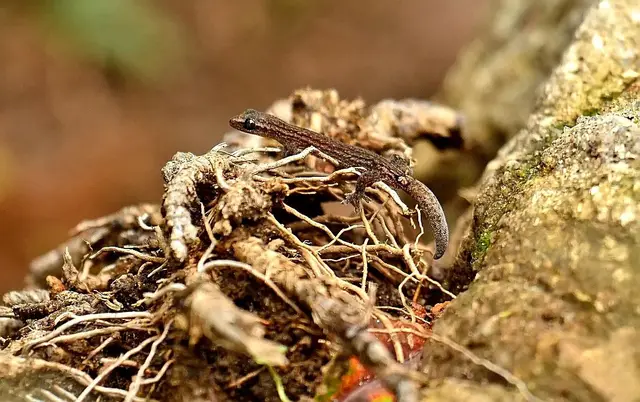
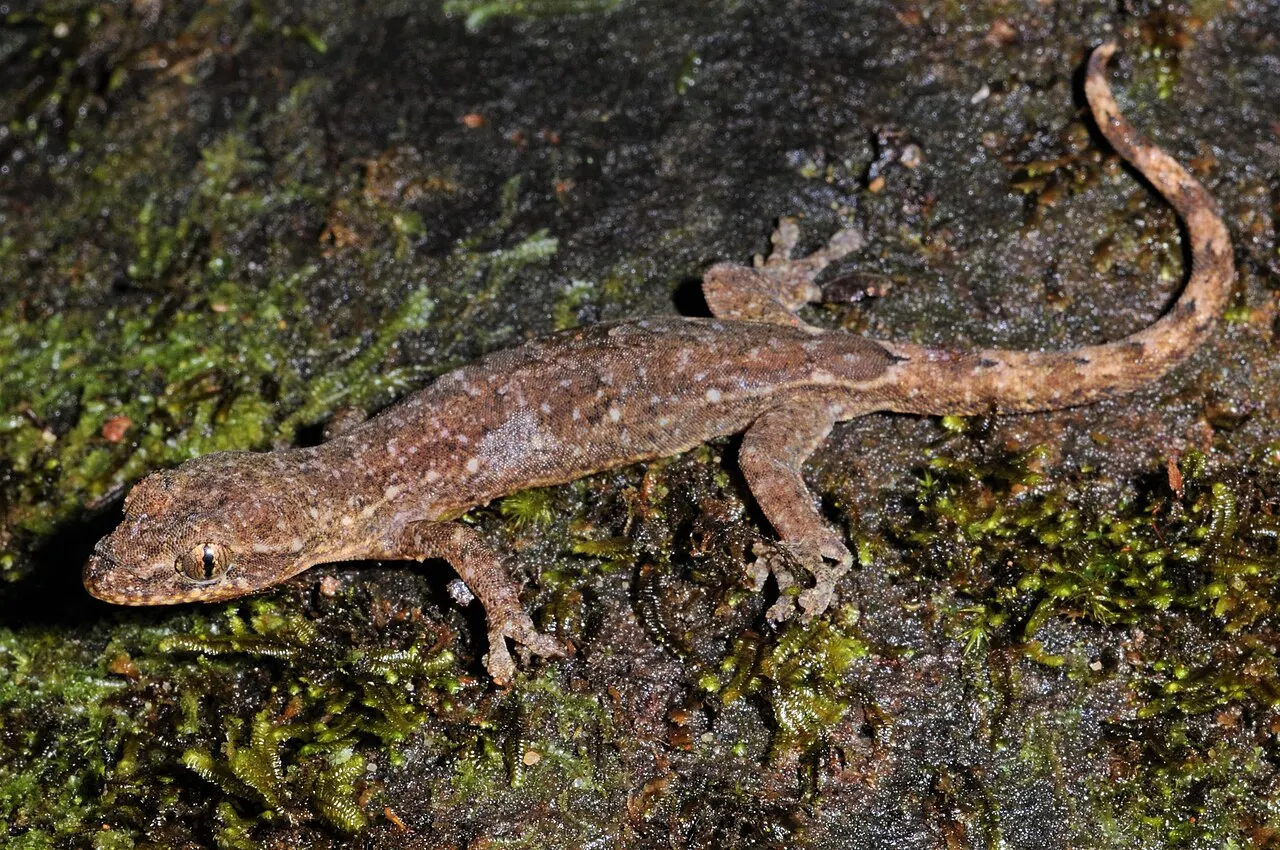
It is a slim, long-bodied gecko with a large head, big eyes with vertical pupils, and a short, round tail covered in tiny overlapping scales. Colour runs from pale buff to dark brown with light or dark speckling, and dark irregular bands cross the back. Field marks include a dark band behind the eye and a yellowish-orange underside to the tail.
Sizes differ by source. The Reptile Database gives an average adult snout-to-vent length of about 49 mm, while one field guide gives 5.8 cm and around 10 cm in total. Males have a continuous row of 17 to 39 pores along the thighs and in front of the vent. Females have none.
Where it lives
George Zug described the species in 2010 . The holotype, an adult male, was collected on 25 June 2000 near the summit of Gunung Brinchang in the Cameron Highlands, Pahang. It is also reported from the hill resorts of Fraser's Hill and Genting Highlands, all in the Titiwangsa range. The IUCN counts three locations, with an extent of occurrence of about 500 square kilometres.
Pins are Wikidata “endemic to” fields. Orange dots, when present, are GBIF occurrence tiles — survey bias included.
How it lives
It rests by day and is active at night, and it isn't easy to find. In forest it has been seen clinging to slender twigs and saplings up to 3 m off the ground, and on granite outcrops. It has also taken to human structures, using roadside shelters, lampposts, walls and the undersides of sloping roofs. It lays eggs. Females carrying eggs show them as pale shapes through the belly skin.
Why it is in trouble
The IUCN lists housing and urban development and tourism and recreation areas as ongoing threats, each affecting most of the range, and records a continuing decline in habitat area. The scale of their effect on the animal is scored as unknown. Cameron Highlands, Fraser's Hill and Genting Highlands are all well-known resort areas.
What is being done
As of the 2018 assessment, the gecko wasn't known from any protected area. The only action the IUCN lists is the protection of its resources and habitat. The population trend is recorded as unknown, so nobody can say yet whether numbers are falling.
Sources
Written for this catalog in our own words from the sources below, checked against them on 12 November 2026. Population figures are estimates and carry the year they were made. Status and assessment year: IUCN. 2026. The IUCN Red List of Threatened Species. Version 2026-1. iucnredlist.org.