Endangered
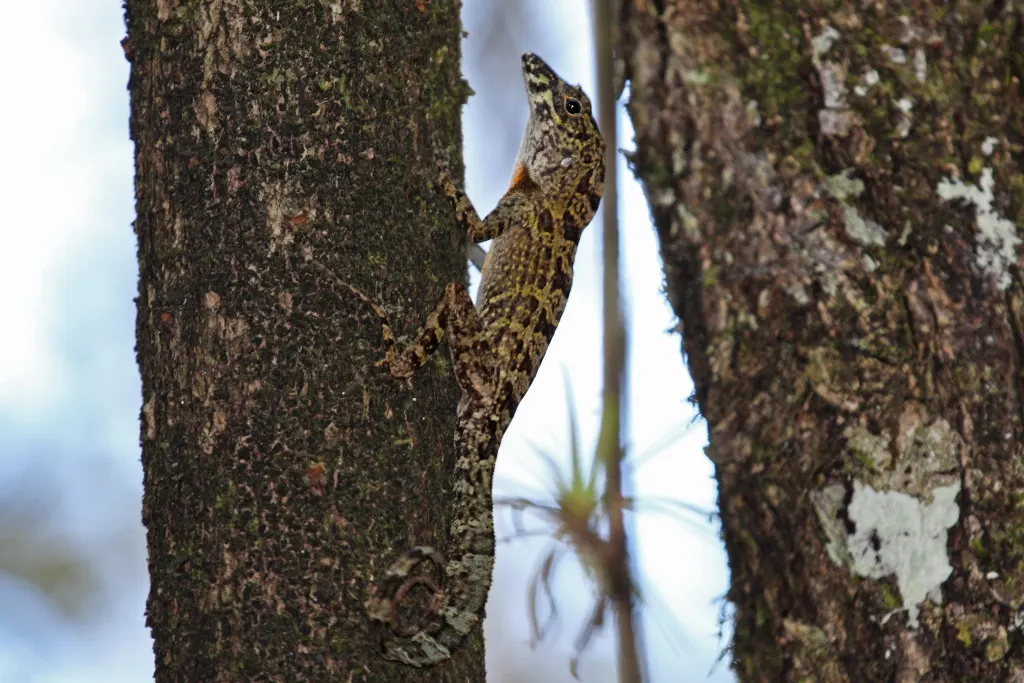
Cuban Tiger Anole
Anolis rubribarbus
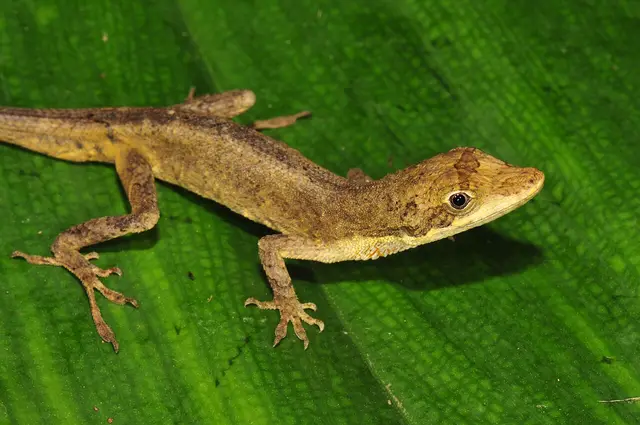
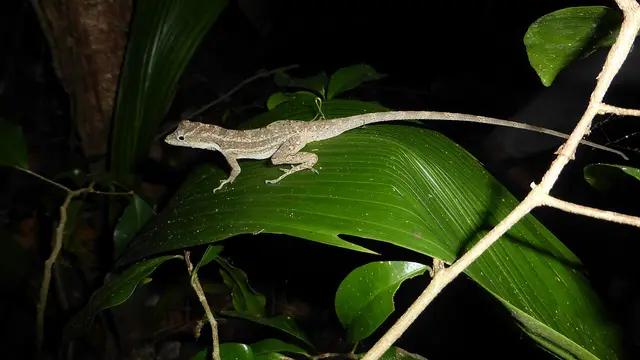
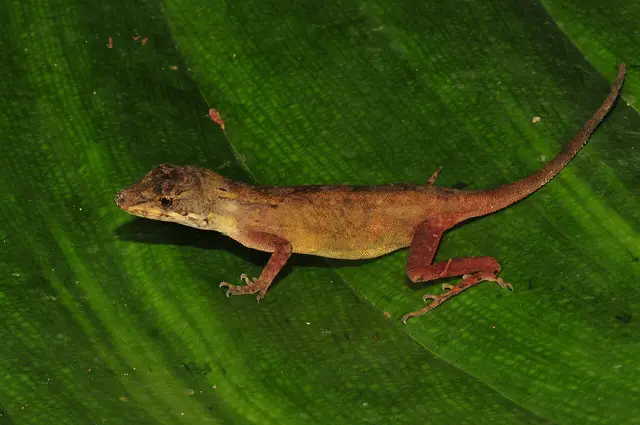
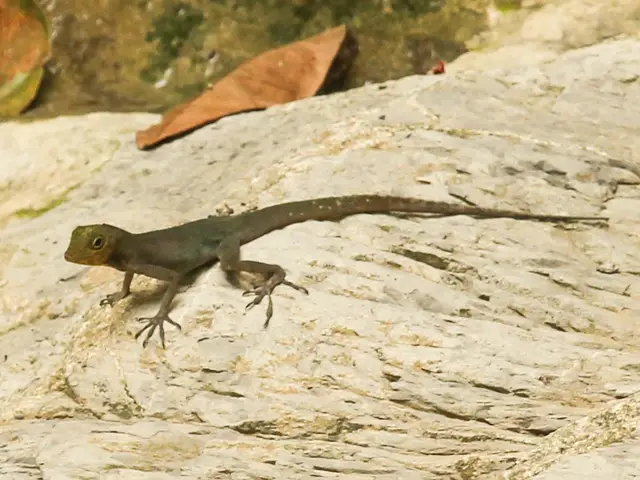
The Sagua de Tánamo anole (Anolis rubribarbus), also called the Cuban tiger anole, is a small lizard found only in eastern Cuba. The Red List rated it Endangered, in an assessment published in 2020, because it lives in a tiny area where its forest habitat keeps shrinking. Little else is known about it.
How to recognise it
This is a tan to olive anole marked with darker vertical stripes, which gives it a tiger-like look and its second common name. The throat fan, or dewlap, is yellow with orange stripes in recent photographs. The scientific name joins the Latin words for red and beard and apparently refers to that display, so the dewlap colour may vary or have been described differently in the past.
Anole biologists class it as a trunk-ground anole, one of the habitat-use categories (ecomorphs) used for Caribbean anoles. It sits in the Norops auratus species group, and some authors place it in the genus Norops rather than Anolis.
Where it lives
It is endemic to Cuba. Barbour and Ramsden described it in 1919 from specimens collected at El Puerto de Cananova, near the town of Sagua de Tánamo in Holguín Province, which gives the lizard its common name. A museum specimen collected in 1959 about 7 km east of Moa, also in Holguín, shows it also occurs further east.
The IUCN assessment estimates its extent of occurrence at about 4,947 square kilometres, split among three locations, from sea level up to 800 m. It records the habitat as moist lowland forest, dry forest and moist shrubland, and says the species occurs in at least one protected area.
Pins are Wikidata “endemic to” fields. Orange dots, when present, are GBIF occurrence tiles — survey bias included.
How it lives
The species lays eggs, as most anoles do. Little has been published on its diet, breeding season or population size. The IUCN lists its population trend as unknown, though it records a continuing decline in the area it occupies.
Why it is in trouble
The Endangered rating rests on criteria B1ab(iii). That means a small range, few locations, and a continuing decline in the area, extent or quality of habitat. The threats the assessment names are small-holder farming, small-holder grazing and mining and quarrying. Each of these can convert or damage the forest and shrubland the lizard depends on.
What is being done
The assessment lists no species-specific conservation actions. The only recorded protection is that part of its range lies inside a protected area.
Sources
Written for this catalog in our own words from the sources below, checked against them on 12 November 2026. Population figures are estimates and carry the year they were made. Status and assessment year: IUCN. 2026. The IUCN Red List of Threatened Species. Version 2026-1. iucnredlist.org.