Critically Endangered
Anolis eugenegrahami
Anolis eugenegrahami
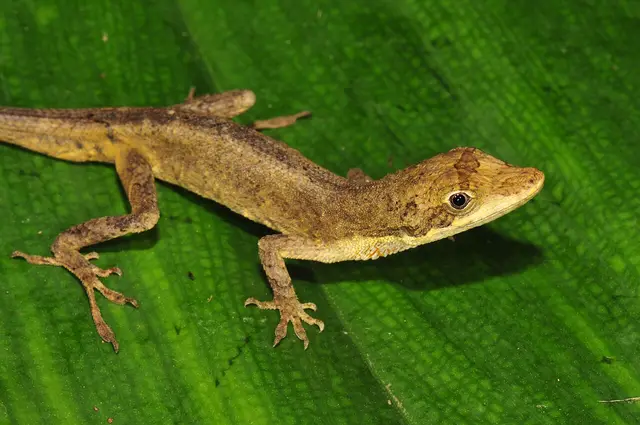
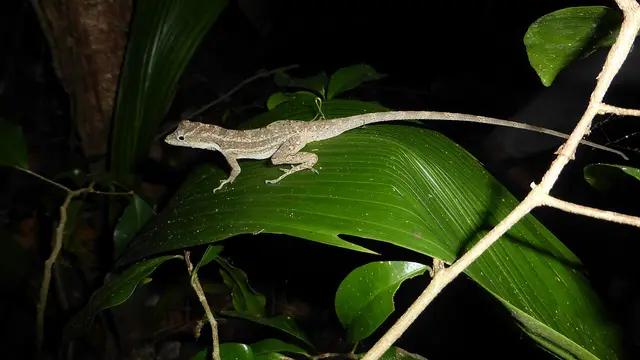
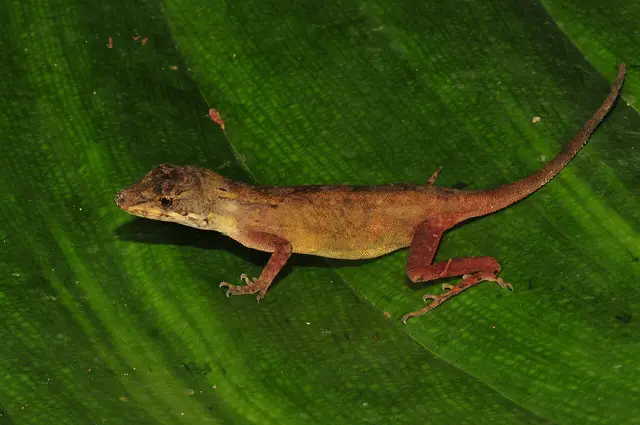
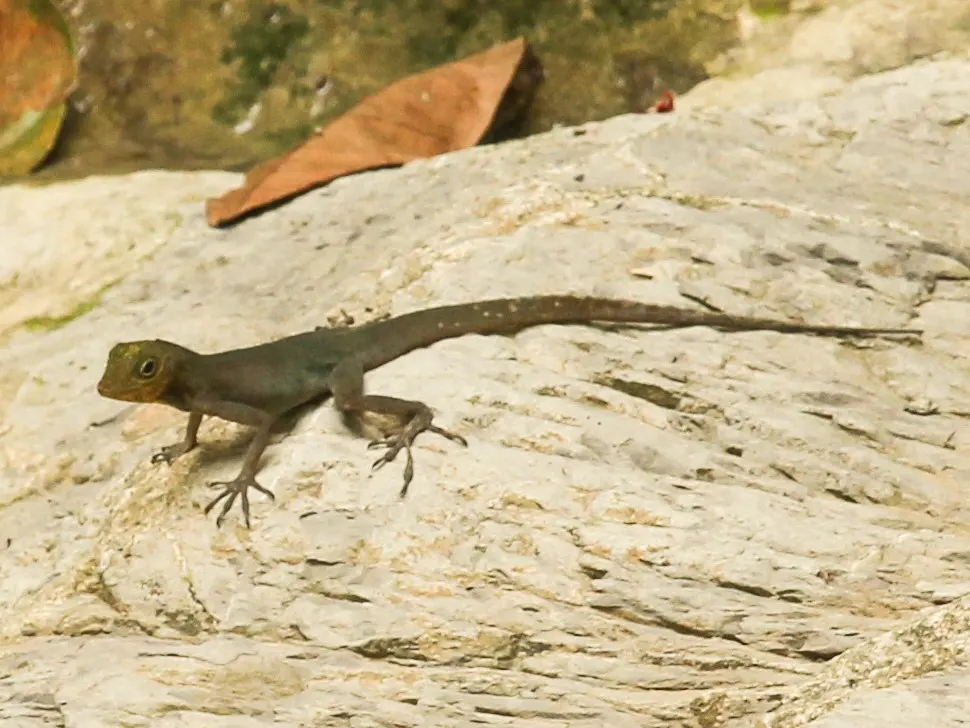
Eugene's anole, or black stream anole (Anolis eugenegrahami), is a very dark, long-legged lizard of forested streams in northern Haiti. It is one of only two semi-aquatic anoles in the Caribbean. The IUCN Red List rated it Critically Endangered in 2020, and it is known from a single place.
How to recognise it
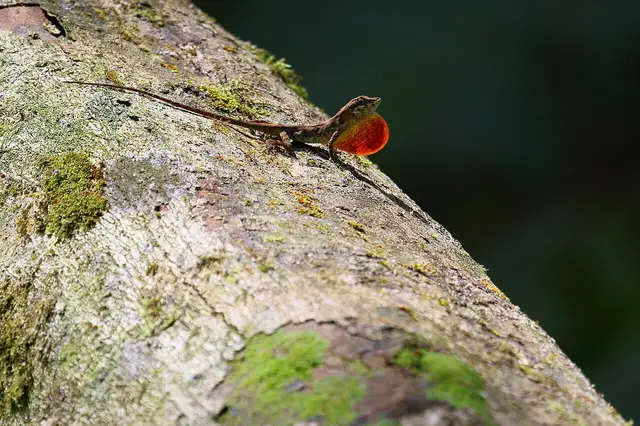
This is a moderate-sized anole with extremely long limbs. Males reach about 72 mm from snout to vent, females about 61 mm. Both sexes are very dark. Only males have a dewlap, the throat flap that anoles flash, and in this species it runs from very dark gray to black with a lighter edge.
The skin is unusually water-repellent. Microscopic structures hold a thin film of air against the body when the lizard is under water, and water doesn't cling when it climbs out. That air layer may also give it a little extra air to breathe.
Where it lives
It is found only in the Nord department of northern Haiti. The type locality is Roche Parfait, about 9 km northeast of Plaisance at roughly 215 m elevation. The IUCN counts one location and estimates its extent of occurrence at about 86 square kilometres.
It keeps strictly to forested stream margins. Its only semi-aquatic counterpart in the Caribbean is the Cuban anole Anolis vermiculatus.
Pins are Wikidata “endemic to” fields. Orange dots, when present, are GBIF occurrence tiles — survey bias included.
How it lives
The species lays eggs. It was described in 1978 by Albert Schwartz and named for Eugene D. Graham Jr., who found the first specimens with Thomas Thurmond and Schwartz. Little else is recorded about its diet, breeding or daily life.
Why it is in trouble
The IUCN lists small-holder farming and shifting agriculture, which convert the forest, plus unintentional effects of subsistence harvest. It records a continuing decline in area and a decreasing population trend. The species does not occur in a protected area.
A 2011 post on Anole Annals called its single known locality highly degraded. In the comments, herpetologist Luke Mahler, who visited Haiti with Rich Glor in 2009, wrote that most of the country's endemic anoles survived but often in shrinking, very restricted habitat.
What is being done
The IUCN lists resource and habitat protection and site or area protection as actions needed, along with a species recovery plan, an area management plan, and research on population size, distribution and trends. The species does not occur in a protected area.
Sources
Written for this catalog in our own words from the sources below, checked against them on 12 November 2026. Population figures are estimates and carry the year they were made. Status and assessment year: IUCN. 2026. The IUCN Red List of Threatened Species. Version 2026-1. iucnredlist.org.