Critically Endangered
Anolis bicaorum
Anolis bicaorum
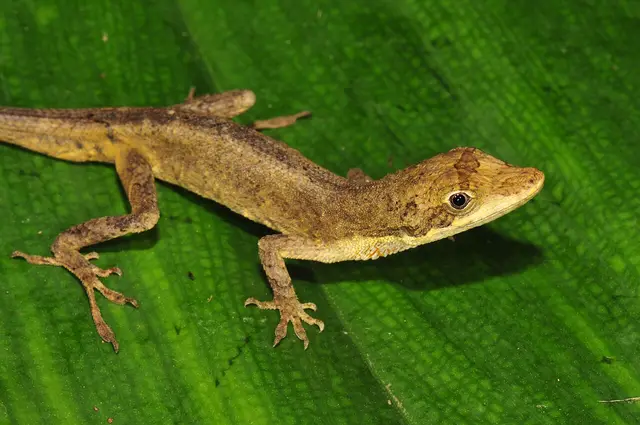
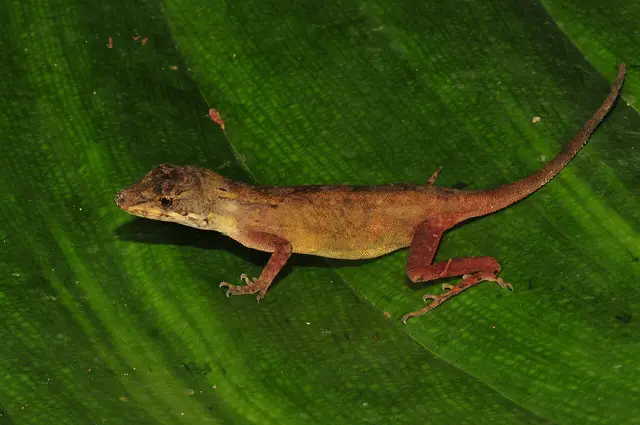
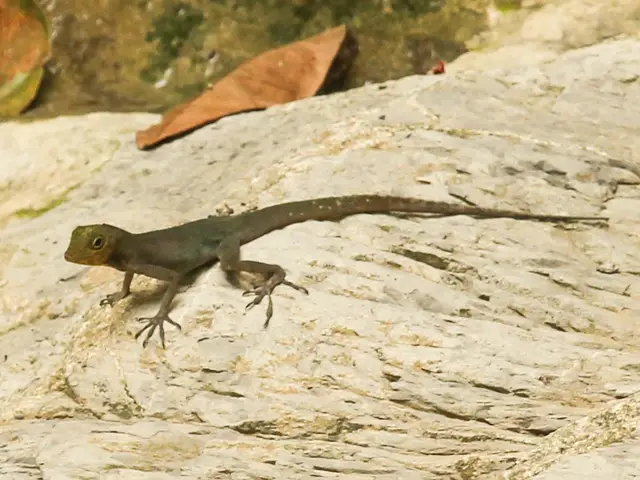
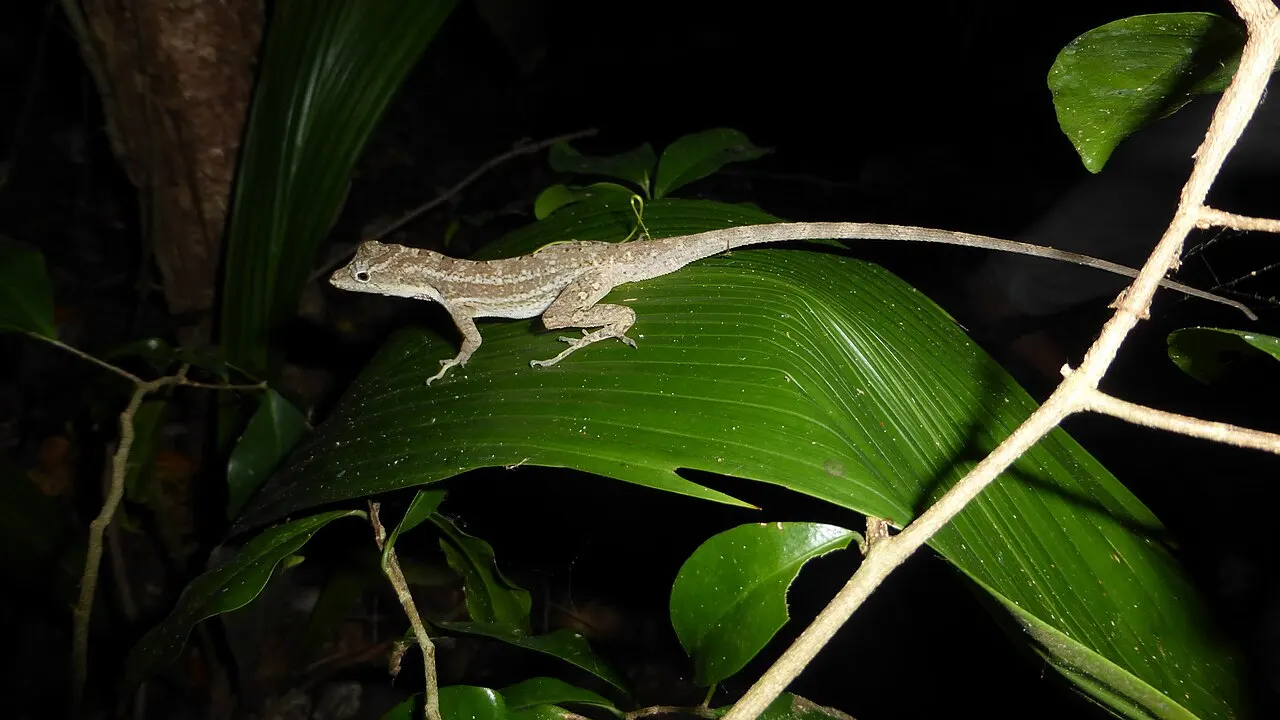
The Utila anole (Anolis bicaorum), also called the Bay Islands or Bica anole, is a small tree lizard found only on Utila, one of Honduras's Bay Islands. The IUCN Red List listed it as Critically Endangered in 2021, as forest on its small island is cleared for housing and tourism.
How to recognise it
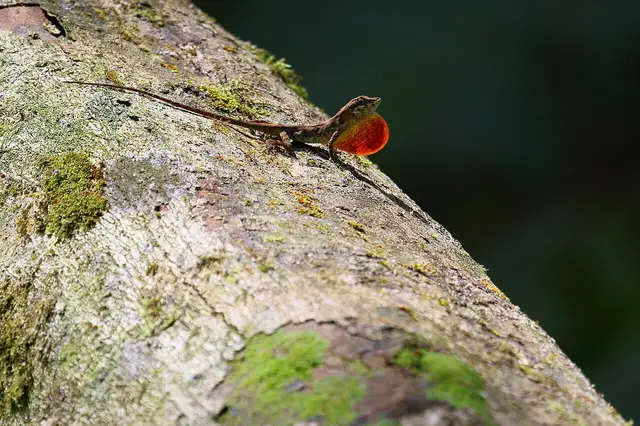
It's a small to medium-sized anole, reportedly brownish with long limbs. Males average about 64 mm from snout to vent and carry a bright orange-red dewlap, the throat flap typical of anoles. Females average about 62 mm and have a smaller dewlap, coloured cream or grey through to red.
The largest male measured in a 2017 to 2018 field project on the island reached 74.6 mm, a little above the 73 mm reported before.
Where it lives
Utila covers only about 41 square kilometres and its highest point is 74 m, with most of the island between sea level and 8 m. The anole is a forest animal. Early surveys found it only in lowland moist forest on the eastern side, and the Red List gives its elevation as sea level to 20 m. Later fieldwork also turned it up in the north, south and west.
It's scarce in farmland, savannah, mangrove and coastal habitats. The densest populations sit in broadleaf and palm forest in the east, where some 100 m transects produced about one lizard every 5 m.
Pins are Wikidata “endemic to” fields. Orange dots, when present, are GBIF occurrence tiles — survey bias included.
How it lives
Mostly arboreal, it's thought to sit and wait for arthropods, sometimes dropping to the ground to chase prey. Detailed diet data are lacking. It lays eggs.
A 2021 study in Ecology and Evolution by Emma Higgins and colleagues surveyed thirteen 20 by 20 m plots, from intact forest to heavily disturbed, sparsely treed ground in Utila Town. Plots held between 1 and 20 lizards, averaging about 7. Anoles were more numerous where more of the day was spent within their preferred body temperature range (25.4 to 28.0 degrees C) and where there was more prey. Built-up areas had less prey and fewer lizards.
Why it is in trouble
Everything depends on the forest, and the forest is shrinking. The Higgins team judged from their own observations that human disturbance near Utila Town drives canopy loss, with clearing for housing ongoing. The Red List names housing, and tourism and recreation areas, as ongoing threats, and records the species as not occurring in any protected area. It treats the whole population as one location.
The invasive brown anole (Anolis sagrei) is another worry. It was reported only in Utila Town and not in the forest, but it could compete with the native lizard if it spreads. The Red List's population trend is marked stable, even though the area of habitat is still declining.
What is being done
Research has come first. A grant-funded project run with the Kanahau Utila Research and Conservation Facility, awarded in 2017, recorded more than 350 individuals and proposed buying and privately protecting an area of suitable broadleaf and palm forest. A 2020 University of Nottingham master's thesis by Thomas Brown recommended the species be considered Critically Endangered, and the Red List listed it that way in 2021.
Sources
Written for this catalog in our own words from the sources below, checked against them on 12 November 2026. Population figures are estimates and carry the year they were made. Status and assessment year: IUCN. 2026. The IUCN Red List of Threatened Species. Version 2026-1. iucnredlist.org.