Critically Endangered
Cortés Anole
Anolis amplisquamosus
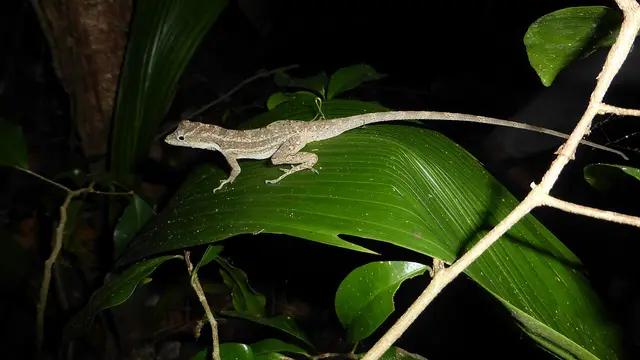
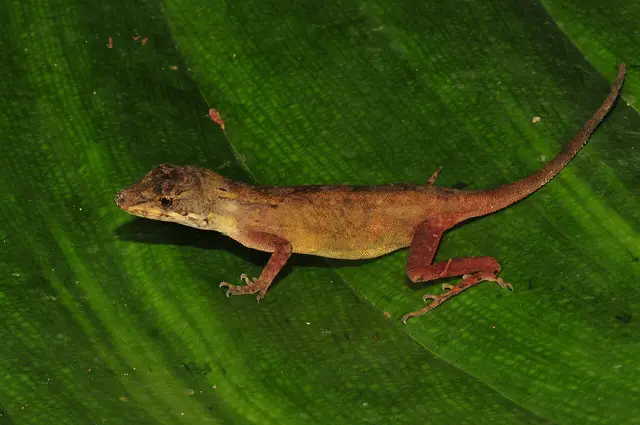
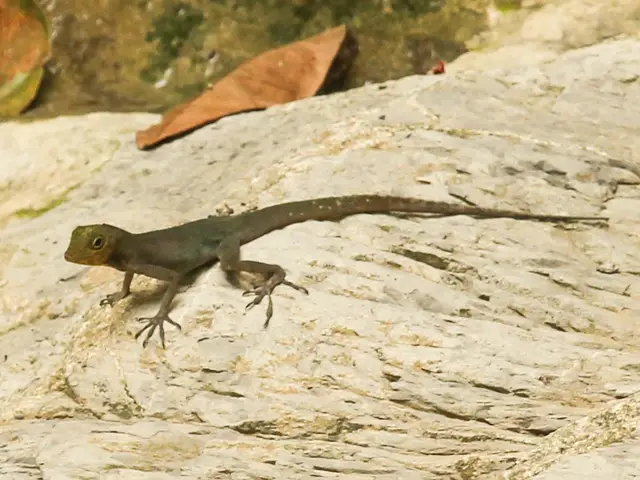
Anolis amplisquamosus is a small lizard known only from cloud forest in northwestern Honduras, in and around Cusuco National Park. The IUCN's 2020 assessment lists it as Critically Endangered, with a decreasing population at a single location, and reports describe a severe decline at a site where it was once abundant.
How to recognise it
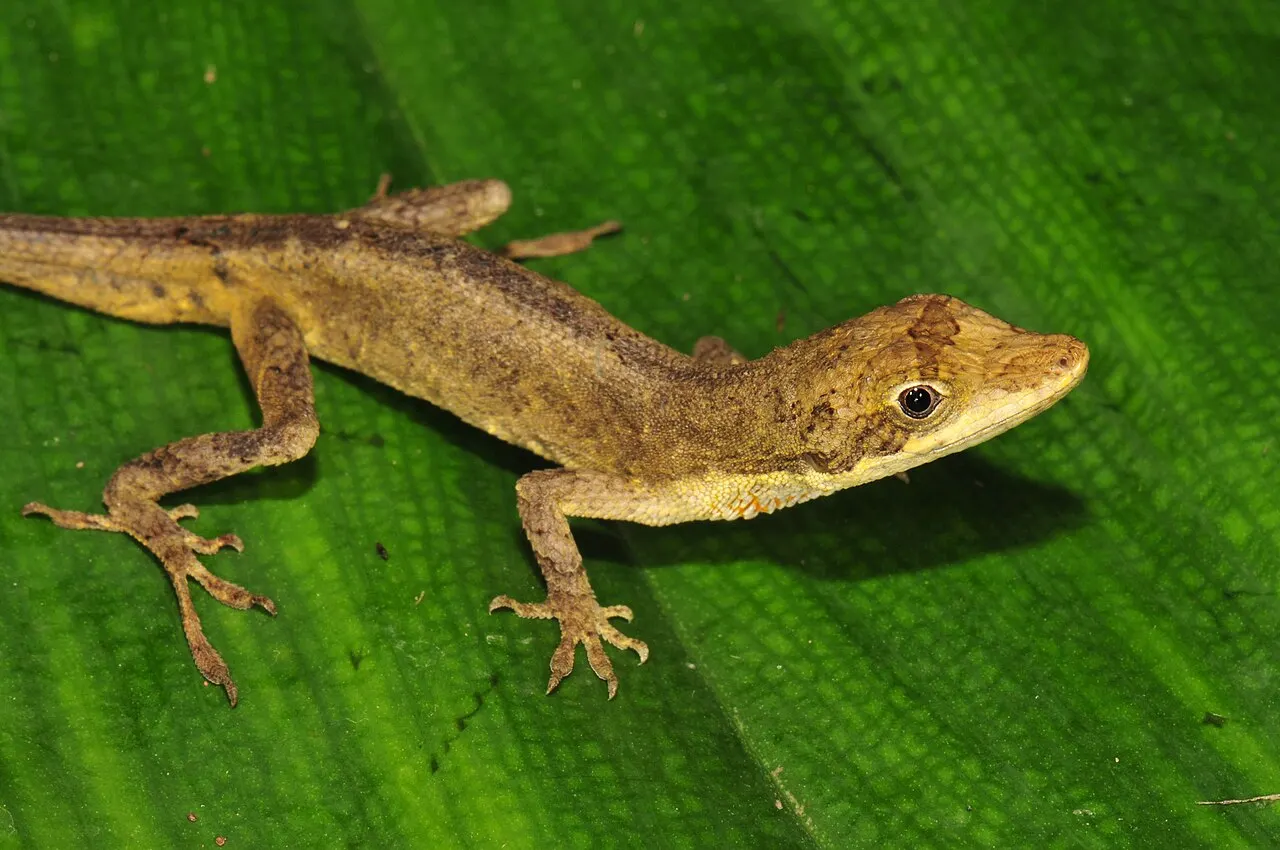
This is a small anole, placed in the family Dactyloidae and sometimes in the group called Norops. Its easiest field mark is a band of 8 to 10 rows of greatly enlarged scales down the middle of the back, which is also the source of the name (from Latin words for large and scale). McCranie, Wilson and Williams described it in the early 1990s.
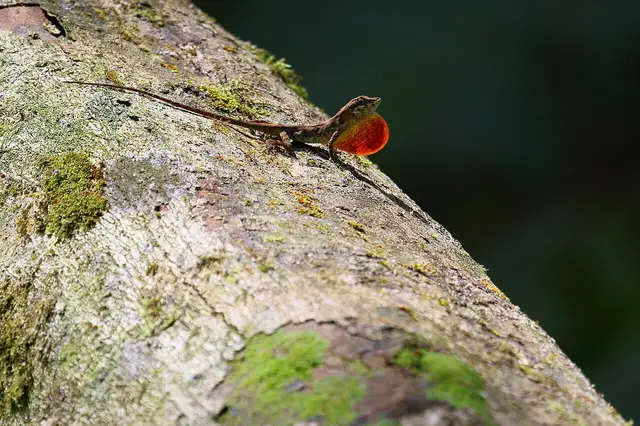
One adult male caught in 2018 had a body length of 44.8 mm, a tail of 102 mm and a mass of 2.4 g. The throat fan is large and orange. In that male, black scales on the fan turned pale yellow within about 10 minutes of capture, and its body colour lightened too. The species lays eggs.
Where it lives
Everything known comes from one corner of the Sierra de Omoa, in the department of Cortés. The type locality is a farm called Finca El Cusuco at about 1,550 m. The Reptile Database gives an elevation range of 1,530 to 1,720 m, while the IUCN assessment gives 1,530 to 2,200 m, and lists the habitat as subtropical or tropical moist montane forest.
A 2006 survey of Cusuco's dwarf forest, which grows above about 1,950 m, records nine amphibian and reptile species there, five of them found only in Honduras. This anole is one. On 15 June 2018, researchers found numerous individuals basking on sunlit ferny vegetation beside an old road to a private farm.
Pins are Wikidata “endemic to” fields. Orange dots, when present, are GBIF occurrence tiles — survey bias included.
Why it is in trouble
The Red List category rests on criterion B1ab(iii,v), a very small range with continuing decline. The assessors count one location and a decreasing population, with the area of habitat still shrinking.
The threats listed include farming of several kinds (agro-industry, shifting agriculture and small-holder farming), housing and urban areas, and unintended effects of small-scale logging or wood harvesting, though the scope and severity of each are marked unknown. The 2018 field note says the spot where the species was abundant in the 1980s and 1990s has reportedly seen severe declines in recent years, even though many animals were active there that day.
What is being done
It occurs in at least one protected area, Cusuco National Park, and site and area management is the one conservation action listed. Operation Wallacea runs long-term biodiversity monitoring in the park. Research on population trends, habitat trends, threats, life history and distribution is marked as needed.
Sources
Written for this catalog in our own words from the sources below, checked against them on 12 November 2026. Population figures are estimates and carry the year they were made. Status and assessment year: IUCN. 2026. The IUCN Red List of Threatened Species. Version 2026-1. iucnredlist.org.