Critically Endangered
Anolis monteverde
Anolis monteverde
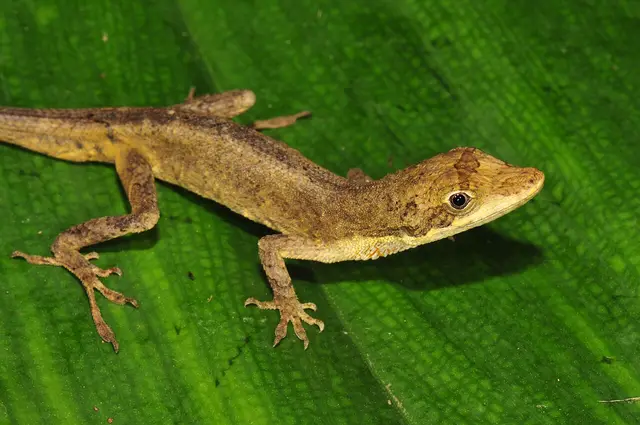
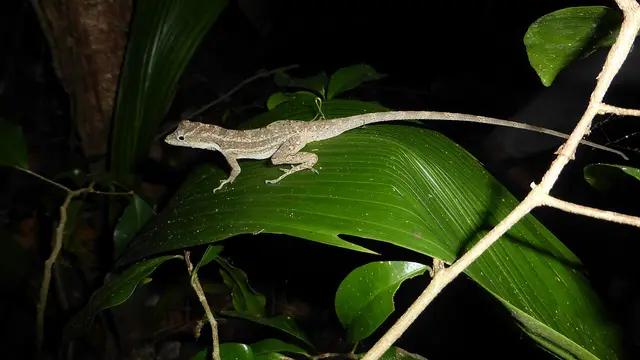
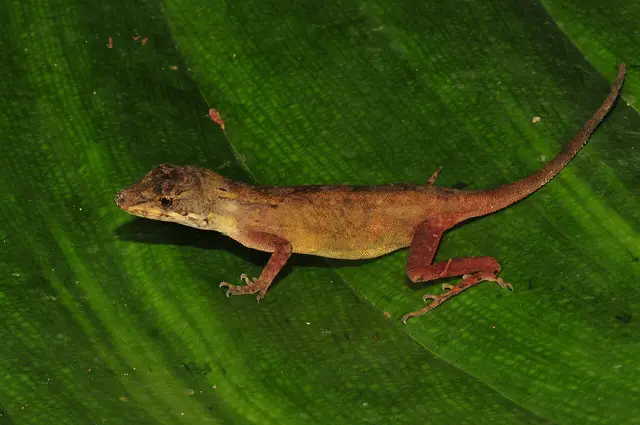
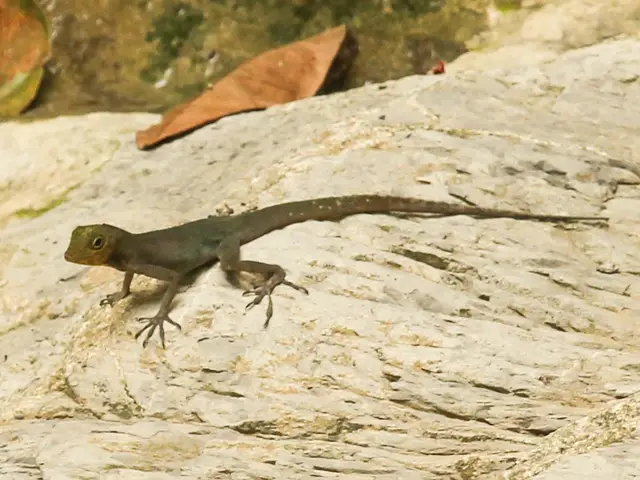
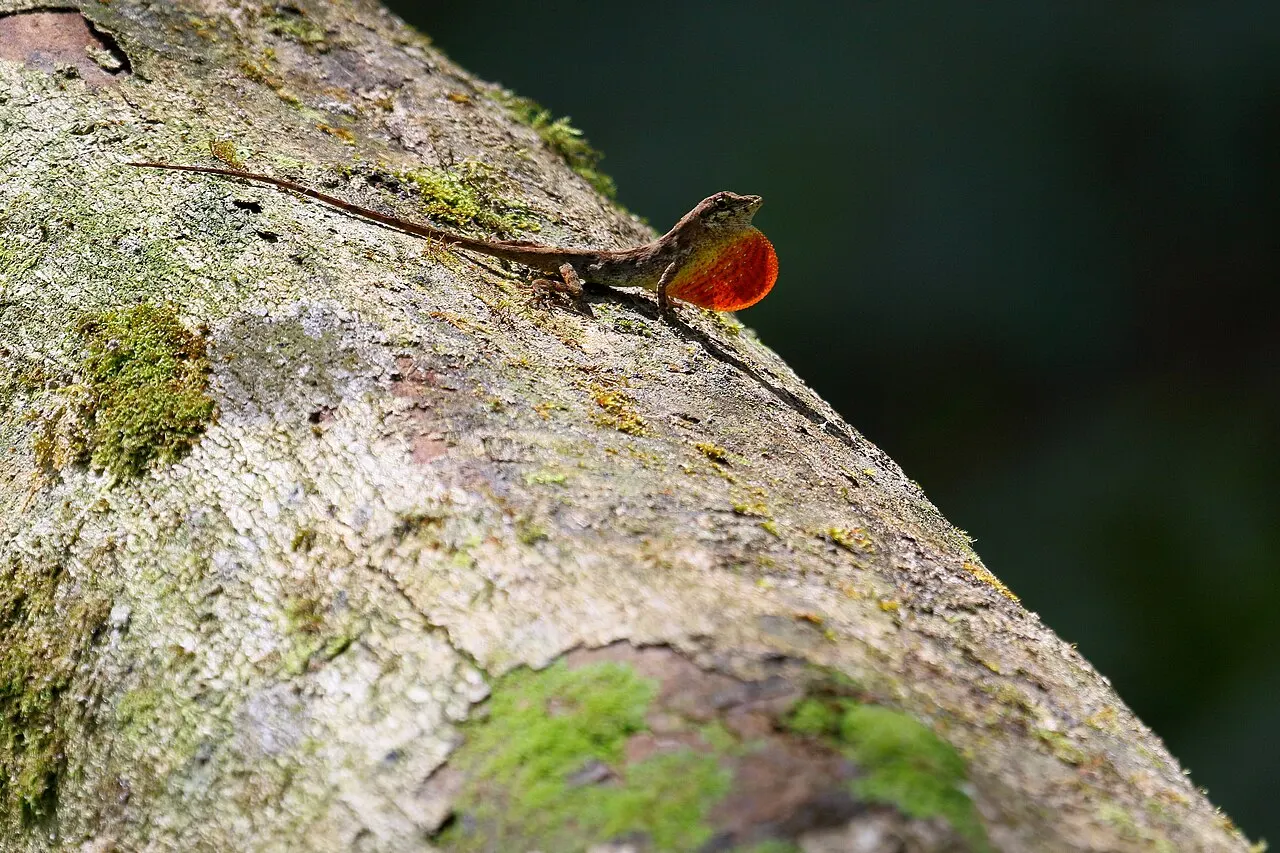
The Monteverde anole (Anolis monteverde) is a medium-sized, reddish-brown lizard from the cloud forest highlands of Puntarenas Province, Costa Rica, and appears to live nowhere else. It was only named in 2009. The IUCN Red List rated it Critically Endangered in 2021, with a decreasing population.
How to recognise it
It's a slender, short-legged anole with a reddish-brown body. The largest specimen in the original description measured about 50 mm from snout to vent, though a comparison table in the same work gives a maximum of 47 mm. Males carry a dewlap, the throat fan anoles use to signal, that is yellow ocher to orange yellow at the base and reddish-orange toward the edge.
Telling it apart is a job for specialists. Until 2009 it was treated as part of Anolis altae, and females of the two species can't be separated by any physical trait, only by where they were found. Males differ in dewlap colour and in hemipenis shape: this species has a single-lobed organ, while A. altae has two lobes. Its tail is also a little shorter relative to its body.
Where it lives
It is endemic to Costa Rica and known only from the Tilarán Mountains in Puntarenas Province, between 1,545 and 1,650 m above sea level. The type series was collected about 2 km east of Santa Elena, at roughly 1,550 m, and the name refers to the nearby Monteverde region, where it is probably restricted.
The IUCN assessment lists a single location and an extent of occurrence of only 20 square kilometres. Its habitat is moist montane forest, and pastureland is also listed. It is not a migrant, and the assessment notes that it occurs in at least one protected area.
Pins are Wikidata “endemic to” fields. Orange dots, when present, are GBIF occurrence tiles — survey bias included.
How it lives
Its natural history is poorly documented. It lays eggs, and it belongs to the Norops auratus group of anoles. Little has been published on its diet, behaviour or breeding season.
Why it is in trouble
A tiny range is the main issue. All known records sit in one small patch of highland, which leaves the species exposed to any local disturbance. The 2021 assessment gives the population trend as decreasing and records a continuing decline, but no population size is available.
The IUCN lists threats from problematic species, one named and one unspecified, as ongoing, with the scale and severity unknown. The cause of the decline is still unclear.
Sources
Written for this catalog in our own words from the sources below, checked against them on 12 November 2026. Population figures are estimates and carry the year they were made. Status and assessment year: IUCN. 2026. The IUCN Red List of Threatened Species. Version 2026-1. iucnredlist.org.