Endangered
Whitaker's skink
Oligosoma whitakeri
Whitaker's skink (Oligosoma whitakeri) is a large, secretive, mostly night-active lizard from the north of New Zealand's North Island. It survives at a few sites, several of them offshore islands. The IUCN Red List rates it Endangered (2019 assessment), and New Zealand's own threat system lists it as Nationally Endangered (2021).
How to recognise it
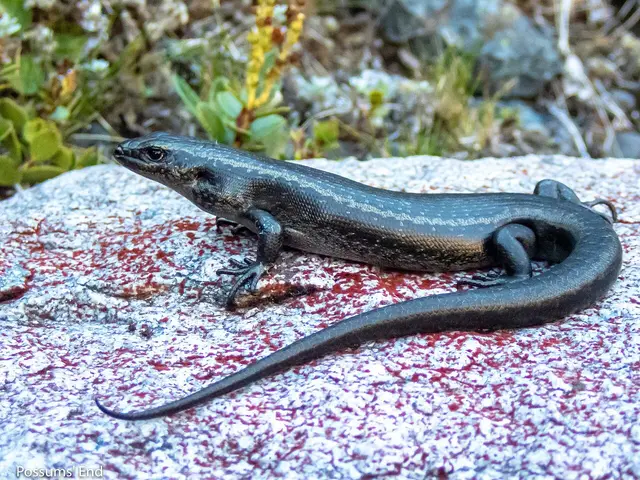
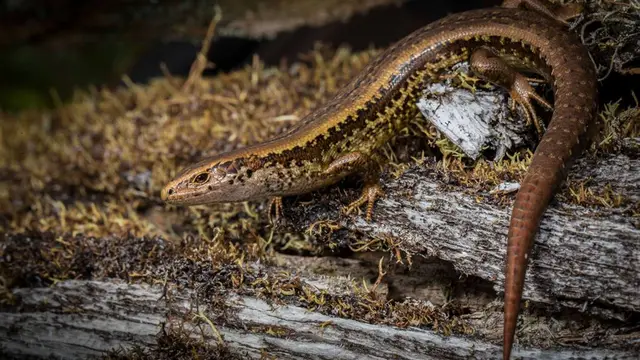
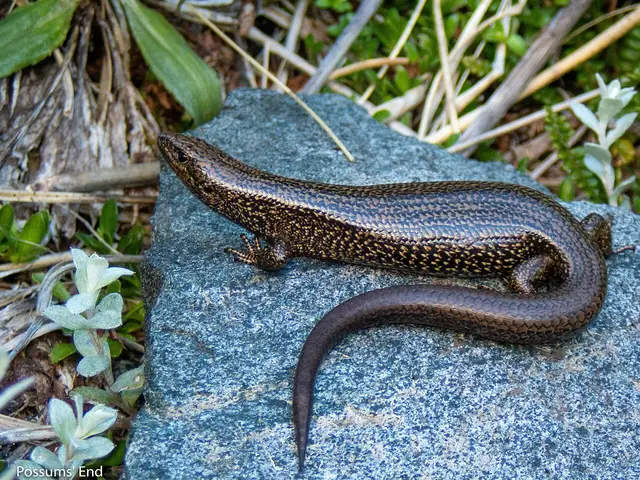
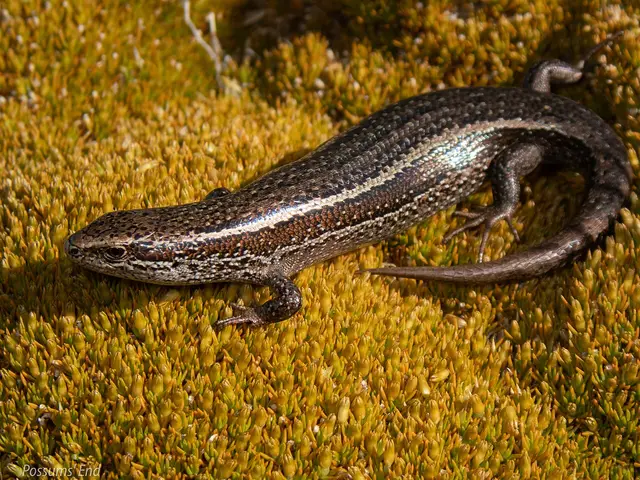
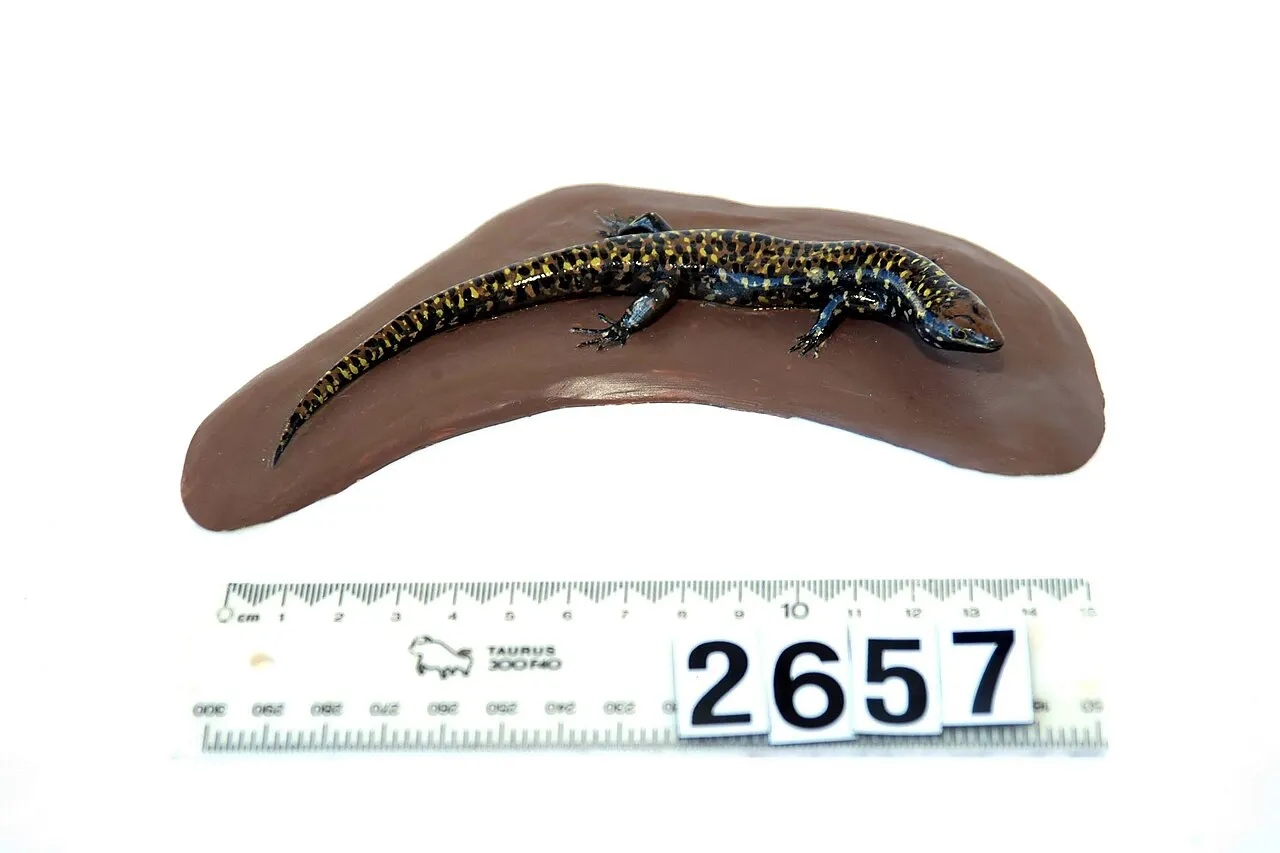
It is one of the bigger native skinks, with a body up to about 101 mm from snout to vent and a tail about as long as the body or slightly longer. Weight tops out near 26 g. The back is yellow-brown to dark brown with light and dark flecks, and the flanks are cream, yellow or brown, heavily mottled with black, especially on the neck. Some animals show the reverse, with black flanks and pale mottling.
Each eye has a pale, black-edged teardrop mark. The belly ranges from yellow to orange, and the pattern can fade with age.
Where it lives
When it was first described, it was known from only three places: Middle Island in the Mercury Islands, Castle Island off the Coromandel Peninsula, and a small rocky area at Pukerua Bay, near Wellington. Subfossil bones from the Waikato, Motutapu Island and as far south as Wellington show it once ranged much wider on the North Island.
The Red List counts three locations, all at or near sea level (0 to 100 m), with an occupied area of about 12 square kilometres. Its habitats are listed as sea cliffs, rocky offshore islands and temperate shrubland. Skinks from Middle Island were moved to Korapuki Island in 1988 and Red Mercury Island in 1994.
Pins are Wikidata “endemic to” fields. Orange dots, when present, are GBIF occurrence tiles — survey bias included.
How it lives
Whitaker's skink shelters by day in places such as boulder banks and seabird burrows. It is most active at dawn and for several hours after dusk. At Pukerua Bay, activity peaked at 15 to 20 degrees C. It eats mostly small ground animals such as ground beetles, spiders and weta, plus nectar and small fruits when they are in season.
Females give birth to live young, in litters of up to five, in April. Newborns are independent at birth. The species is long-lived, and captive animals have passed 46 years.
Why it is in trouble
Introduced mammals are the problem. The Red List names the Pacific rat, ship rat, house mouse, stoat and weasel as ongoing threats. It puts the population at an estimated 250 to 1,000 animals (2019) and describes the overall trend as stable, though it also records a continuing decline in numbers.
With so few sites, one bad invasion could undo the gains.
What is being done
The Red List lists invasive species control and site protection as the main actions, and says part of the range lies in a protected area. It also records that the species has been successfully introduced to new sites and is held in captivity. A Department of Conservation project with Friends of Mana Island aims to breed skinks from the Pukerua Bay colony to establish a population on predator-free Mana Island.
Sources
Written for this catalog in our own words from the sources below, checked against them on 12 November 2026. Population figures are estimates and carry the year they were made. Status and assessment year: IUCN. 2026. The IUCN Red List of Threatened Species. Version 2026-1. iucnredlist.org.