Critically Endangered
Anatolian Meadow Viper
Vipera anatolica
The Anatolian meadow viper (Vipera anatolica) is a small, venomous snake of a few high limestone steppes in the Taurus Mountains of southwest Turkey. The IUCN rated it Critically Endangered in 2009. Only a handful of specimens were known for decades, and it is still recorded from very few sites.
How to recognise it
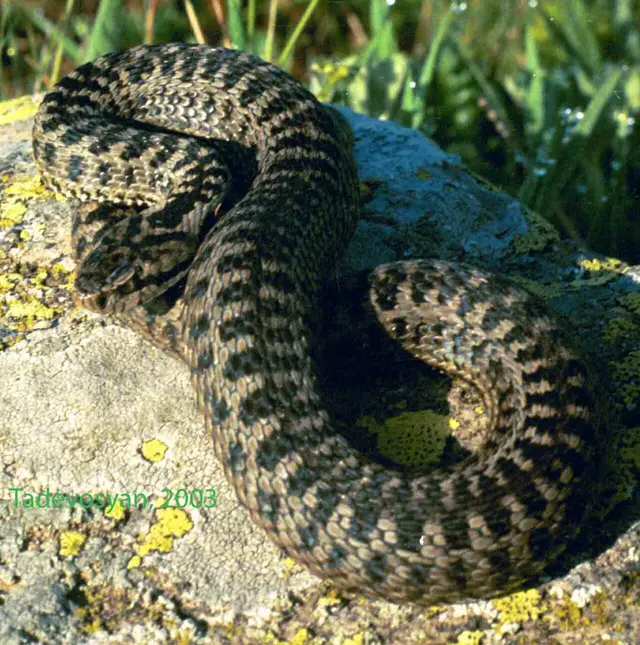
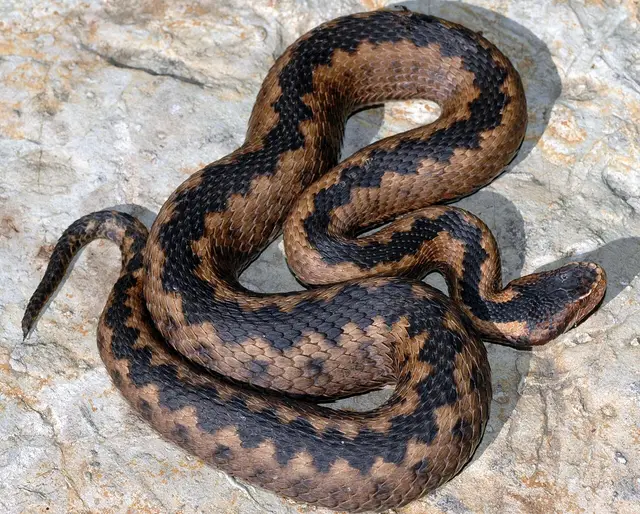
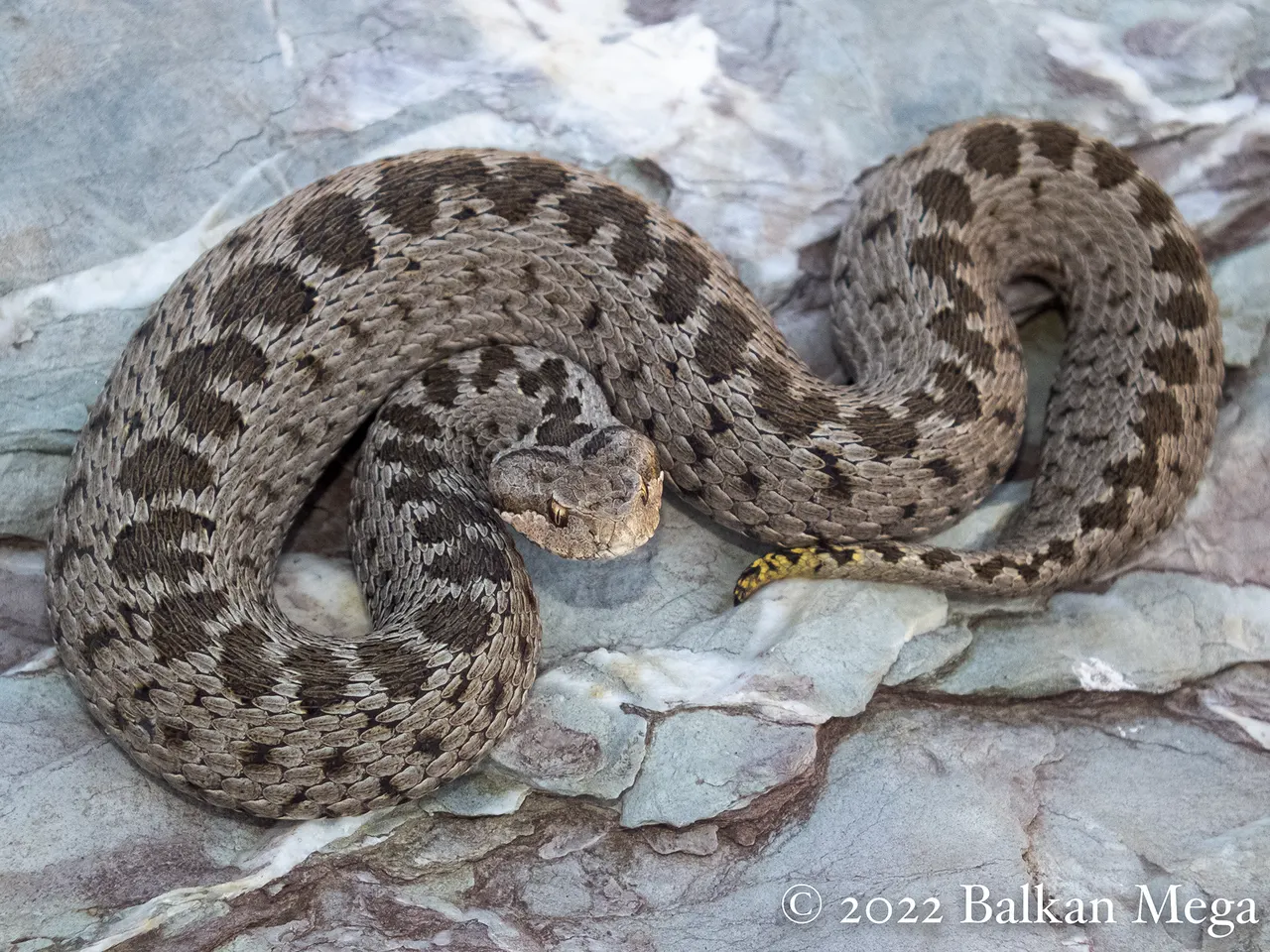
This is a small, greyish brown viper. A dark zigzag band runs down the back, and in a 2014 field study of seven live animals the band had 51 to 63 windings, counting the tail. Rows of dark spots mark the flanks. On most of the snakes the stripe behind the eye and the blotch on the neck joined into a Y shape (11 of 14 head sides).
The largest of those seven vipers, a male, measured 368 mm in total length, longer than the 344 mm previously recorded. A Turkish herpetologist quoted by Daily Sabah in 2021 gave a maximum of 40 to 50 cm for adults, so published sizes vary. Females tend to be browner and less contrasty than males. Colours are bright just after a moult and darken and fade afterward.
Where it lives
The snake is endemic to Turkey and known only from the western and central Taurus in Antalya province. It was described in 1970 from two females collected in 1969 in the cedar forest reserve of Çığlıkara, near Elmalı. The nearest meadow or steppe vipers live roughly 850 km away in Greece and 1,060 km to the east, so this is a very isolated population.
It lives high up. The IUCN assessment gives 1,500 to 1,900 m. In 2014 vipers were caught between 1,980 and 2,265 m, mostly on stony slopes of 10 to 20 degrees in a mountain steppe pocked with limestone sinkholes, with junipers and sparse plants. Their colour blends with silvery, hairy steppe plants. Cedar woodland grows lower down, and trees thin out around 1,950 m.
Pins are Wikidata “endemic to” fields. Orange dots, when present, are GBIF occurrence tiles — survey bias included.
How it lives
At that site the active season runs from early May to mid-October, and snow usually covers the ground by the end of October. Grasshoppers are the main food, and one viper was seen eating a small skink. Another was recorded trying to grab a juvenile lizard. The species gives birth to live young.
Why it is in trouble
After 1970, only a few specimens came to light, and six years of searching by researchers from 2007 to 2013 found none. A team found it again in 2014 in the Çığlıkara forests. In 2017 a population in eastern Antalya was described as the subspecies Vipera anatolica senliki.
The 2009 assessment lists targeted collection and persecution as ongoing, low-impact threats, and rates the population as decreasing. A Turkish herpetologist interviewed in 2021 added quarrying and mining, grazing and new settlements in high-altitude summer pastures, and global warming that restricts the range. No population count has been published.
What is being done
The IUCN notes that conservation sites have been identified across the whole range, and lists awareness and communication as an action. In 2021 a researcher told Daily Sabah that his team had won a stay order against mining activity. Researchers who handled the 2014 animals released them and kept exact sites secret for conservation reasons. Further surveys are needed to establish how far the species ranges and how many survive.
Sources
Written for this catalog in our own words from the sources below, checked against them on 12 November 2026. Population figures are estimates and carry the year they were made. Status and assessment year: IUCN. 2026. The IUCN Red List of Threatened Species. Version 2026-1. iucnredlist.org.