Critically Endangered
Vipera orlovi
Vipera orlovi
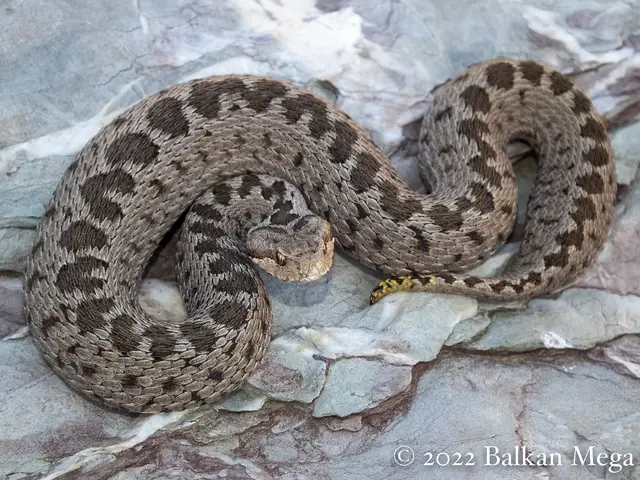
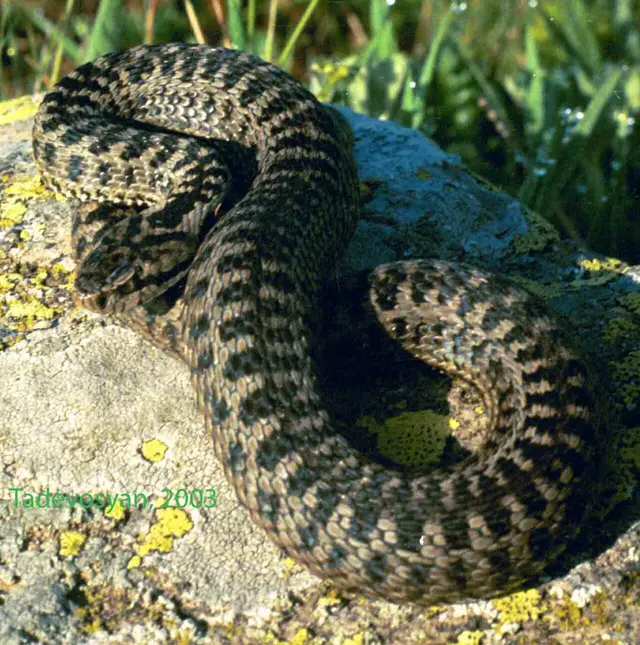
Orlov's viper (Vipera orlovi) is a small, venomous snake found only in the western Caucasus of Russia, in Krasnodar Territory. The IUCN Red List rated it Critically Endangered in 2009, with a decreasing, fragmented population. Genetic work suggests it arose long ago from a cross between two other vipers.
How to recognise it
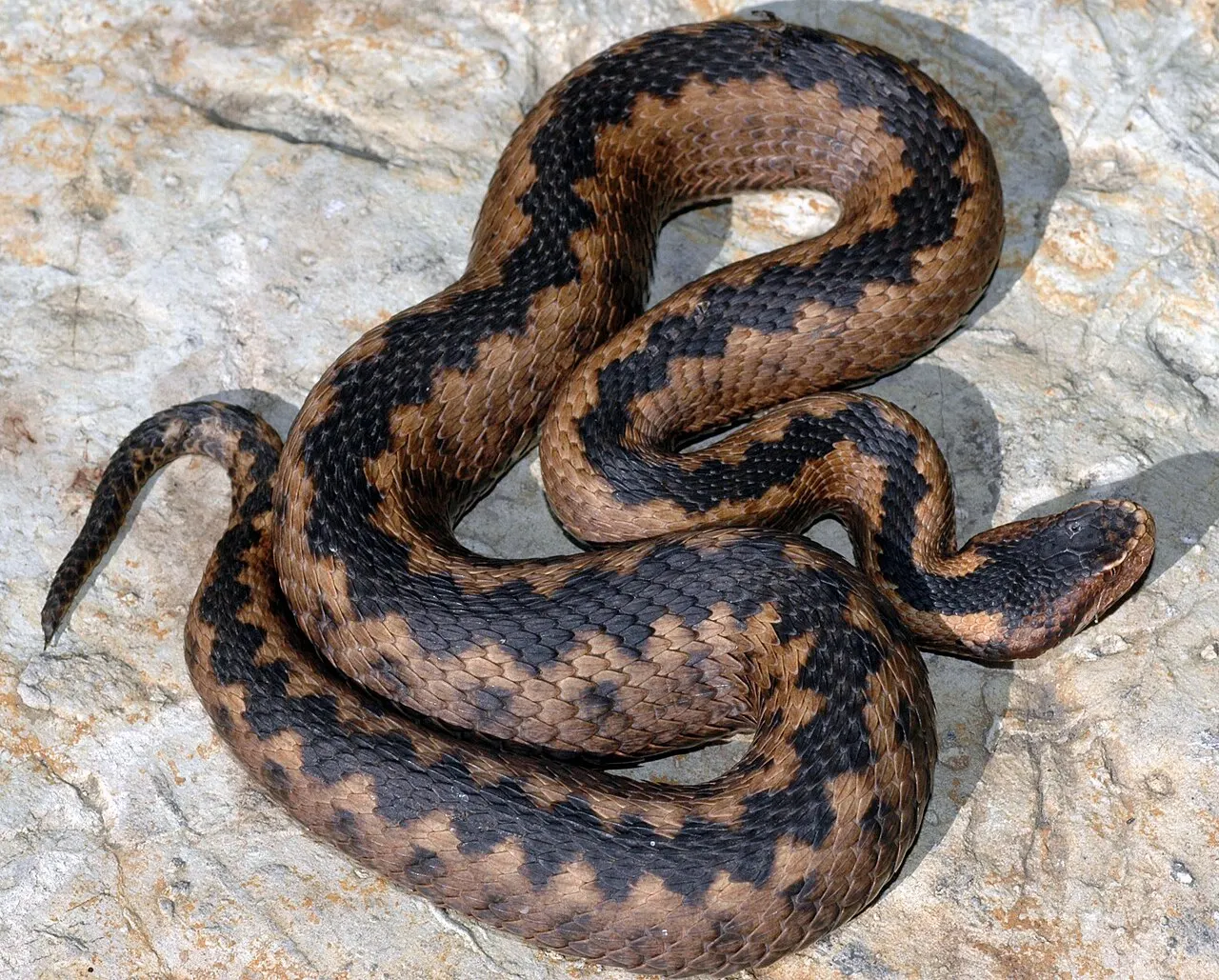
It is a medium-sized viper. The head is paler than the body, and the scales along the snout edge and lips are white. Boris Tuniyev of Sochi National Park describes it as very similar to the Caucasus viper (Vipera kaznakovi) but different in colour and scale covering, so field identification is best left to specialists.
It is venomous and gives birth to live young. The species name honours the Russian herpetologist Nikolai Orlov, and Boris Tuniyev and Sergei Ostrovskikh described it in 2001 from Papai Mountain in Krasnodar Territory.
Where it lives
The IUCN records it only in Russia. It lives in the northwestern Caucasus, in a mosaic of dry sub-Mediterranean forest, meadows and mountain steppe that people have strongly altered. The IUCN lists temperate forest, temperate grassland, and temperate and Mediterranean-type shrubland as habitats, at about 200 to 950 m. The Reptile Database gives 50 to 1,100 m.
In a December 2024 interview, Tuniyev called Orlov's viper and the relict viper endemics of Krasnodar Territory only, with a very small range. The IUCN notes that the population is severely fragmented.
Pins are Wikidata “endemic to” fields. Orange dots, when present, are GBIF occurrence tiles — survey bias included.
A hybrid origin
A 2016 study in BMC Evolutionary Biology by Oleksandr Zinenko and colleagues sequenced 12 Orlov's vipers and found that its genome comes mostly from the Caucasus viper, with an admixture from Renard's viper (Vipera renardi) of about 19 percent by one measure and 15.5 percent by another. The study found no sign of ongoing gene flow, read the hybridisation as historical, and recommended keeping its taxonomy and protection status until more research was done.
A 2021 paper by Ulrich Joger and Oleksandr Zinenko, titled as a question about whether it is a distinct hybrid species, reportedly proposed keeping it as a separate species. Some authors have treated it as part of Vipera dinniki, so its status is still debated.
Why it is in trouble
The IUCN lists one threat: the snake itself being the target of collection, and its recorded use is as a pet or display animal. The assessment rests on a small, fragmented range and a continuing decline in numbers (criteria B1ab(i,v); C2a(i)). No population estimate is given.
The region adds pressure. In his 2024 interview Tuniyev named climate change, construction in the foothills and people killing snakes as threats to snakes there, and said numbers in Red Data Book snake populations fell by almost 30 percent over the last decade. That figure is an average across species, not specific to Orlov's viper.
What is being done
Orlov's viper is listed in the Red Data Books of Russia and of Krasnodar Territory. The IUCN lists the action needs as site and area protection, awareness, and management of harvest and trade at regional, national and international level. No species-specific programme has been described.
Sources
Written for this catalog in our own words from the sources below, checked against them on 12 November 2026. Population figures are estimates and carry the year they were made. Status and assessment year: IUCN. 2026. The IUCN Red List of Threatened Species. Version 2026-1. iucnredlist.org.