Endangered
Fringe-toed sand lizard
Uma exsul
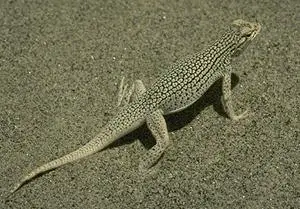
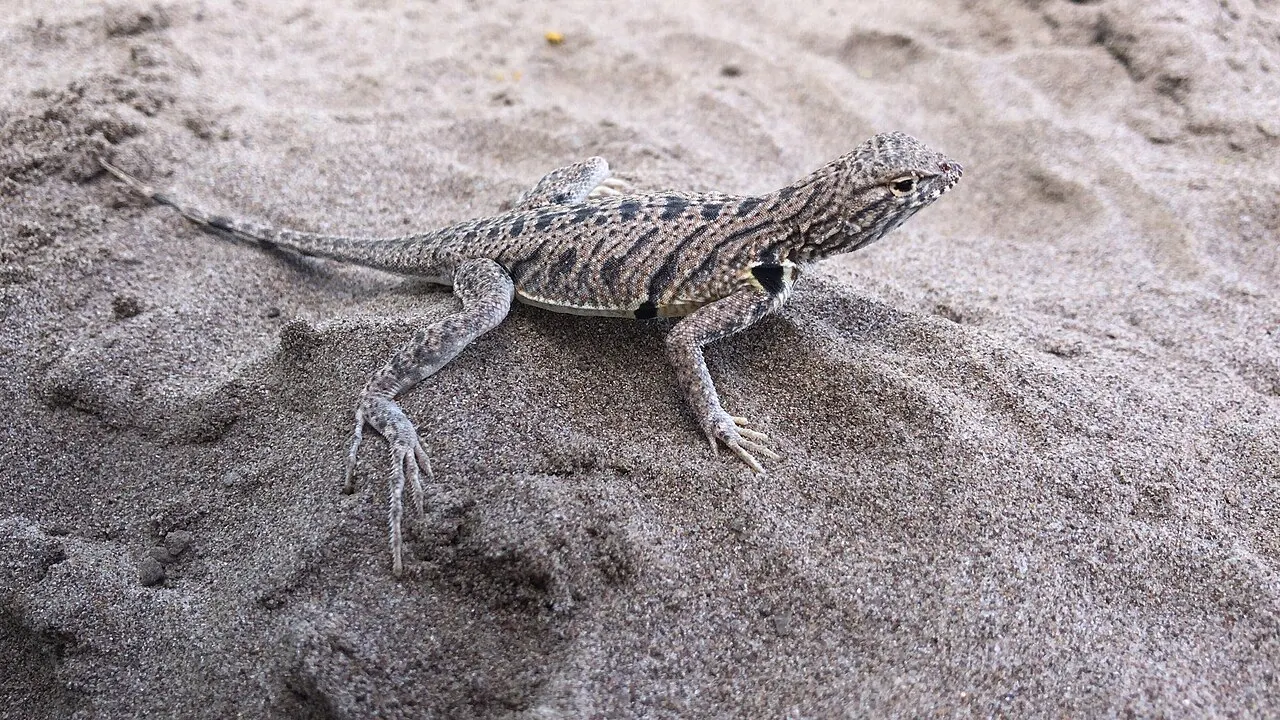
The Coahuila fringe-toed lizard (Uma exsul) is a sand lizard found only in the Chihuahuan Desert of Mexico, in dune fields of Coahuila. The IUCN Red List assessed it as Endangered in 2007, with a decreasing population. Its name, Latin for a banished person, refers to its geographic isolation from its closest relatives.
How to recognise it
The back carries a pattern of black lines that form a net of diagonal chevrons, and there is a prominent black blotch on the shoulder. The species usually has four small scales between the nostrils (internasals). Herpetologists treat it as a highly distinct member of the fringe-toed lizard genus, most closely related to Uma scoparia.
Where it lives
Karl Schmidt and Charles Bogert described it in 1947 from dunes 12 miles north of San Pedro de las Colonias, Coahuila. The species name comes from the Latin for a banished person, a nod to its separation from close relatives. The IUCN lists it as endemic to Mexico, and the only habitat it rates as suitable is hot desert.
A 2020 genetic study in the journal Biotecnia analysed 24 samples collected over 14 field trips, mainly at Viesca and Estacion Marte. About 87 percent of the genetic variation lay within populations, and Viesca showed high gene flow. Estacion Marte showed signs of a recent bottleneck followed by expansion, and the study concluded it can be treated as an allopatric (geographically separate) population.
Pins are Wikidata “endemic to” fields. Orange dots, when present, are GBIF occurrence tiles — survey bias included.
How it lives
It lays eggs and eats both plants and animals, reportedly. It reportedly finds food by tongue-flicking, which picks up chemical cues. Little else about its daily life has been recorded.
Why it is in trouble
The 2007 assessment recorded a decreasing population and listed four ongoing threats, each rated low impact: mining and quarrying, small-holder grazing or farming, small-holder farming, and recreational activities. The stresses were ecosystem conversion, ecosystem degradation and disturbance of the animals.
A 2007 Journal of Herpetology study modelled the ranges of this lizard and another dune species. It reported heavy human transformation of the land within the range of Uma exsul and a large projected shrinkage of its distribution by 2050 under climate change scenarios. The paper called for immediate conservation action.
What is being done
The species is known from at least one protected area. The assessment lists site protection, site management and national-level actions, with no details on what has been carried out. The assessment dates from 2007, so current numbers and pressures may differ.
Sources
Written for this catalog in our own words from the sources below, checked against them on 12 November 2026. Population figures are estimates and carry the year they were made. Status and assessment year: IUCN. 2026. The IUCN Red List of Threatened Species. Version 2026-1. iucnredlist.org.