Critically Endangered
Reyes's Caribbean gecko
Aristelliger reyesi
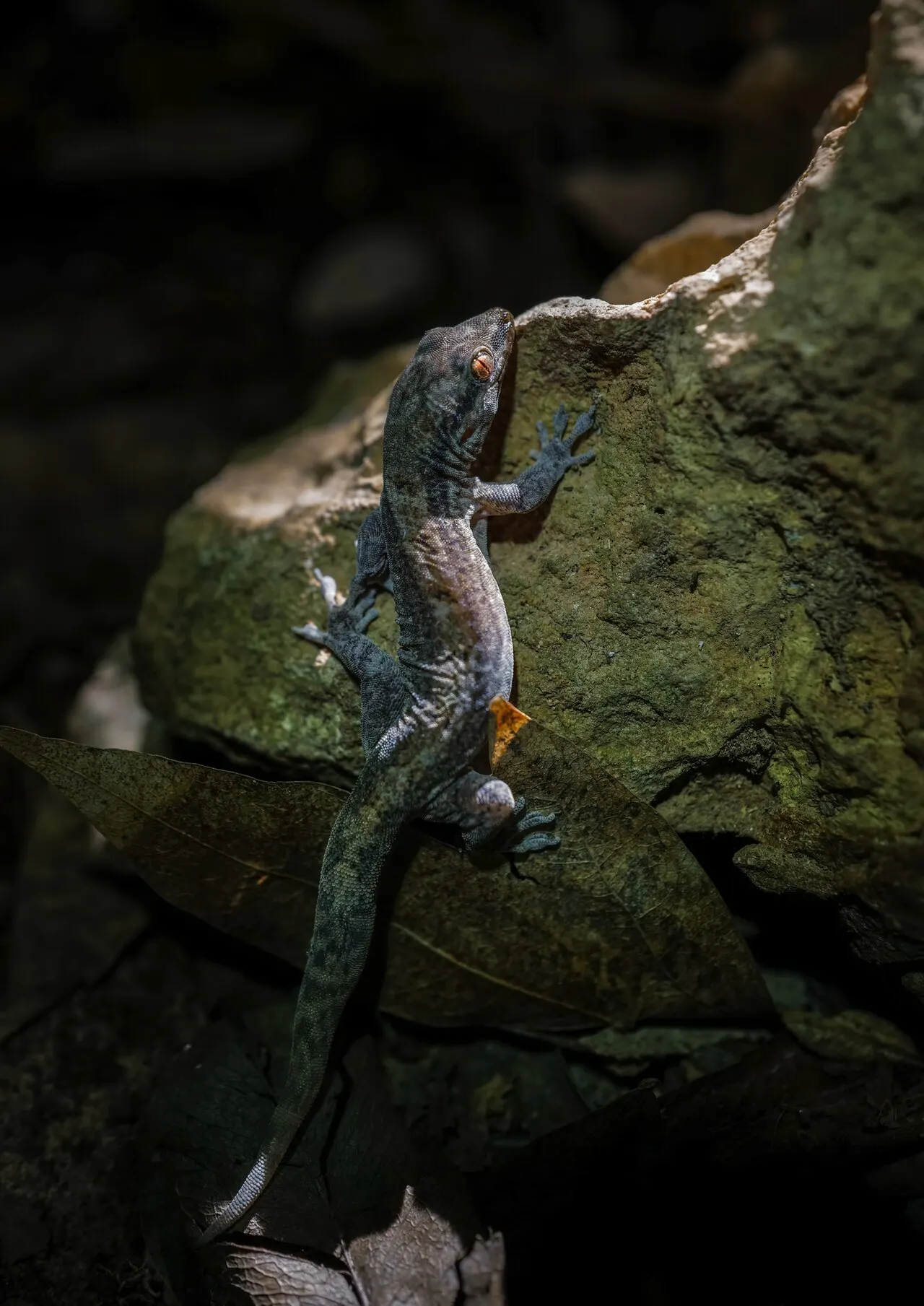
Reyes's Caribbean gecko (Aristelliger reyesi) is a small lizard known only from the Hicacos Peninsula on Cuba's northern coast. It was described in 2009, and the IUCN Red List assessed it as Critically Endangered in 2017, because its tiny range is being affected by tourism development.
How to recognise it
This is a modest-sized gecko in the family Sphaerodactylidae. The largest measured individual had a snout-to-vent length of 63.6 mm, a little over 2.5 inches, not counting the tail.
Both sexes carry a dark, almost black stripe that runs along the head and over the shoulders, fading into brown bands on the back that reach the base of the tail. Its describers separated it from close relatives in the genus using colour pattern and counts of scales, including the lamellae under the fourth toe. Compared with Aristelliger expectatus it is longer and sturdier, and the male's hemipenes have two prominent horn-like papillae that the other species lacks.
A late discovery
Luis M. Díaz and S. Blair Hedges named the species in a 2009 paper in the journal Zootaxa, titled as the first record of the genus Aristelliger in Cuba. The type specimen, an adult male, was collected on 5 June 2007 along the Los Musulmanes trail in the Varahicacos Ecological Reserve, at sea level.
The name honours Ernesto Reyes, a Cuban photographer who provided the first evidence that the gecko existed.
Where it lives
Every record comes from the Hicacos Peninsula in Matanzas Province. The IUCN treats the whole population as a single location, with an extent of occurrence of about 21 square kilometres and an area of occupancy of 4. The assessment lists two habitats: subtropical dry forest and caves.
The global biodiversity database GBIF held only seven occurrence records for the species in November 2026, which says as much about how little it has been surveyed as about how rare it is.
Pins are Wikidata “endemic to” fields. Orange dots, when present, are GBIF occurrence tiles — survey bias included.
Why it is in trouble
The IUCN names tourism and recreation areas as the ongoing threat, affecting between half and 90 percent of the range through ecosystem conversion and degradation. The area it occupies is continuing to shrink, and the population trend is listed as decreasing. No population estimate has been made.
A peninsula this small has little room to absorb hotels, roads and housing. Anything that clears the dry forest takes the gecko's habitat with it, because it is not known from anywhere else.
What is being done
The IUCN records that the species occurs in at least one protected area, and lists site and area management as a conservation action. Research on its threats, ecology and population size is listed as needed. No recovery plan, captive population or monitoring scheme is recorded.
Sources
Written for this catalog in our own words from the sources below, checked against them on 12 November 2026. Population figures are estimates and carry the year they were made. Status and assessment year: IUCN. 2026. The IUCN Red List of Threatened Species. Version 2026-1. iucnredlist.org.




